
Last updated September 10, 2026
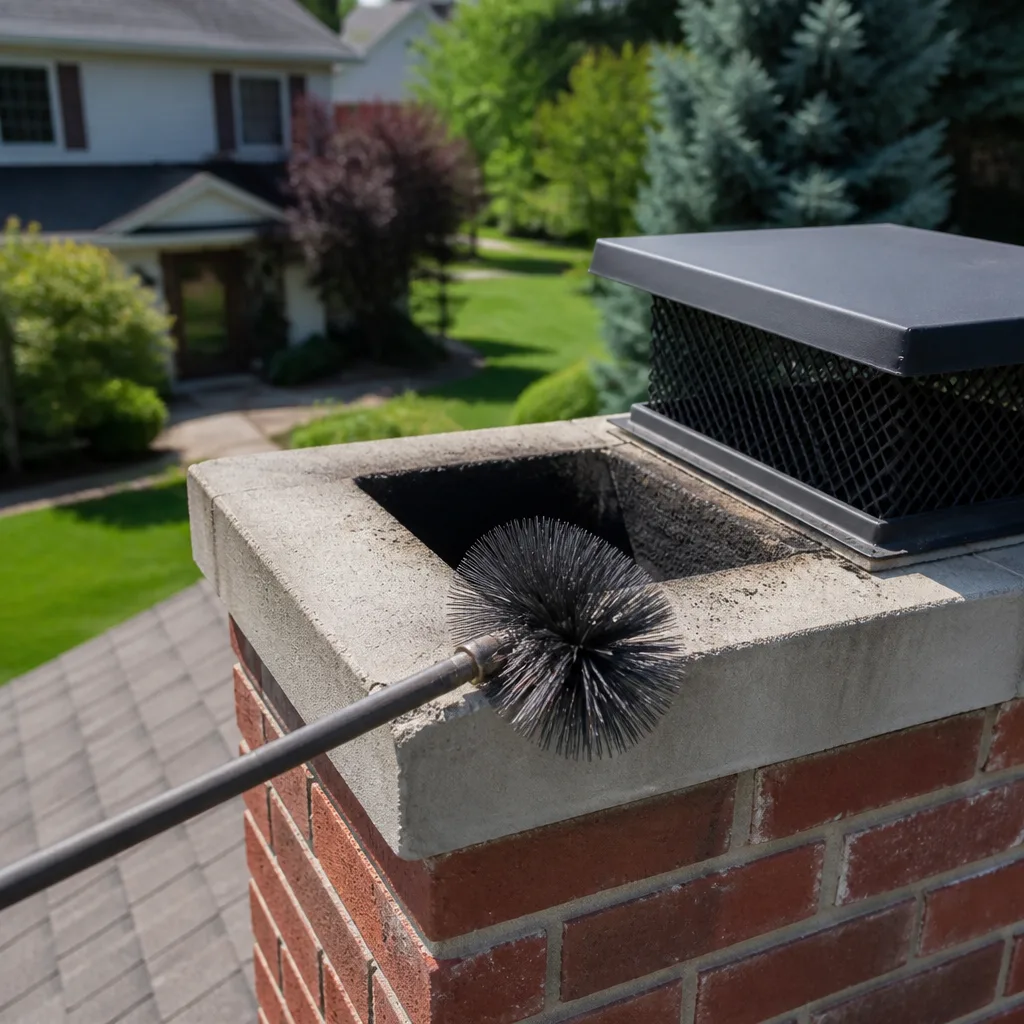
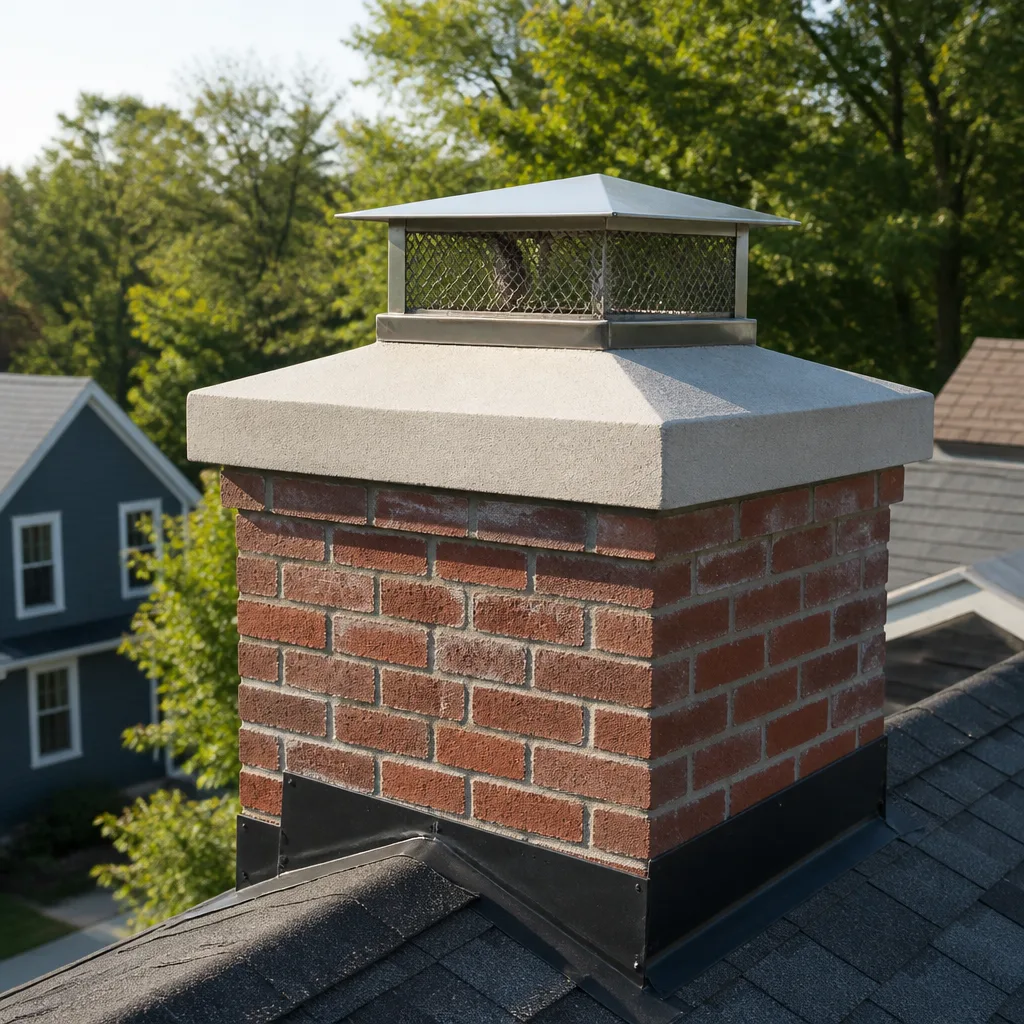
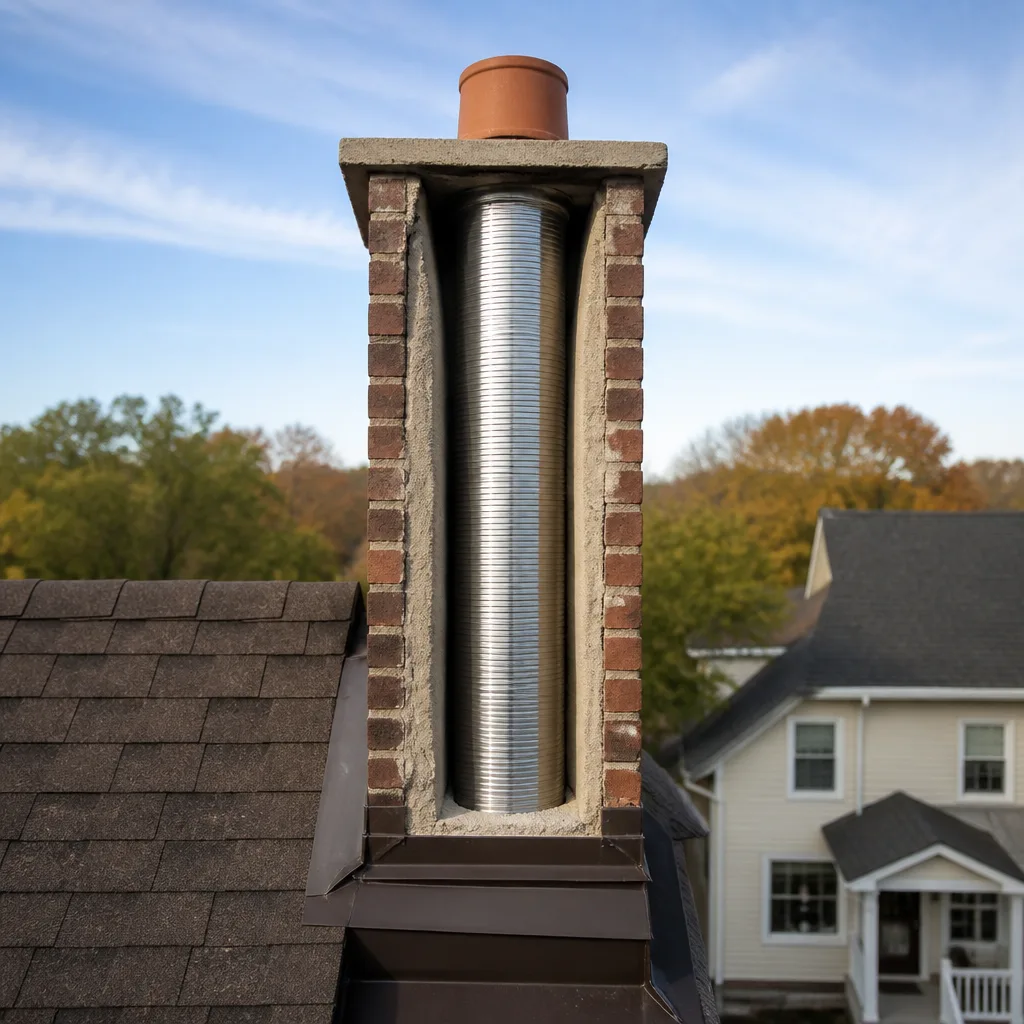
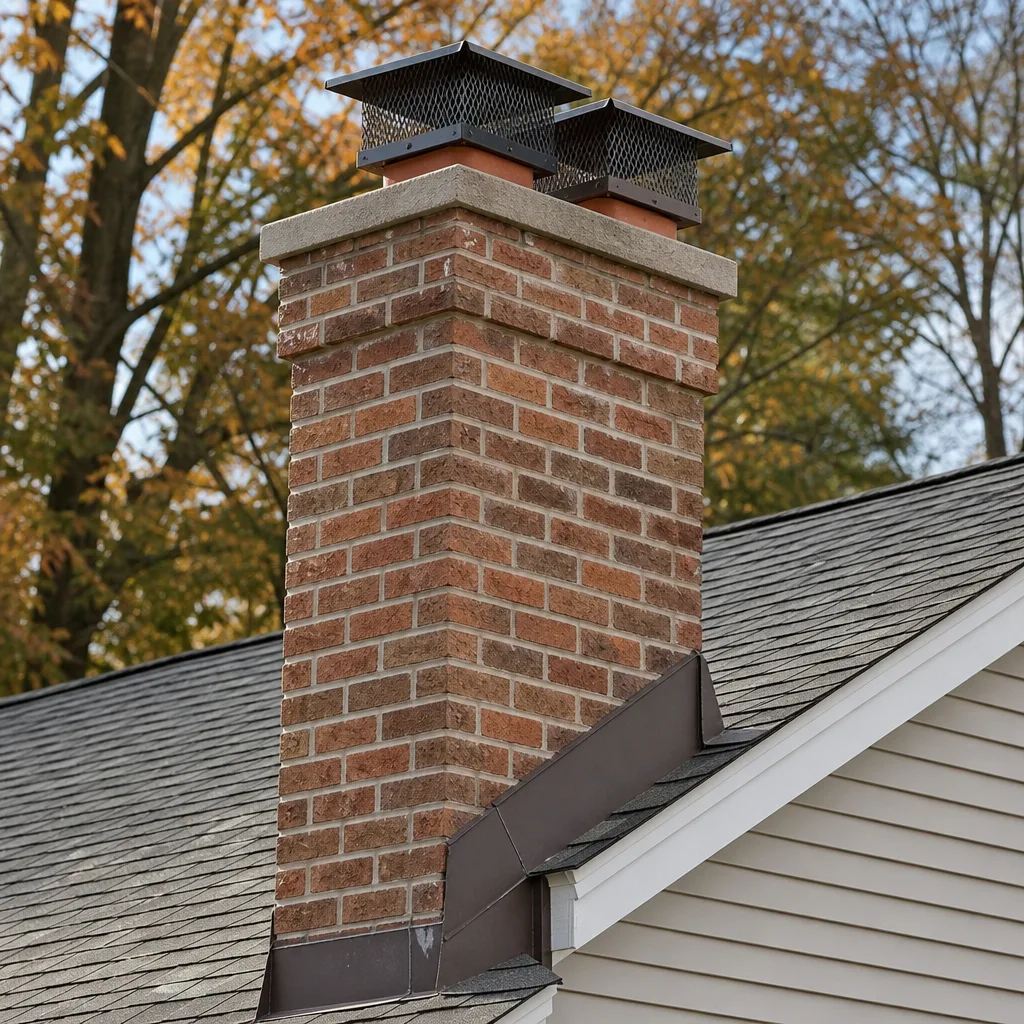
Level 1 sweep and inspection to the NFPA 211 annual standard - flue, crown, cap, and flashing checked and photographed
Chimney sweep logs do not sweep chimneys. They loosen some creosote - which then falls where a brush and vacuum still have to collect it.
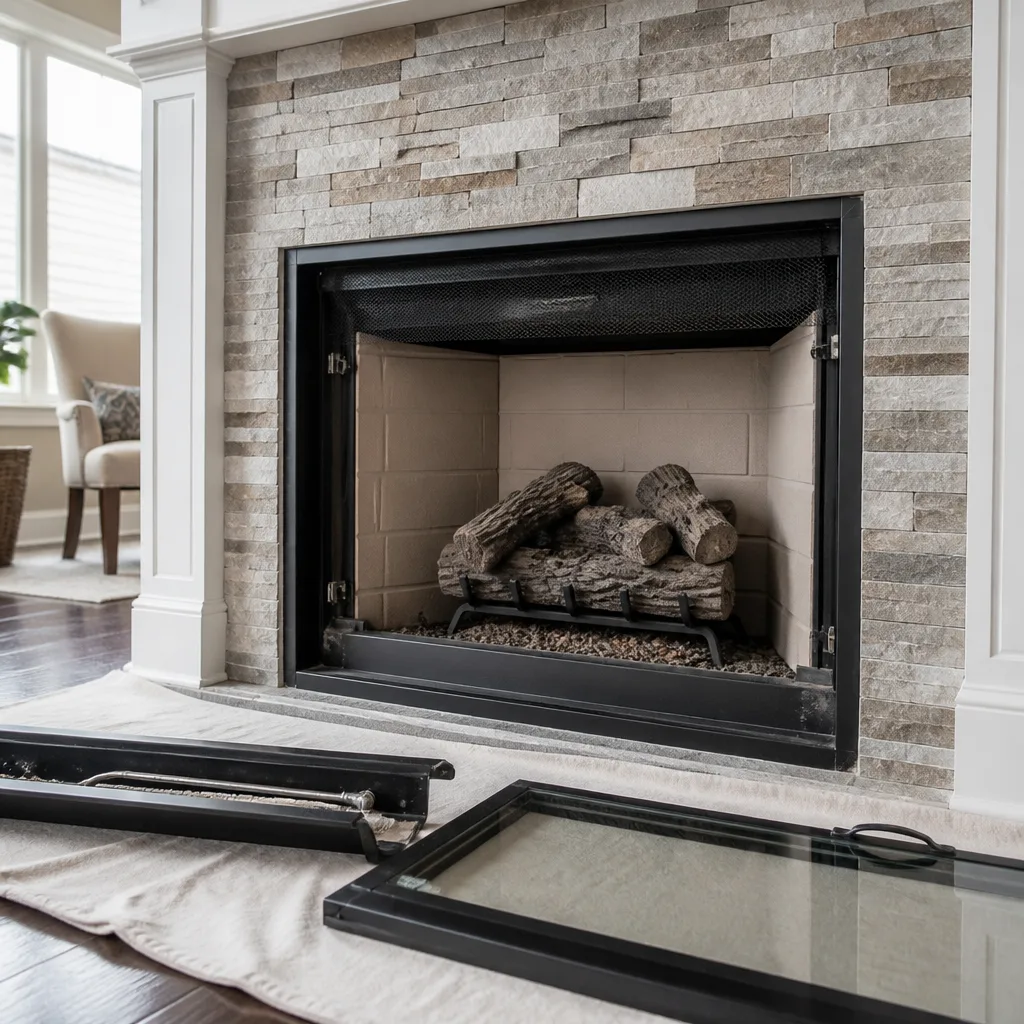
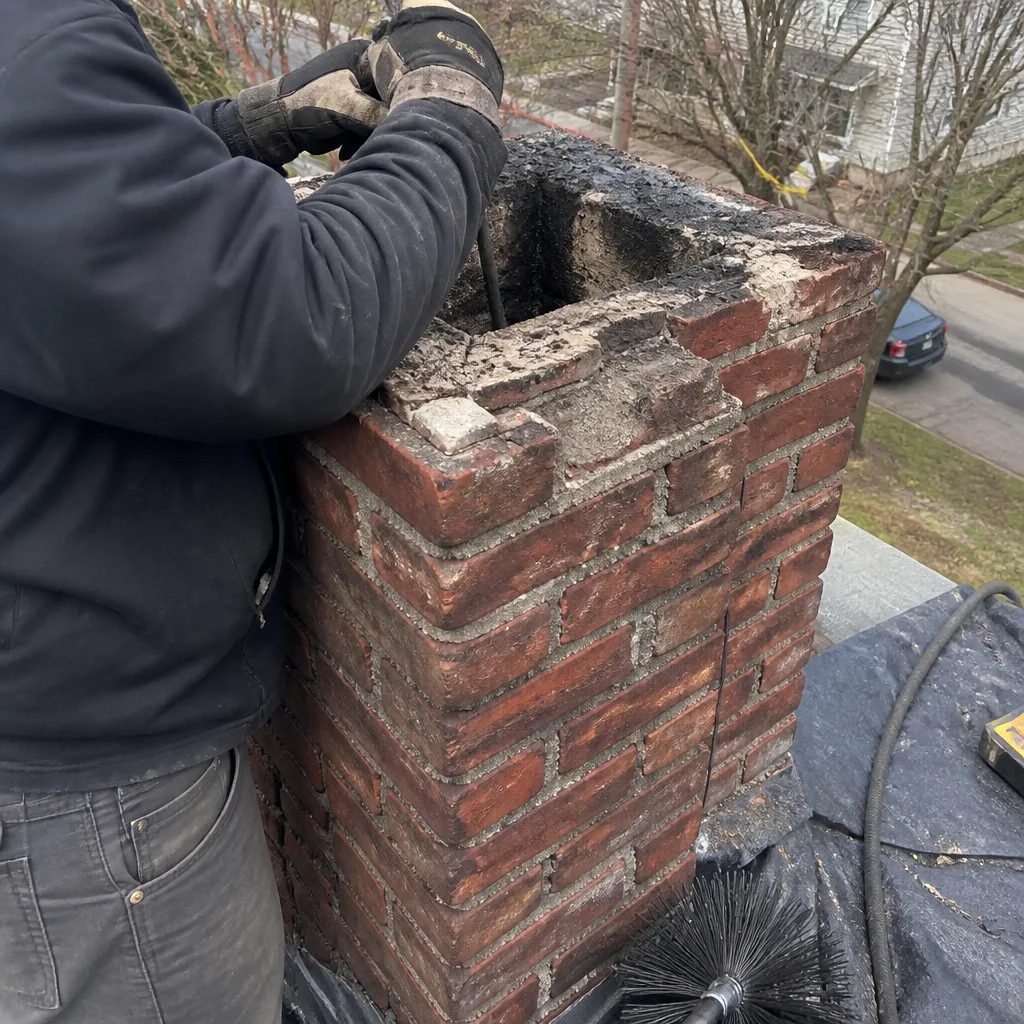 Before
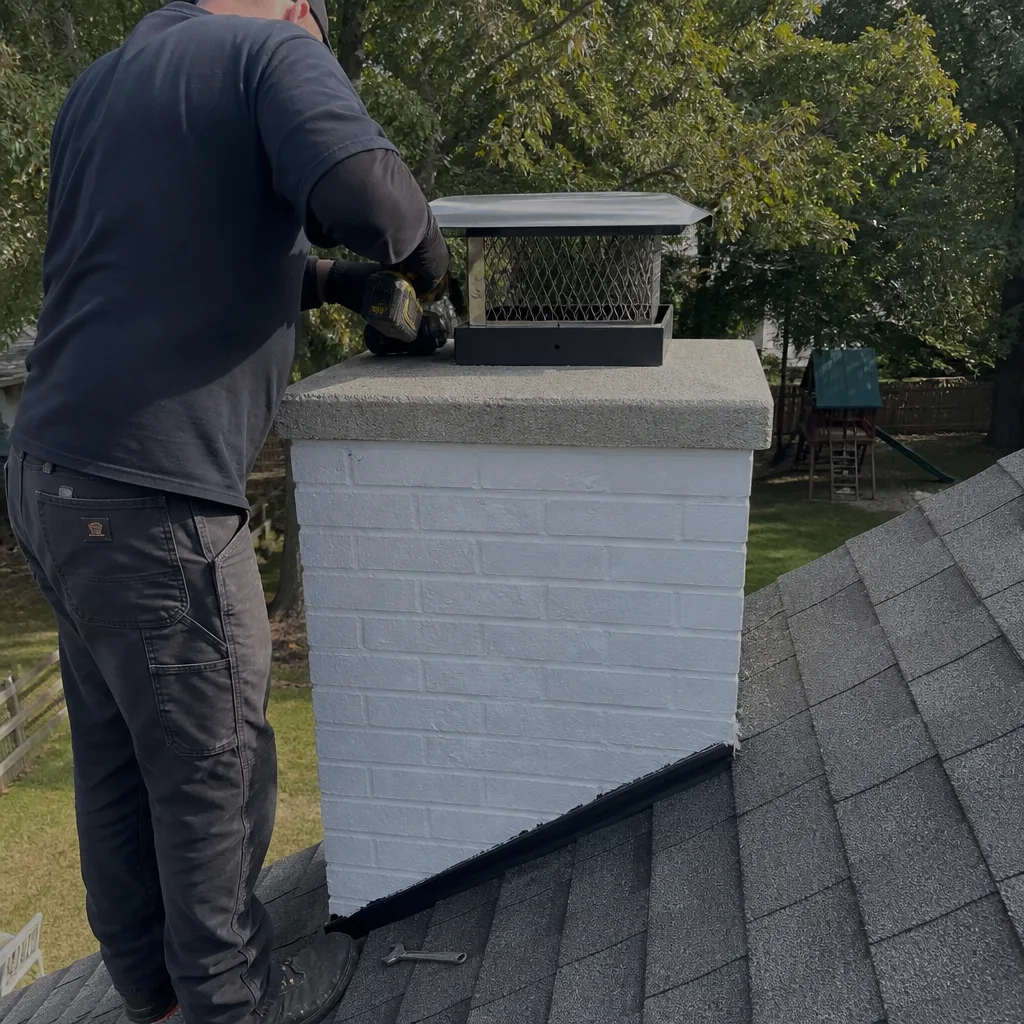 After
After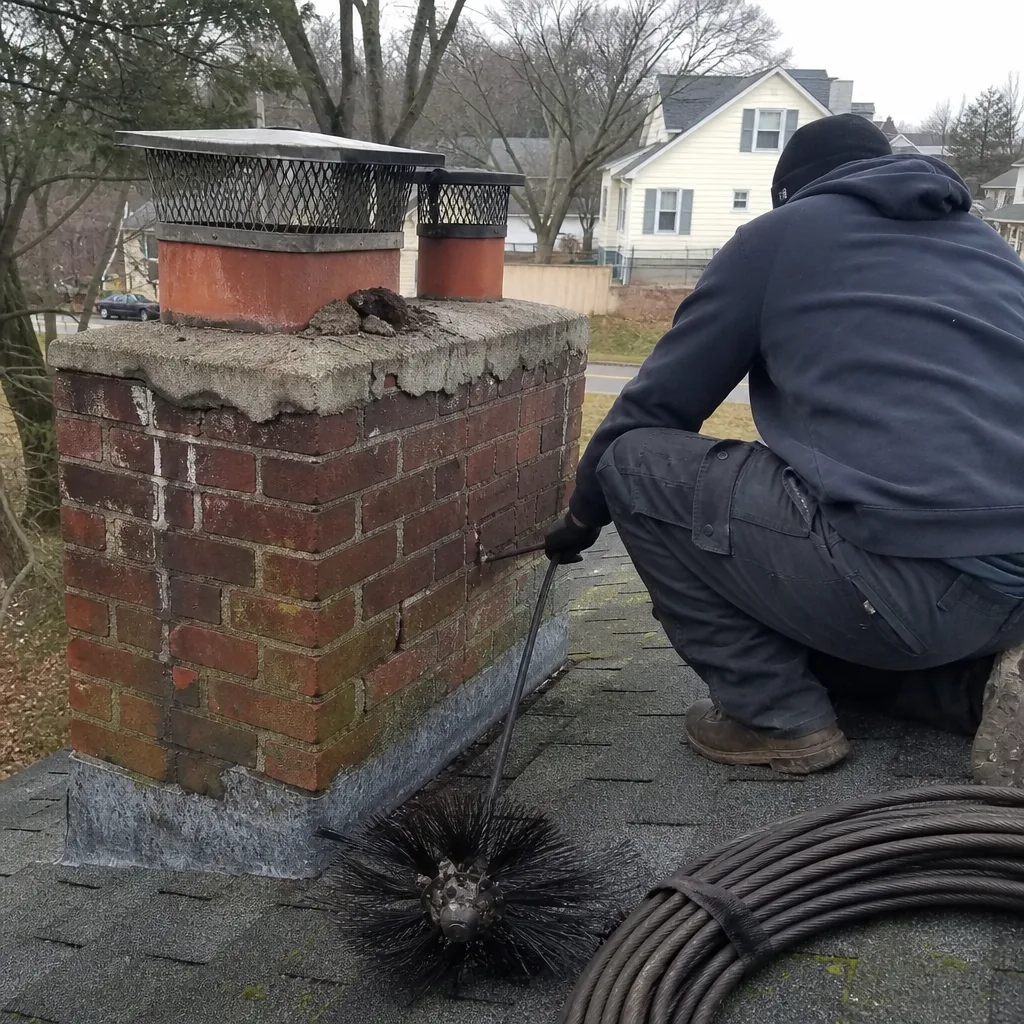 Before
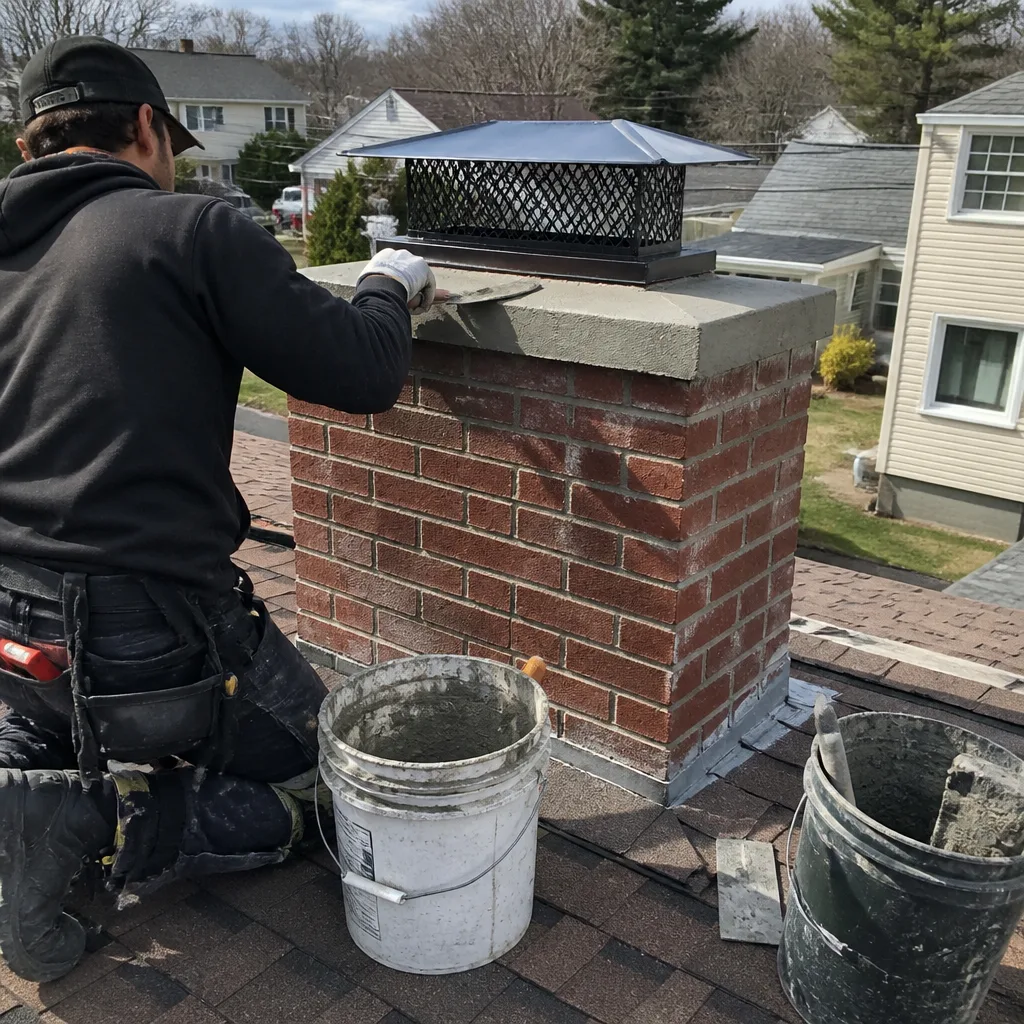 After
After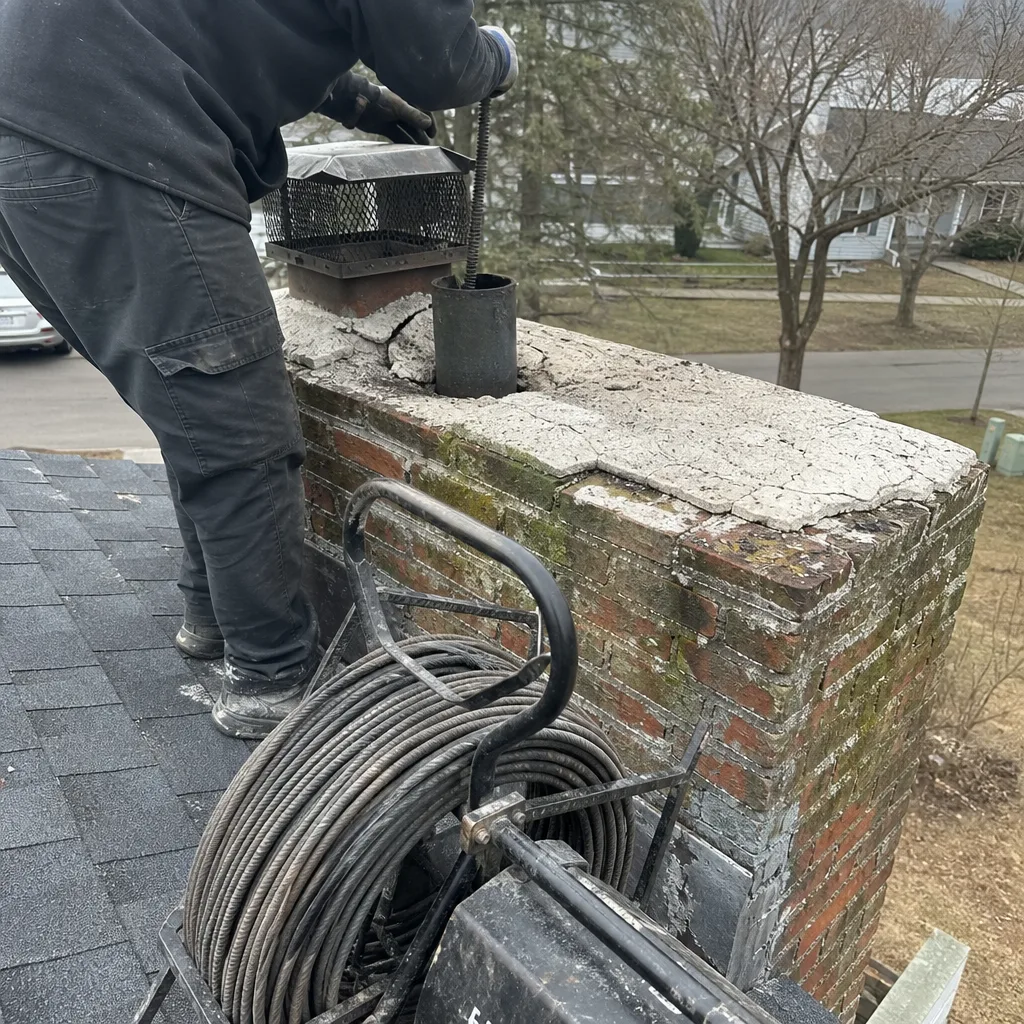 Before
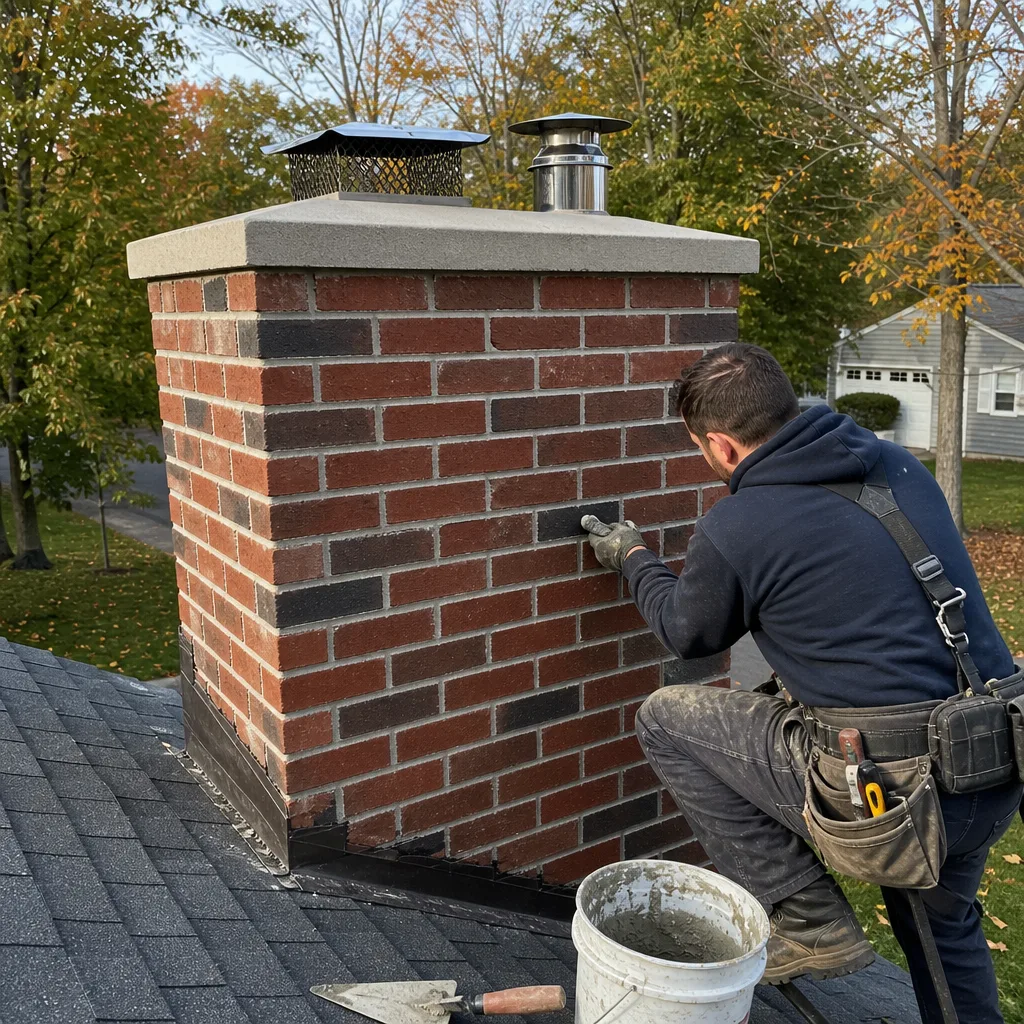 After
AfterHow to Hire a Chimney Cleaning Contractor in Chelmsford: A Step-by-Step Guide
In Massachusetts, anyone can call themselves a chimney sweep and start taking jobs tomorrow. There is no state license required, no apprenticeship mandate, no board to file a complaint with. That makes hiring a chimney cleaning contractor in Chelmsford more consequential than in states like New York or Connecticut, where the trade is regulated. Over 42 years, we’ve seen what happens when homeowners skip the vetting: cracked flues missed by untrained eyes, $3,000 liner jobs pushed on nervous families who never needed them, and soot-stained living rooms from crews who didn’t bother with drop cloths. This guide gives you the exact questions, credential checks, and red flags to separate a craftsman from a cheap-truck operation before anyone sets foot on your roof, and you can find more guides & resources on our blog.
Quick Answer
To hire a chimney cleaning contractor in Chelmsford, verify CSIA or NFI certification, request a current certificate of insurance showing both general liability and workers’ compensation, ask five specific process questions during your phone call, and demand a written guarantee with a clear time limit. Expect to pay $200-$350 for a proper Level-1 sweep with inspection in the Chelmsford market, and treat any quote under $150 as a warning sign.
Table of Contents
- Why Massachusetts Has No Licensing - and What That Means for You
- The Two Credentials That Actually Matter
- Insurance: What You’re Actually Protected Against
- Five Questions to Ask Before Anyone Visits
- Written Guarantee Language: What Protects You vs. What Doesn’t
- The Low-Bid Trap: How Bait-and-Switch Pricing Works
- What Happens During a Proper Chimney Cleaning Visit
- Common Mistakes to Avoid
- When to Call a Professional
- Frequently Asked Questions
Why Massachusetts Has No Licensing - and What That Means for You
Massachusetts licenses plumbers, electricians, and gasfitters. Chimney sweeps are not on that list. The state leaves the trade to local fire departments for code enforcement and to the free market for quality control. In Chelmsford, the Fire Prevention Bureau enforces the Massachusetts Fire Prevention Code, which requires chimneys to be “maintained in a safe condition,” but they do not inspect who does the work or how. For details on the regulatory landscape, see our guide to Chimney Cleaning Permits, Codes & Inspections in MA: What You Need to Know.
This matters because chimney work sits at the intersection of three genuine hazards: carbon monoxide, structural fire, and working at height. A sweep who doesn’t understand flue gas dynamics can leave a homeowner breathing poison. One who doesn’t know Chelmsford’s freeze-thaw cycle can miss crown damage that turns into a $4,000 rebuild. And anyone on your roof without proper insurance puts your homeowner’s policy at risk.
The absence of state licensing shifts the burden entirely to you. There is no state board to revoke a bad actor’s license, no bond to claim against, no mandatory continuing education. The good sweeps in Chelmsford hold themselves to national standards voluntarily. The bad ones count on you not knowing the difference.
We’ve been serving Chelmsford and surrounding towns since 1984. In that time, we’ve rebuilt work done by uncertified contractors in Westford, replaced liners installed backwards in Billerica, and cleaned up soot spills in North Chelmsford homes where the “sweep” didn’t own a vacuum. The pattern is consistent: the homeowner chose based on price or convenience, not on verified competence.
Your first line of defense is understanding what credentials actually mean something in an unregulated market.
The Two Credentials That Actually Matter
In a field with no state license, national certification is the only reliable quality signal. Two organizations set the standard: the Chimney Safety Institute of America (CSIA) and the National Fireplace Institute (NFI). They are not interchangeable, and a contractor who flashes one without the other may be covering gaps in their training.
CSIA Certified Chimney Sweep
The CSIA certification is the older and broader credential, established in 1983. To earn it, a sweep must pass a comprehensive exam covering chimney physics, wood-burning science, inspection protocols, and NFPA 211 standards. The certification requires recertification every three years, which means a current CSIA sweep has demonstrated recent knowledge, not just past training.
What CSIA covers: inspection techniques (Level 1, 2, and 3), creosote identification and removal, clearance requirements, and venting principles. What it does not cover: detailed factory-built fireplace service, gas appliance venting, or pellet stove installation. A CSIA sweep is trained to recognize when a job exceeds their scope and to refer it to a specialist.
How to verify: Ask for the sweep’s CSIA ID number. Then check it yourself at csia.org using their online verification tool. Do not accept a certificate photocopy at face value. We’ve encountered contractors in the Chelmsford area who let certifications lapse or who display a colleague’s credentials as their own.
NFI Certification
The National Fireplace Institute offers more specialized credentials: NFI Woodburning, NFI Gas, and NFI Pellet. These are installation and service certifications, focused on specific appliance types rather than chimney systems broadly. An NFI-certified gas specialist understands direct-vent and B-vent configurations, gas pressure testing, and manufacturer-specific requirements.
For most Chelmsford homeowners with traditional masonry fireplaces, CSIA is the credential you want. If you have a gas insert, pellet stove, or factory-built fireplace, NFI certification in that fuel type becomes relevant. The ideal contractor holds both, or has both credentials represented on their team.
Red flag: A contractor who says “I’m certified” without specifying by whom. Red flag: A contractor who claims certification but won’t provide an ID number. Red flag: Certification from an organization you’ve never heard of that isn’t CSIA or NFI. The chimney trade has spawned multiple “certification mills” that require little more than a fee and an open-book quiz.
At Hearthstone Chimney Co., our technicians hold current CSIA certification, and we maintain NFI credentials for gas and pellet work. We’ve invested in this training because in an unregulated state, it’s the only way to give homeowners a verified standard to judge us by.
Insurance: What You’re Actually Protected Against
Insurance is where many homeowners stop asking questions too soon. They hear “yes, we’re insured” and move on. In chimney work, that is a costly mistake. There are two distinct policies that matter, and a contractor who carries only one leaves you exposed.
General Liability Insurance
General liability covers damage to your property. If a sweep cracks your roof tile, scratches your hardwood, or spills soot through your living room, this policy pays for repairs. The minimum you should accept is $1 million per occurrence, though many reputable contractors carry $2 million.
But general liability does not cover the sweep if they are injured on your property. That gap is filled by workers’ compensation.
Workers’ Compensation Insurance
Workers’ comp covers medical expenses and lost wages if a technician is injured on your job. In Massachusetts, workers’ compensation is mandatory for businesses with employees, but many one-truck operators skirt it by classifying workers as independent contractors or by simply going without.
Here’s why this matters to you: If an uninsured worker falls from your roof and breaks their back, their attorney will look for someone to pay. That someone can be you, the homeowner, under premises liability theories. Your homeowner’s insurance may or may not cover it. We’ve seen $100,000 claims land on homeowners who hired uninsured contractors to save $50 on a sweep.
How to Verify Insurance
Do not accept a verbal assurance. Do not accept a photocopy that could be outdated or forged. Request a certificate of insurance (COI) issued directly by the contractor’s insurance broker, with your name and address listed as the certificate holder. This costs the contractor nothing and takes 24 hours to produce.
On the COI, confirm:
- General liability coverage amount and expiration date
- Workers’ compensation coverage listed (not waived or excluded)
- Your name appears as certificate holder
- The policy is current, not expired
A contractor who hesitates or pushes back on this request has something to hide. A professional expects it. We’ve provided certificates of insurance to every Chelmsford homeowner who has asked for 42 years, and we keep current COIs ready for immediate email delivery.
Five Questions to Ask Before Anyone Visits
The phone call is your first vetting opportunity. A legitimate operation has clear processes. A fly-by-night operation reveals itself in vague answers, impatience, or deflection. Ask these five questions and listen for specificity.
1. “What do you use to protect my hearth and floors during the sweep?”
A professional has a system: drop cloths, corner guards, a HEPA vacuum for soot control, and shoe covers or booties. The answer should be immediate and detailed. “We lay down tarps” is insufficient. “We use heavy canvas runners from the door to the hearth, corner guards on the mantel, a sealed HEPA vacuum, and our techs wear booties” indicates real process.
In Chelmsford’s older homes, many built in the 1960s and 1970s, hearths are often brick or stone that stains easily. A sweep who doesn’t protect surfaces properly can cause damage that outlasts any savings on the job price.
2. “Will I receive a written report with photos of what you found?”
Documentation separates craftsmen from hacks. A proper inspection produces images you can see and a plain-English verdict you can understand. If a contractor says “I’ll tell you if there’s a problem” or offers only a verbal summary, you have no record, no way to verify, and no leverage if something is missed.
At Hearthstone, our chimney cleaning and sweep service in Chelmsford includes Level-2 camera inspection with photos when indicated, documented like an engineer and explained like a craftsman. You see what we see. No surprises, no trust-me assertions.
3. “What does your guarantee cover, and for how long?”
Listen for specificity. “We stand behind our work” is not a guarantee. “90-day written guarantee on all workmanship, if it’s not right we come back, no paperwork required” is. The time limit matters: a 30-day guarantee expires before you’ve burned through a cord of wood. A one-year guarantee on a sweep is unusual and may indicate the contractor doesn’t expect you to remember to call.
Ask what triggers the guarantee. Does it cover only the sweep itself, or also damage caused by improper technique? Does it require you to prove the contractor was at fault, or is the burden on them to make it right?
4. “Are your technicians employees or subcontractors?”
Employees mean training consistency, background checks, and workers’ compensation coverage. Subcontractors mean variable quality, possible insurance gaps, and no direct accountability. Many low-price operators in the Chelmsford area are referral networks that dispatch whoever is available, with no quality control beyond a star rating.
Follow-up: “Are they background-checked and uniformed?” A professional operation has invested in these basics. A one-truck operator may bristle at the question.
5. “What is your total price, and what could change it?”
The word “starting at” is a warning. The phrase “we’ll see when we get there” is a trap. A legitimate contractor can give you a firm price for a defined scope: Level-1 sweep and inspection, $X. Additional work requires additional authorization, not automatic upselling.
Ask specifically: “If you find creosote buildup beyond standard cleaning, what does that cost?” “If you recommend a camera inspection, is that included or extra?” “If my flue needs a new liner, do you provide that quote in writing before starting work?”
Our approach at Hearthstone is no-hassle upfront pricing. The number on the estimate is the number on the invoice. If we find something unexpected, we stop, explain, show you the photo evidence, and get your authorization before proceeding. Nothing is done without your clear okay.
Written Guarantee Language: What Protects You vs. What Doesn’t
Guarantees in the chimney trade range from meaningful to meaningless. The difference is in the language, and most homeowners never read past the headline promise. Here’s how to evaluate what you’re actually being offered.
Boilerplate That Protects No One
These phrases appear on many contractor websites and mean little:
- “Satisfaction guaranteed” - No time limit, no definition of satisfaction, no remedy specified. Unenforceable.
- “Licensed and insured” - In Massachusetts, there is no chimney sweep license. This is either misleading or refers to a business license, which offers you no protection.
- “Quality workmanship” - Subjective, unmeasured, unverifiable.
- “We stand behind our work” - Stand behind it how? For how long? At what cost to you?
Meaningful Guarantee Language
A guarantee that actually protects you includes:
- A specific time period (90 days, one year, etc.)
- A clear trigger (workmanship defect, material failure, performance issue)
- A defined remedy (return to repair, refund, or credit)
- No homeowner paperwork burden (“call us, we’ll handle it”)
- Written form, not verbal
Our 90-Day Done Right Promise is structured this way: if any aspect of our work is not right, we make it right. Period. No forms to fill out, no receipts to find, no arguing about whose fault it is. We return, we fix it, we stand behind it. It’s governed by our K.E.Y.S. values code: Krafted right, Every time, Your home first, Standing behind it. We’ve honored this promise for 42 years, and we put it in writing on every invoice.
Chelmsford homeowners should be particularly wary of guarantees that expire before the burning season ends. A sweep done in September with a 30-day guarantee leaves you uncovered by January, when problems from poor technique typically surface.
The Low-Bid Trap: How Bait-and-Switch Pricing Works
The chimney trade has a particular vulnerability to deceptive pricing, because most homeowners cannot evaluate the work performed. You can’t see inside your flue without specialized equipment. You don’t know if creosote was fully removed or just disturbed. You have to trust what you’re told, and bad actors exploit that trust.
The “$49 Sweep” and Its Variants
You’ve seen the ads: “Chimney sweep starting at $49,” “$99 special,” “half-price inspection.” In the Chelmsford market, a proper Level-1 chimney sweep with inspection costs between $200 and $350. The math on a $49 sweep doesn’t work unless corners are cut or the price is a fiction.
Here’s how the trap unfolds:
- The low price gets the appointment. The technician arrives, often in an unmarked vehicle, sometimes without proper equipment.
- Within minutes, the “inspection” finds critical problems: cracked flue, dangerous creosote, blocked liner. The technician shows you a blurry photo or simply describes the hazard with urgency.
- The recommended repairs run $2,000-$5,000. The original $49 sweep is now a foot in the door for a high-pressure sales pitch.
- If you decline, you may receive a cursory sweep or none at all, and a “certificate” that your insurance company may not recognize.
We’ve cleaned up after these operations in Chelmsford neighborhoods from East Chelmsford to South Chelmsford. The homeowner who called us for a second opinion often found the “critical” problem was minor or nonexistent, and the “required” repair was unnecessary.
How to Compare Apples-to-Apples Quotes
When evaluating multiple quotes, demand that each contractor specify:
- Exactly what is included (sweep, inspection level, photo documentation)
- What equipment will be used (rotary brushes, HEPA vacuum, camera)
- What is excluded and at what cost (Level-2 inspection, creosote removal beyond standard, repairs)
- Whether the technician is certified and by whom
- Whether the price is firm or an estimate subject to change
A legitimate contractor welcomes this comparison. A bait-and-switch operation depends on you not making it. Our chimney repair services in Chelmsford are quoted only after inspection and documentation, never invented on the spot to close a sale.
The $89 Seasonal Tune-Up we offer is a defined-scope service: full Level-1 sweep, visual inspection, and written condition report. The price is the price. If we find conditions requiring additional work, we document them, explain them, and quote them separately for your authorization. No surprises on the bill.
What Happens During a Proper Chimney Cleaning Visit
Understanding proper procedure helps you evaluate what you’re paying for and spot shortcuts. A complete visit follows a consistent sequence, whether in a 1970s colonial in Chelmsford or a historic home near the town center.
Pre-Work Protection
The technician arrives in a marked vehicle, in uniform, with photo identification. They lay protective coverings from the entry door to the work area, shield the hearth, and set up a sealed HEPA vacuum system. In our experience, the time spent on protection correlates with care throughout the job.
The Sweep Process
Using specialized brushes sized to your flue diameter, the technician mechanically removes creosote and soot deposits. Rotary systems with flexible rods navigate flue bends more effectively than hand brushes. The vacuum runs continuously to capture airborne particles. For masonry flues, this takes 45-90 minutes for a typical fireplace.
Inspection and Documentation
After cleaning, the technician inspects the accessible portions of the system: firebox, damper, smoke chamber, flue liner, and exterior crown and cap. In Chelmsford, we pay particular attention to crown condition, because our freeze-thaw winters crack mortar caps and allow water infiltration that destroys liners from the outside.
If conditions warrant, a Level-2 inspection uses a video camera to examine the full flue length. You should see the footage and receive still images with annotations. Any recommendation for repair should reference specific code requirements, not vague safety warnings.
Written Report and Verdict
You receive a documented assessment: what was found, what it means, what your options are, and what the timeline is. “Monitor” is a legitimate recommendation. Not everything requires immediate action, and a contractor who recommends urgency for every finding is selling, not advising.
Our fireplace services in Chelmsford include this full documentation protocol. Photos you can see, a plain-English verdict. Done right, and we stand behind it.
Common Mistakes to Avoid
- Hiring based on a single online review without checking certification. A five-star rating on a generic platform tells you nothing about technical competence. Verify CSIA or NFI certification independently before booking.
- Accepting a verbal quote that “might change.” In Chelmsford’s competitive market, vague pricing often precedes aggressive upselling. Get the scope and price in writing, with conditions for any change.
- Skipping the insurance verification. Massachusetts homeowners have been held liable for uninsured worker injuries. The certificate of insurance takes one day to obtain. There is no valid reason for a contractor to refuse.
- Assuming a “chimney sweep” license exists in Massachusetts. It doesn’t. Anyone can claim the title. The credentials that matter are national: CSIA and NFI.
- Ignoring the written guarantee details. “Satisfaction guaranteed” without time limit or remedy is marketing language, not a promise. Read the actual terms.
- Booking the lowest price without comparing scope. The $49 sweep that finds $3,000 in “required” repairs costs more than the $250 sweep that finds nothing wrong.
- Neglecting to ask about protection protocols. Soot damage to carpets and furniture from an careless sweep can cost more than the service itself. A professional has a system.
When to Call a Professional
Call a certified chimney professional if you notice any of these conditions: visible creosote buildup thicker than 1/8 inch, smoke entering your living space, a strong odor from the fireplace when not in use, white staining (efflorescence) on exterior brick, pieces of tile or masonry in the firebox, or if it has been more than one year since your last professional inspection. In Chelmsford, where many homes date to the 1960s and 1970s, original clay tile liners may be nearing the end of their service life and require careful evaluation.
Do not attempt to clean your own flue if you have a steep roof, a gas appliance, or any suspected structural damage. Carbon monoxide and chimney fires are real hazards, not theoretical risks. A trained professional with proper equipment and insurance is the only safe choice.
Hearthstone Chimney Co. offers free estimates in Chelmsford. Call (978) 991-9492 to speak with a live person, any hour of any day. We’ll schedule a visit, perform a documented inspection, and give you a plain-English verdict with photos you can see. No pressure, no surprises, just the thing done correctly.
Frequently Asked Questions
A proper Level-1 chimney sweep with inspection in Chelmsford typically costs $200 to $350, depending on accessibility, flue condition, and whether photo documentation is included. Quotes below $150 usually indicate incomplete service, bait-and-switch tactics, or uncertified labor. Call (978) 991-9492 for an exact quote - estimates are free.
Not always. A new liner is necessary if your existing clay tile liner is cracked, shifted, or missing sections; if you are converting fuel types; or if your appliance requires a specific venting diameter that your current flue cannot provide. We recommend nothing without camera evidence you can see yourself, and we will plainly tell you when work can safely wait. Our chimney repair team in Chelmsford uses professional-grade materials from Olympia Chimney and Copperfield when replacement is genuinely needed.
The National Fire Protection Association recommends annual inspection, with cleaning as needed based on creosote accumulation. For Chelmsford homeowners who burn wood regularly, that typically means one sweep per burning season. Occasional users may stretch to every two years if inspection shows minimal buildup. Gas and pellet appliances also require annual service, though the nature of cleaning differs.
Skipped maintenance leads to creosote accumulation, which is the fuel for chimney fires. It also allows minor damage to progress: a cracked crown admits water, which freezes and expands, destroying the liner; a blocked flue vents carbon monoxide into living spaces; a damaged damper wastes heat and raises energy bills. In Chelmsford’s climate, water infiltration is particularly destructive because our temperature swings accelerate freeze-thaw damage. The cost of prevention is always less than the cost of repair.
CSIA certification is a national credential for chimney sweeps, requiring passage of a comprehensive exam and recertification every three years. It matters in Massachusetts because the state has no licensing requirement for chimney sweeps, so CSIA is the only verified standard of training. Always verify a sweep’s CSIA ID number at csia.org rather than taking their word for it.
Request a certificate of insurance issued directly by the contractor’s insurance broker, with your name as certificate holder. Confirm both general liability and workers’ compensation coverage are current. In Massachusetts, workers’ comp is mandatory for businesses with employees, but many small operators go without. If an uninsured worker is injured on your property, you may face liability. Call (978) 991-9492 - we’ll provide our certificate without delay.
Level-1 is a visual inspection of accessible portions, appropriate for annual maintenance with no changes to the system. Level-2 includes video camera examination of the full flue interior, required for real estate transactions, after chimney fires, or when changing appliance type. Level-3 involves demolition of building components to access concealed areas, reserved for serious hazards where other methods are insufficient. Most Chelmsford homeowners need Level-1 annually and Level-2 when buying or selling, or when a problem is suspected.
The Bottom Line
Hiring a chimney cleaning contractor in Chelmsford requires more diligence than in regulated states, but the vetting process is straightforward. Verify CSIA or NFI certification independently. Confirm both general liability and workers’ compensation insurance with a certificate of insurance. Ask five specific process questions during your phone call and judge the answers for specificity. Demand a written guarantee with clear time limits and remedies. Compare quotes on complete scope, not headline price. And treat any offer that seems too cheap as the warning it is.
The contractor you want answers the phone with a live person, arrives in uniform with marked vehicles, protects your home before touching your chimney, documents everything with photos you can see, and stands behind the work with a written promise. That is not too much to ask. In an unregulated trade, it is the minimum.
We’ve been doing this work in Chelmsford and surrounding communities for over 42 years. We’re not going anywhere. We’ll be there when we say. And we’ll do the thing right, or we’ll make it right. That’s a square deal, and it’s the only kind we offer.
Written by Russell Haines, Owner at Hearthstone Chimney Co., serving Chelmsford since 2014.