
Last updated September 10, 2026
Level 1 sweep and inspection to the NFPA 211 annual standard - flue, crown, cap, and flashing checked and photographed
Chimney sweep logs do not sweep chimneys. They loosen some creosote - which then falls where a brush and vacuum still have to collect it.
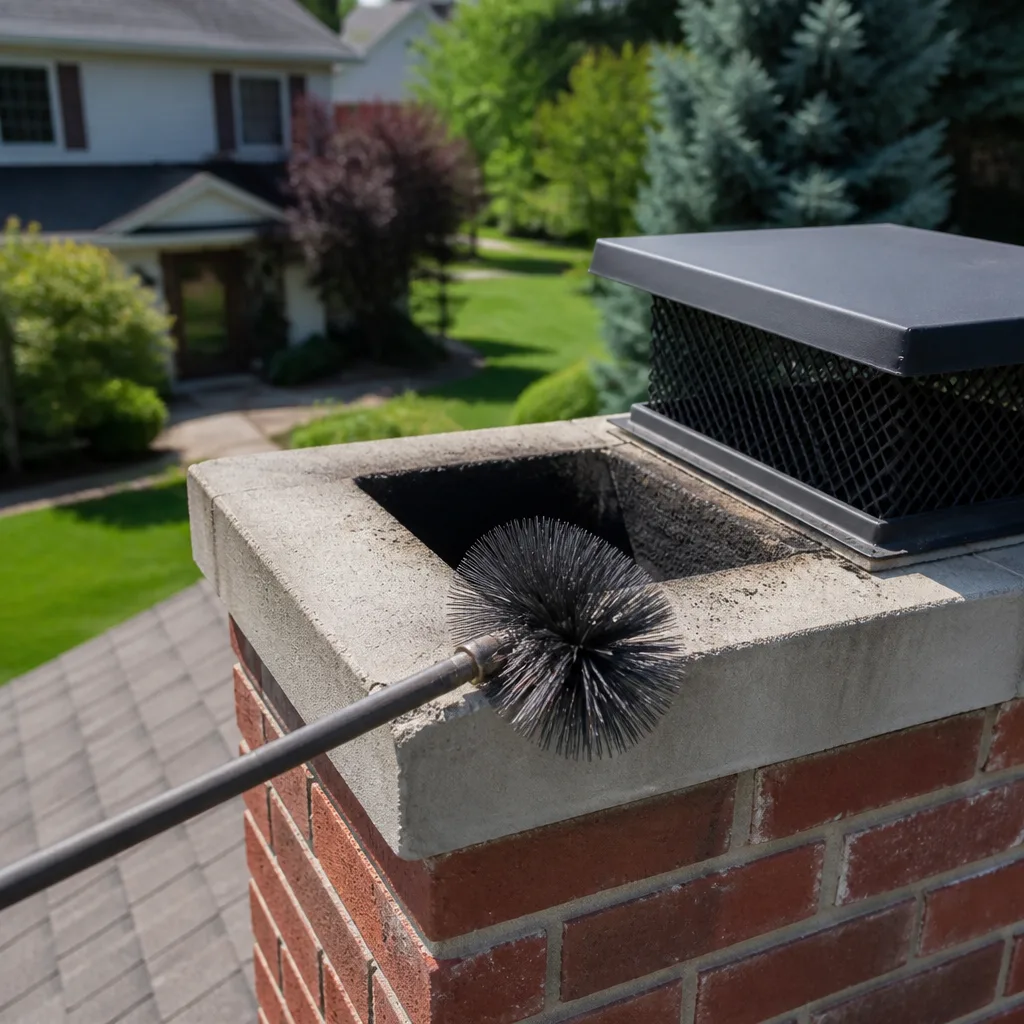
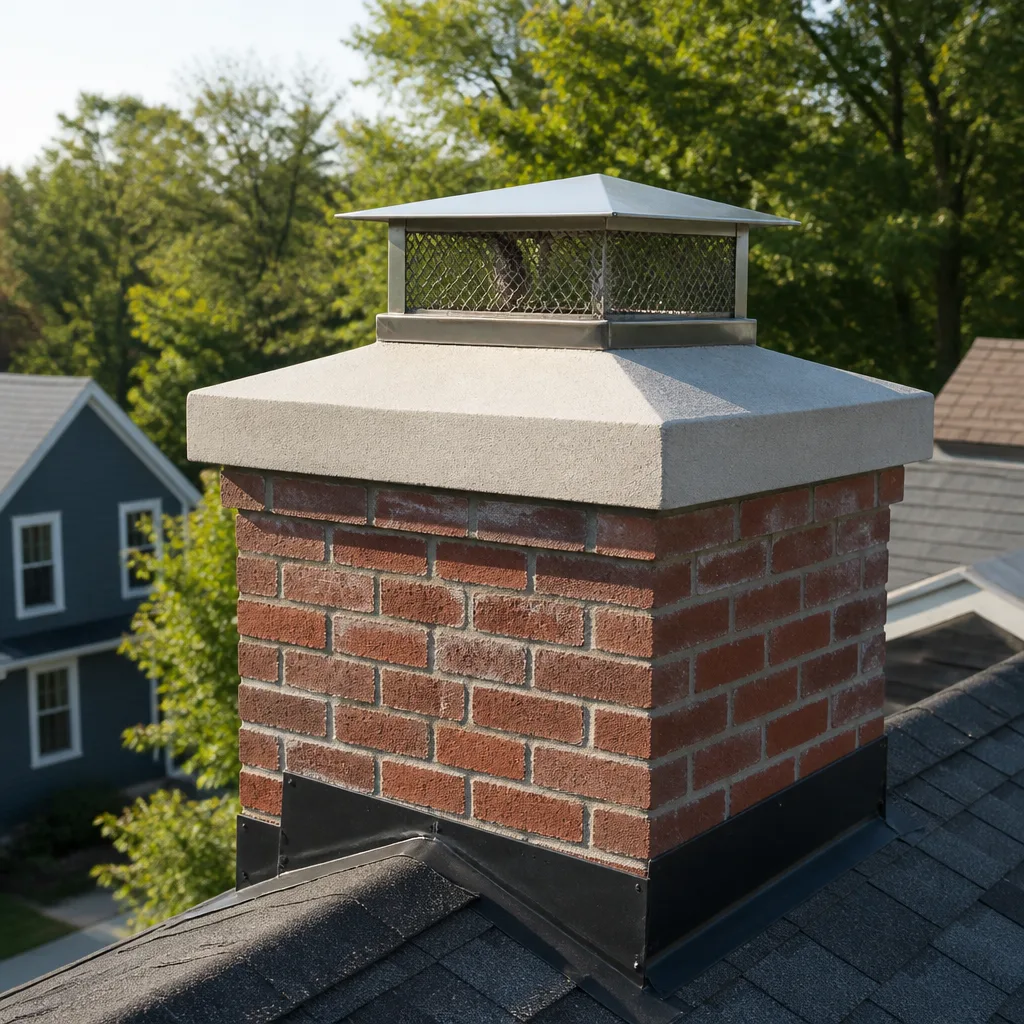
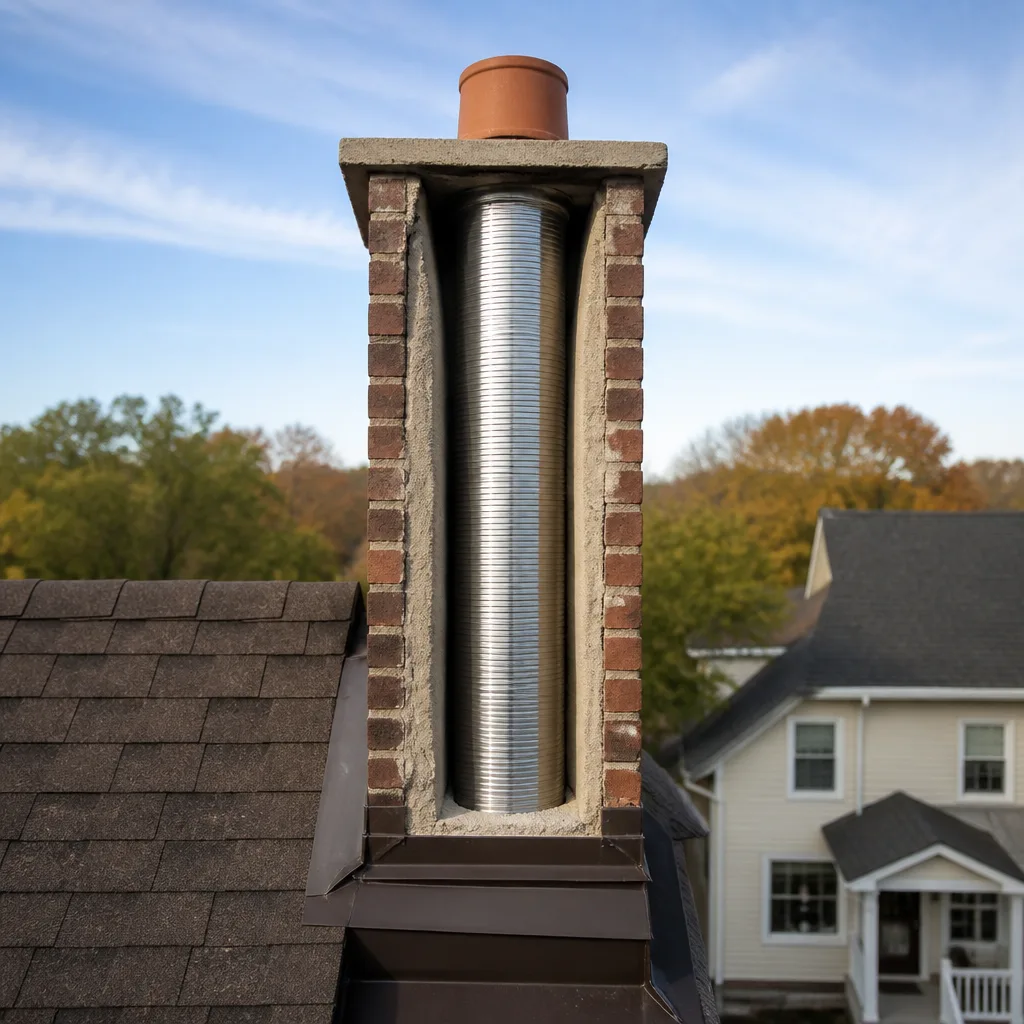
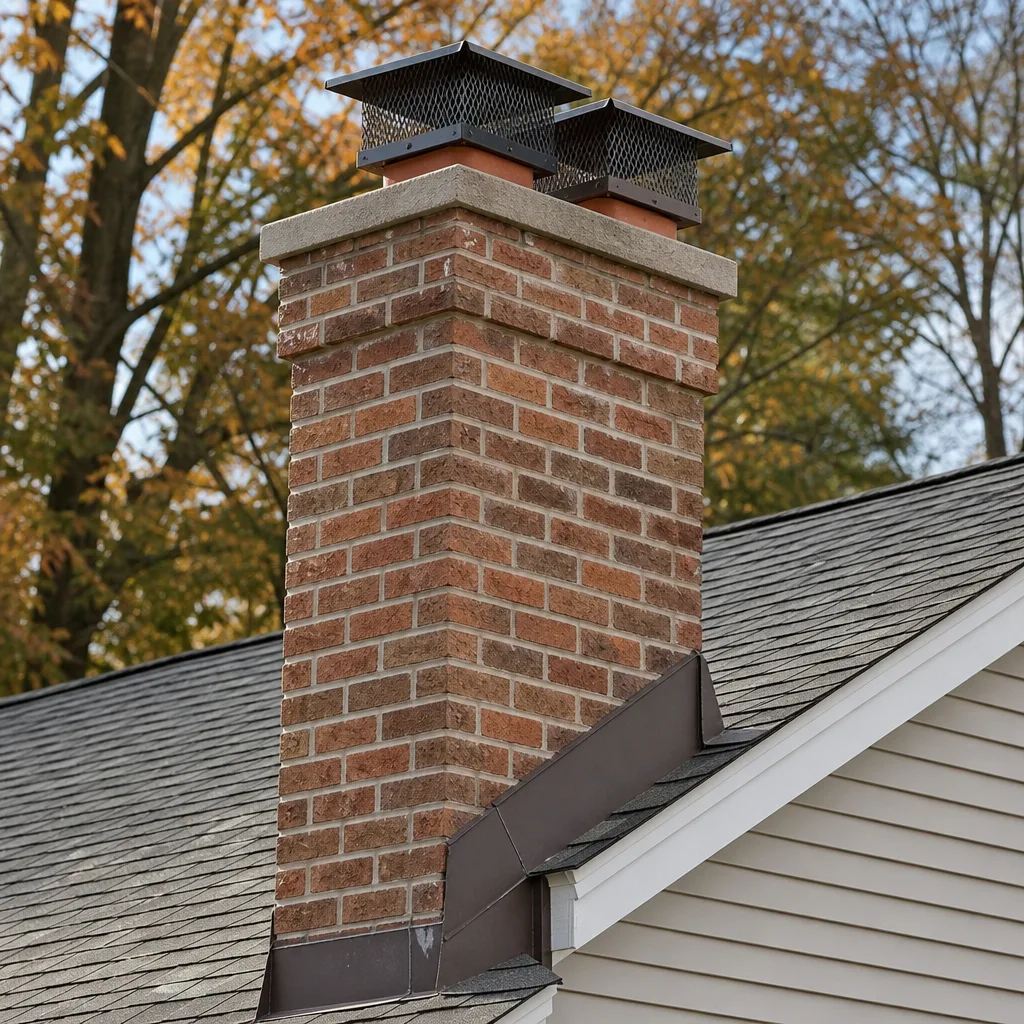
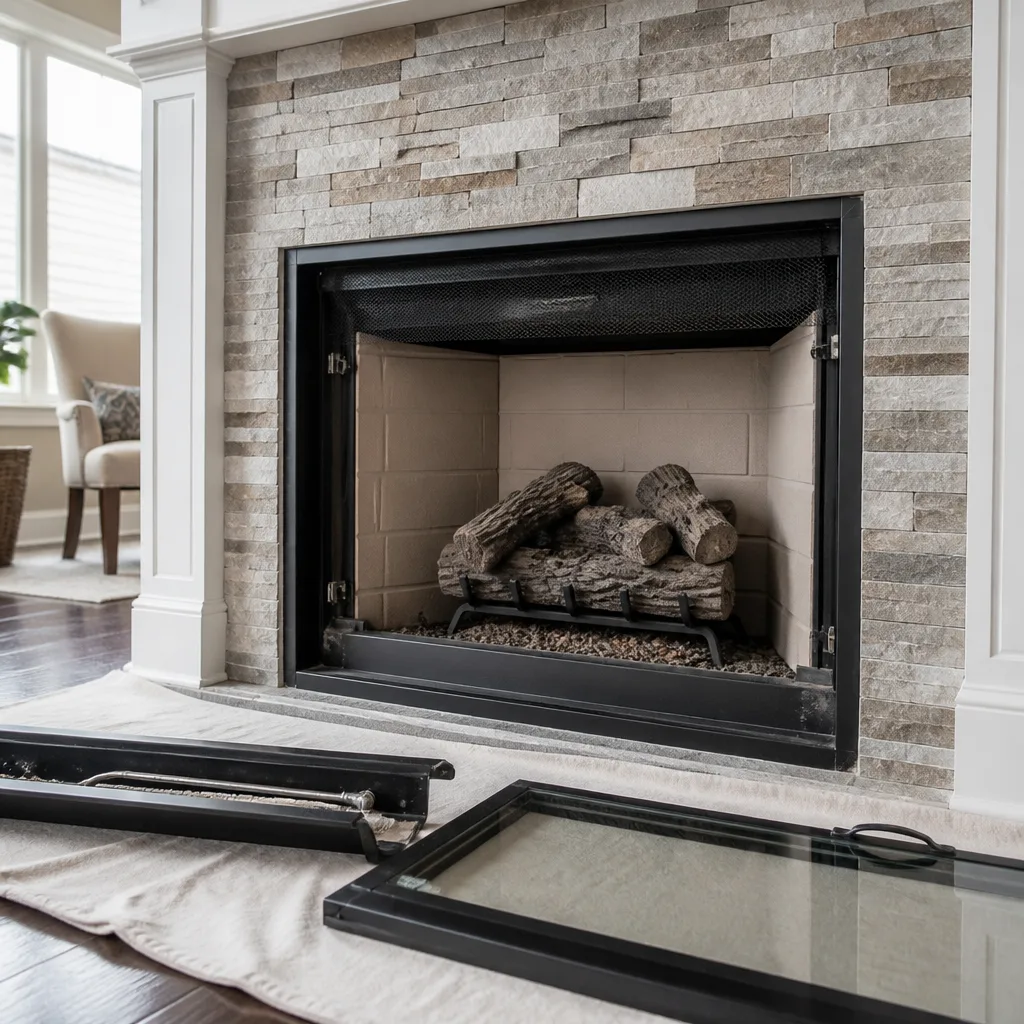
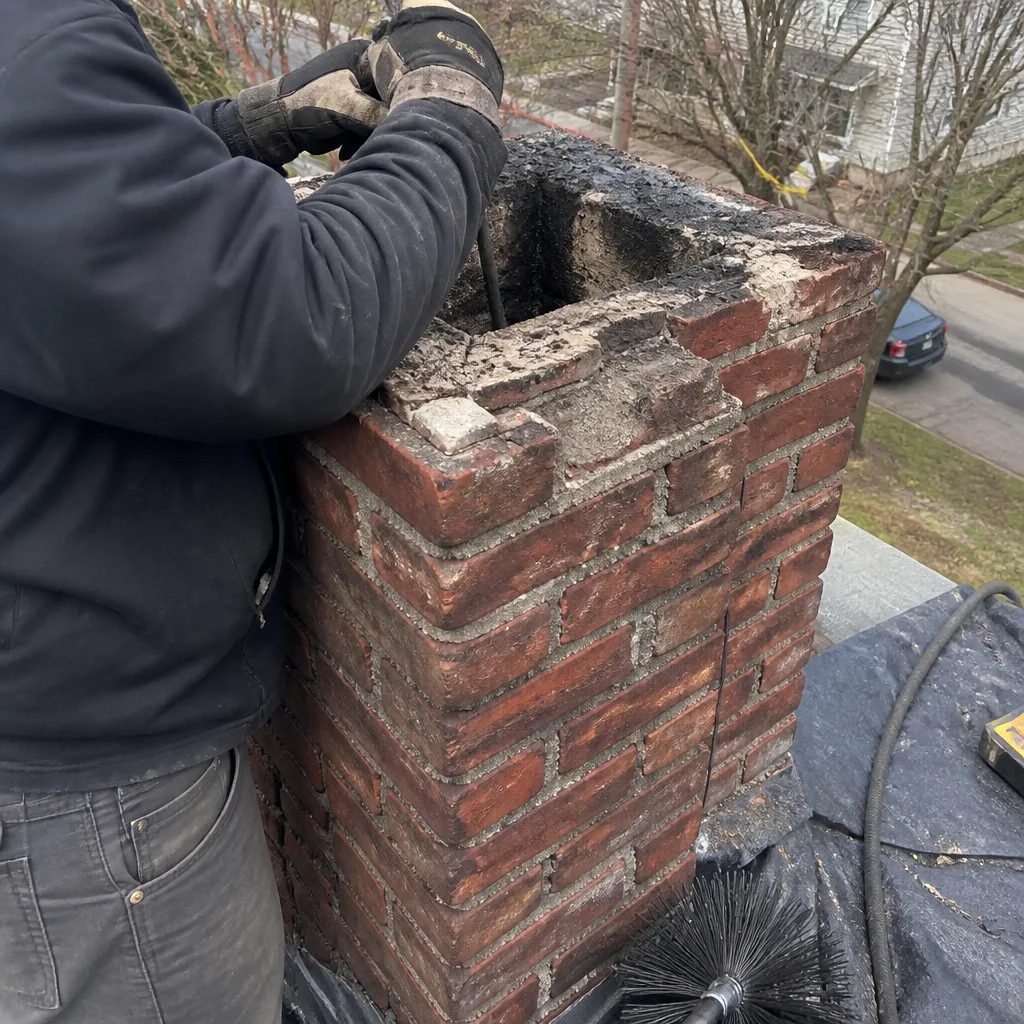 Before
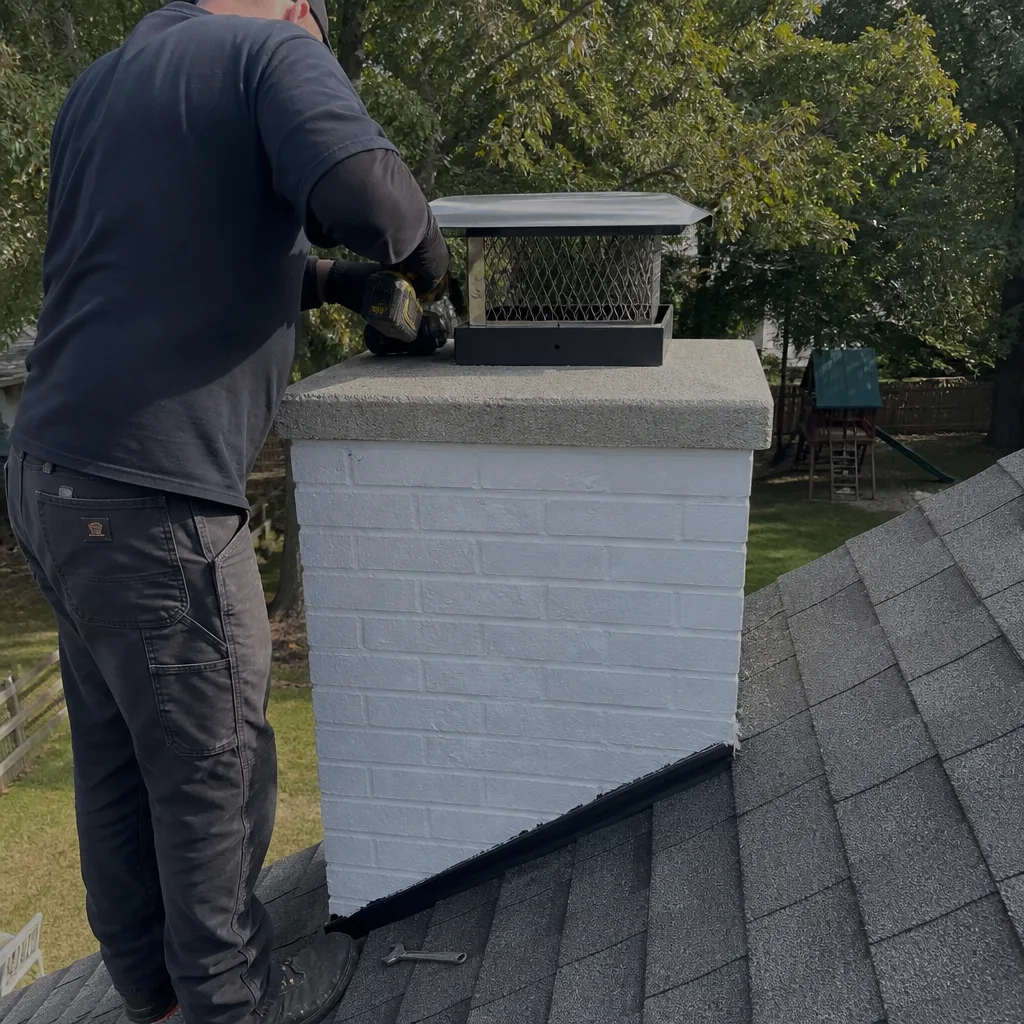 After
After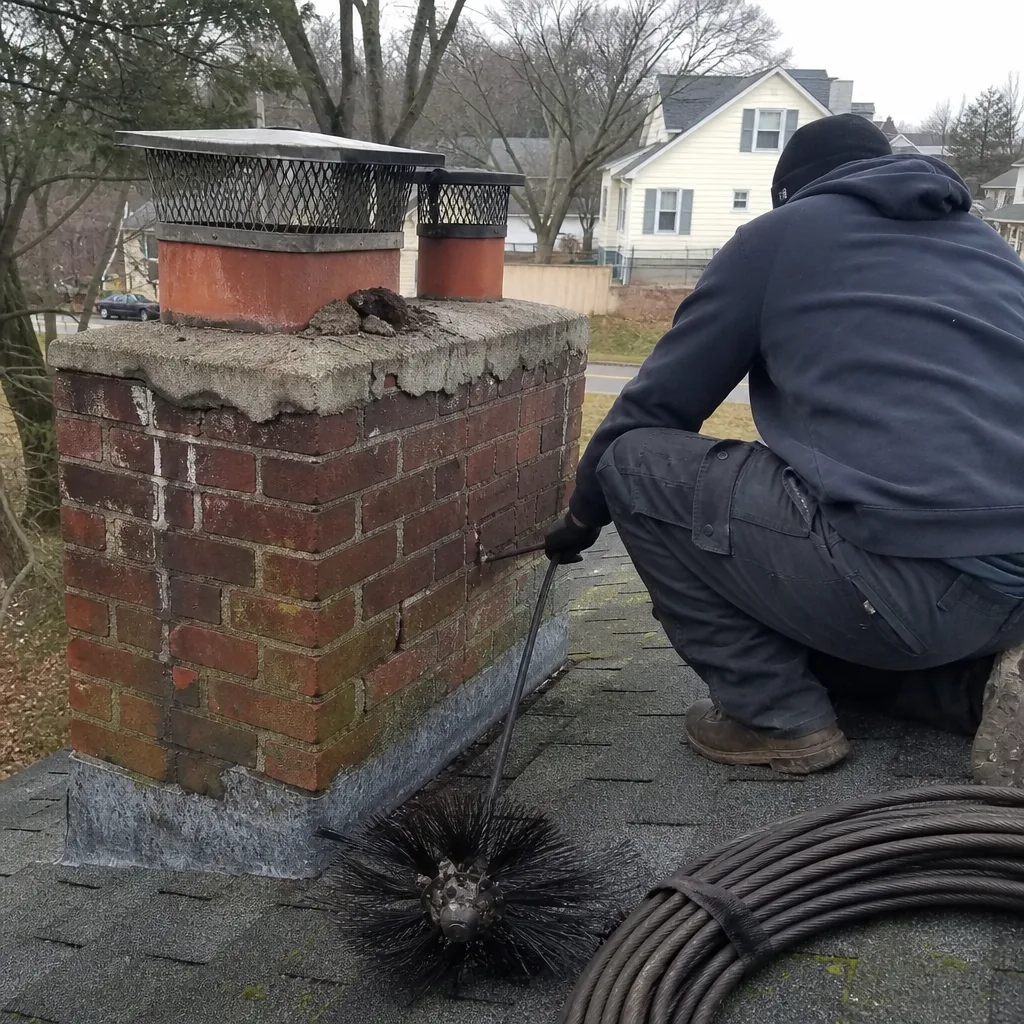 Before
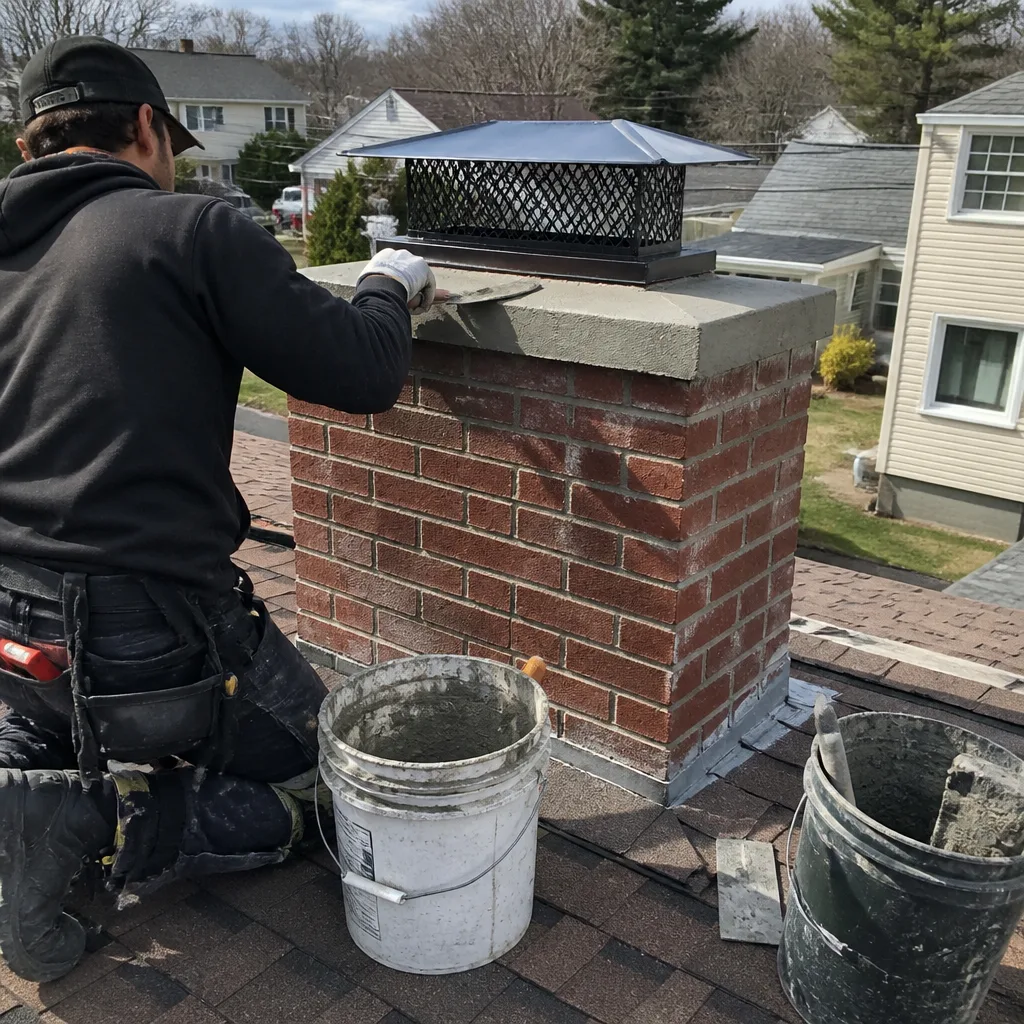 After
After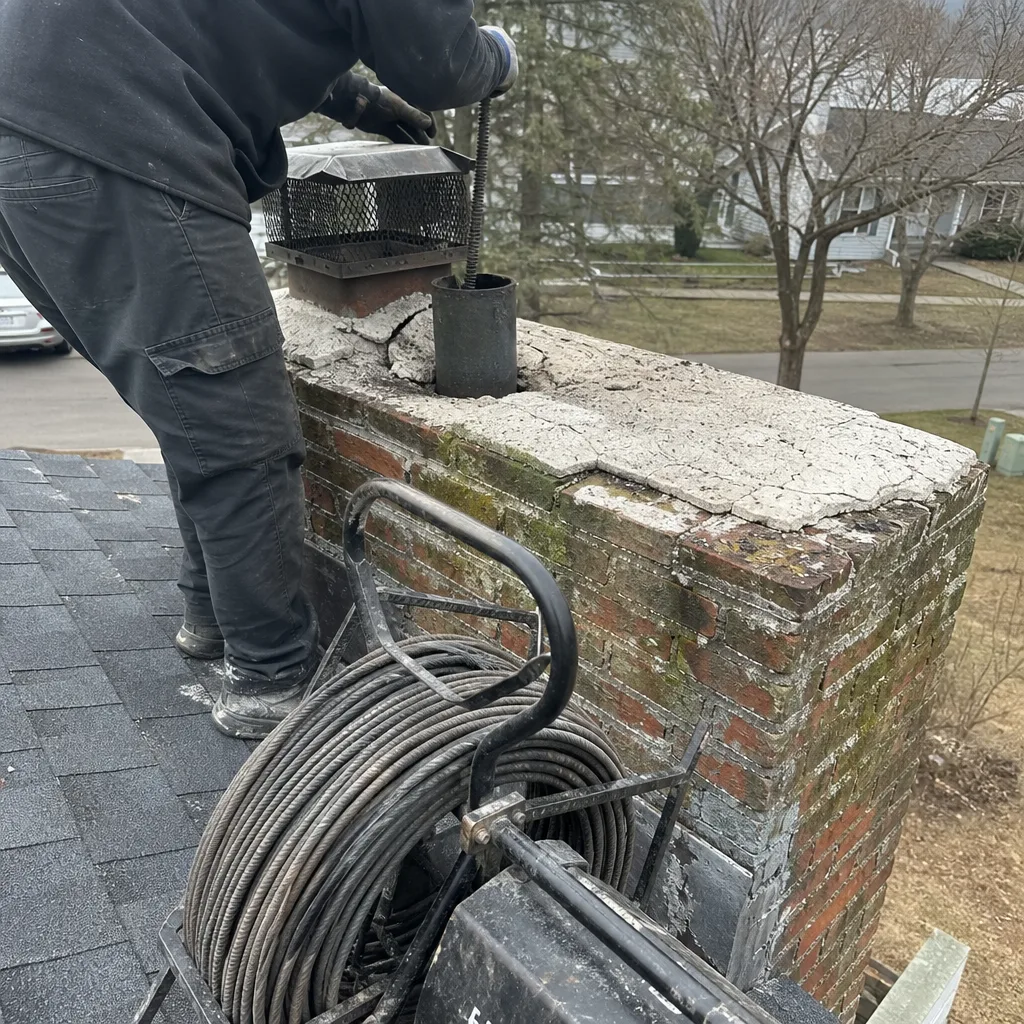 Before
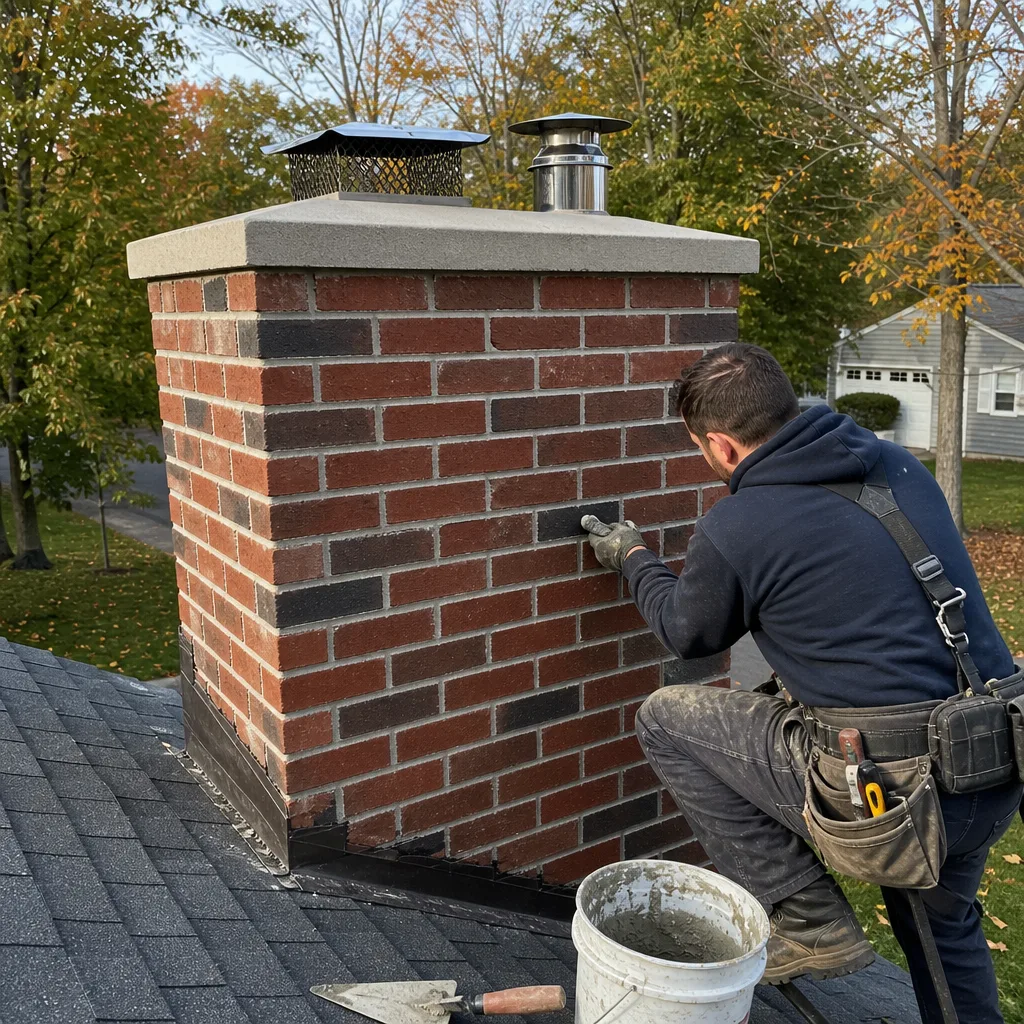 After
AfterSeasonal Chimney Cleaning Care for Chelmsford: Year-Round Homeowner’s Guide
Most Chelmsford homeowners book their chimney sweep in October, cross it off the list, and forget about it until next autumn. That single visit catches creosote buildup, but it misses winter freeze-thaw cracks that opened in February, the squirrel nest built in June, and the crown damage from summer UV that lets water seep in all September. In our 42 years serving Middlesex County, we’ve learned that chimneys here endure four distinct seasons of abuse, and a smart maintenance schedule spreads two shorter visits across the year rather than gambling everything on one October appointment. This guide shows you what to watch for each season, when to schedule professional work, and how to build a year-round plan that catches problems while they’re still small. For Chimney Cleaning & Sweep Maintenance Checklist for Chelmsford Homeowners, see our detailed checklist.
Quick Answer
Chelmsford homeowners should structure chimney care around two professional visits annually: an end-of-season inspection in April or May to assess winter damage, moisture intrusion, and draft behavior in warmer temperatures, plus a pre-season sweep and inspection in September to clear summer debris and verify safe operation before first fire. Between visits, monitor for smoke rollback, new odors, and visible exterior changes. This two-visit schedule costs roughly the same as reactive repairs but prevents the cracked crowns, liner gaps, and animal damage that lead to $2,000-$5,000 rebuilds in Greater Chelmsford’s freeze-thaw climate.
Table of Contents
- April-May: The End-of-Season Inspection That Most People Skip
- June-August: The Pest Window and Summer Moisture Cycle
- September: The Pre-Season Checklist Before First Fire
- Winter: What to Monitor Between Professional Visits
- How to Structure a Two-Visit Annual Service Schedule
- Why Chelmsford’s Climate Demands Seasonal Thinking
- Common Mistakes to Avoid
- When to Call a Professional
- Frequently Asked Questions
- The Bottom Line
April-May: The End-of-Season Inspection That Most People Skip
The phone at Hearthstone Chimney Co. home starts ringing hard in September. By contrast, April is quiet, and that’s the problem. Homeowners who wait until fall to think about their chimney spend the entire burning season with whatever damage winter inflicted, often without knowing it.
An April or May inspection in Chelmsford catches three categories of problems that a September visit cannot reliably identify:
Winter crack development. Our freeze-thaw cycles are brutal on masonry. Water enters hairline cracks in October, expands through 20-30 freeze cycles by March, and turns those cracks into pathways for gas and moisture. In April, those cracks are fresh and visible. By September, they’ve often been partially sealed by summer dust and debris, hiding the damage until water enters again and the cycle repeats. We’ve pulled apart crowns in Westford and Chelmsford neighborhoods where three years of this cycling turned a $400 crown seal into a $3,200 rebuild.
Ice damming residue. Chelmsford’s rooflines, especially the older Cape-style homes near the center and the split-levels in East Chelmsford, accumulate ice dams in hard winters. The meltwater carries salts and grit down the flue. Left through summer, this residue accelerates corrosion on metal components and stains masonry. A May cleaning removes it before the warm months set those compounds into the brick.
Draft problems visible only in warmer ambient temperatures. This is the one that surprises homeowners. A chimney that drafts fine in October, when outdoor air is cool and dense, may show reversed or sluggish draft in April when the temperature differential between flue gas and outside air is smaller. We test draft with our Chimney Cleaning & Sweep in Chelmsford equipment during both seasons, but April is when marginal problems become obvious. If your chimney struggles to draw in 60-degree weather, it will struggle worse on a mild October evening when you first light up.
What we do in April/May:
- Level-2 camera inspection of the full flue, documented with photos you receive
- Exterior crown, cap, and flashing assessment for winter damage
- Draft testing under warm-ambient conditions
- Removal of winter combustion residue and ice dam deposits
- Plain-English verdict on what can wait, what should be scheduled before fall, and what needs immediate attention
The inspection itself runs $200-$300. Compare that to discovering in November that your liner has a gap that requires an emergency rebuild at premium rates. See our Chimney Cleaning Cost Breakdown: The Chelmsford Homeowner’s Reference for 2026 for full pricing context.
June-August: The Pest Window and Summer Moisture Cycle
From Memorial Day to Labor Day, your chimney is either a vacant rental property or an occupied one. There’s no in-between, and in Chelmsford’s mix of established neighborhoods and wooded edges near Russell Mill Pond and the Merrimack River corridor, the wildlife pressure is constant.
Squirrels. Eastern gray squirrels in Middlesex County typically produce two litters: one in early spring, one in midsummer. A June inspection often finds juvenile squirrels or the fresh nests they leave behind. Signs: twigs and leaves packed above the damper, sometimes with acorn shells or stripped insulation from nearby wiring. Squirrels can enter through gaps as small as 1.5 inches. We find their damage on cap screens and deteriorated crown edges.
Raccoons. Heavier, more destructive. A raccoon nesting in a chimney pulls apart masonry, bends or removes cap hardware, and leaves strong scent marking. In Chelmsford’s older homes with larger, unlined flues, raccoons sometimes raise litters on the smoke shelf. The telltale sign: rhythmic scratching at dusk and dawn, plus visible greasy rub marks on the exterior brick where they climb.
Chimney Swifts. These small, cigar-shaped birds are protected under the Migratory Bird Treaty Act. They arrive in Massachusetts in late April, nest in chimneys through July, and cannot be legally disturbed once nesting begins. If you hear high-pitched chittering from your flue in June or July, that’s likely chimney swifts. We cannot remove active nests, and neither can anyone else without federal permits. The legal and ethical course: wait until the young fledge in late August, then install a proper cap with mesh small enough to prevent re-entry. We’ve had Chelmsford homeowners call us in July wanting immediate removal; we explain the law, document the active nest with photos, and schedule cap installation for September.
Summer moisture presents its own problems. Humidity enters the cool flue and condenses on masonry surfaces. Without regular fires to dry the system, this moisture feeds efflorescence (the white powder on brick faces) and accelerates spalling, where the freeze-damaged face of a brick flakes away. A July walk-around of your chimney exterior takes ten minutes. Look for:
- New white staining on brick below the crown
- Missing or shifted cap mesh
- Gaps between crown and flue tile
- Vegetation growing from mortar joints (roots hold moisture against masonry)
If you spot these, note them for your September professional visit. Don’t attempt crown repairs yourself in summer heat; the patching compounds we use, including HeatShield refractory materials, require specific temperature windows for proper cure.
September: The Pre-Season Checklist Before First Fire
This is the visit most homeowners know about, but the timing and scope matter more than many realize. In Chelmsford, first fires often happen on the first October evening that drops below 50 degrees. If you’re scheduling your sweep for October 1, you’re in a queue with everyone else, and you’re burning before the inspection happens.
We recommend completing your pre-season work by September 15. Here’s what belongs on that checklist:
- Full sweep and Level-2 inspection. Creosote removal, flue camera run, documentation of all interior surfaces. This is standard Chimney Cleaning & Sweep in Chelmsford work, but it should never be rushed.
- Cap and crown inspection after UV exposure. Summer sun degrades crown sealant and metal cap finishes. We check for cracks that opened in the heat, separation at the flue tile interface, and corrosion on hardware. Our crews carry Gelco and Olympia Chimney caps for common flue sizes; if yours is damaged, replacement happens same visit.
- Firebox and damper function check. The damper should open fully, seat cleanly, and show no warping. Firebox brick and mortar should be intact. In Chelmsford’s older homes, we’ve found dampers frozen shut by rust after humid summers, or firebox floors cracked by decades of thermal cycling.
- Exterior masonry assessment. Spalling, mortar loss, and leaning should be noted. Minor repointing can be scheduled before burning season; major rebuilds get planned for spring.
- Clearance verification. Furniture, curtains, and stored items migrate closer to hearths over summer. We measure and mark proper clearances; you move what needs moving.
The September visit is also when we review any findings from your April inspection and confirm that recommended repairs were completed. If you deferred crown sealing in May, we verify the condition hasn’t worsened. Deferred maintenance compounds; September is the accountability checkpoint.
For homeowners considering Fireplace Services in Chelmsford upgrades, September is the practical window. Gas insert installations, hearth modifications, and damper replacements need completion before heating demand rises. Our background-checked, uniformed technicians complete most jobs in a single visit, with no-hassle upfront pricing agreed before work begins.
Winter: What to Monitor Between Professional Visits
Once the flue is hot and the damper is open, your job shifts from prevention to observation. Professional visits in winter are typically reactive, and we want to keep them that way. Here’s what to watch for between your September sweep and your April inspection:
Draft behavior changes. A chimney that drew well in November but smokes back in January has changed. Possible causes: partial blockage from a displaced cap screen, ice formation at the flue top during prolonged cold, or negative pressure changes in your home (new exhaust fans, tighter windows, furnace room modifications). Note when the problem occurs: only on startup, only in high wind, only with certain doors closed. This detail speeds diagnosis.
Smoke rollback. If smoke enters the room, the fire goes out immediately. Don’t troubleshoot with the fire burning. Once safe, check: damper fully open? Window cracked for makeup air? If both check out and rollback recurs, call before next fire. Smoke rollback indicates a significant draft failure, possible blockage, or flue damage.
Odor shifts. A healthy chimney smells faintly of wood ash. New odors mean something changed:
- Sharp, acrid smell: often creosote buildup approaching ignition risk, or animal intrusion
- Damp, musty smell: water entry, possibly from ice dam backup or crown failure
- Metallic or chemical smell: possible liner failure or foreign material in flue; stop using immediately
Exterior ice formations. Icicles from the chimney top or ice staining on exterior brick indicate water intrusion and freeze-thaw damage in progress. Document with photos and schedule inspection.
Fireplace performance changes. Harder lighting, incomplete combustion (sooty glass on inserts), or reduced heat output all signal airflow or venting problems. Don’t compensate by burning hotter or using accelerants.
One winter habit that serves Chelmsford homeowners well: after every significant storm or temperature swing below 10 degrees, do a visual check from ground level. Binoculars help. You’re looking for new cracks, shifted caps, or ice formations that weren’t there before. Caught early, most winter damage is repairable before spring makes it worse.
How to Structure a Two-Visit Annual Service Schedule
The single October sweep is a holdover from an era when chimneys were simpler and homeowners burned wood as primary heat. Today’s systems, with inserts, liners, and complex venting, need more nuanced care. Here’s the schedule we recommend for Chelmsford homes:
| Visit | Timing | Primary Focus | Typical Cost Range |
|---|---|---|---|
| End-of-Season Inspection | April 15 - May 31 | Winter damage assessment, moisture intrusion check, warm-ambient draft testing, debris removal | $200-$300 |
| Pre-Season Sweep & Inspection | September 1 - September 20 | Full sweep, Level-2 camera inspection, cap/crown/flashings, damper and firebox, clearance verification | $250-$350 |
This spreads roughly $450-$650 across the year, often less than the deductible on a chimney fire insurance claim and far below the cost of emergency repairs in peak season. More importantly, it catches problems in the season when they’re caused, not months later when they’ve compounded.
For budgeting, many of our long-term Chelmsford customers pair this schedule with our $89 Seasonal Tune-Up offer for the September visit, using the April inspection as the variable-cost visit where we assess what, if anything, needs addressing. Others bundle both visits into annual service agreements that lock pricing and guarantee priority scheduling.
The key principle: never let twelve months pass between professional eyes on your system. In a four-season climate with freeze-thaw cycling, that’s too long.
Why Chelmsford’s Climate Demands Seasonal Thinking
Chelmsford sits at the intersection of several climate stressors that make year-round chimney care non-optional. Understanding these helps explain why the two-visit schedule matters.
Freeze-thaw frequency. Middlesex County averages 20-30 freeze-thaw cycles annually, with January and February seeing the most rapid temperature swings. Each cycle pumps water deeper into masonry. Chelmsford’s older housing stock, much of it built between 1950 and 1985, often has original crowns and caps that have endured 40+ years of this cycling without replacement.
Proximity to water bodies. The Merrimack River to the north and numerous ponds and wetlands create localized humidity patterns. Homes near Heart Pond or Freeman Lake experience higher ambient moisture, which accelerates metal component corrosion and masonry deterioration. We’ve replaced dampers in waterfront-adjacent Chelmsford homes at twice the rate of inland properties.
Tree canopy and wildlife corridors. Chelmsford’s mature oak and maple canopy, especially in established neighborhoods like South Chelmsford and around Robin Hill, provides continuous squirrel and raccoon highway systems. The gap between “chimney not in use” and “animal nest established” can be two weeks in June.
Heating degree days. Chelmsford accumulates roughly 6,000 heating degree days annually. That means your chimney system works hard for five months straight, then sits completely idle for four months. The transition between heavy use and complete disuse, repeated annually, creates more stress than continuous moderate use would.
These factors don’t appear in generic chimney care guides because they’re specific to our region. A sweep in Arizona faces none of them. Even a Boston-based company may not account for Chelmsford’s particular mix of older housing, water-proximity humidity, and dense canopy. We’ve built our service protocols from four decades of observing what actually fails here, when, and why.
Common Mistakes to Avoid
- Scheduling the October sweep after first fire. We see this every year: homeowner lights the first fire on a cold night, smells something odd, then calls for a sweep. If the system has a blockage or liner gap, that first fire was the riskiest one of the year. Schedule September, burn October.
- Ignoring summer animal signs until fall. Scratching in June that “wasn’t that bad” becomes a fully blocked flue in September, sometimes with deceased animals that require biohazard-level cleanup. Address animal intrusion when you first notice it.
- DIY creosote removal with hardware store tools. Poly chimney brushes and amateur rods can damage clay flue tiles, especially in older Chelmsford homes where tiles may already be crazed from thermal cycling. Worse, they give a false sense of cleanliness. We’ve camera-inspected after DIY sweeps that left glazed creosote intact and dangerous.
- Deferring crown repairs because “it’s not leaking yet.” By the time water shows inside, the damage has progressed through the crown, into the brick courses below, and often to the interior flue wall. Crown sealing in May costs $400-$800. Crown rebuild with adjacent brick replacement runs $2,500-$5,000 in the Chelmsford market.
- Assuming gas fireplaces need no chimney care. Gas burns cleaner than wood, but produces corrosive condensation, especially in exterior chimneys that cool below the dew point. The liners in gas venting systems degrade, and the termination caps still require inspection. Annual inspection applies to all fuel types.
- Neglecting the exterior walk-around. Most homeowners never look at their chimney from the outside except when raking leaves. A monthly visual check from ground level catches cap shifts, new stains, and vegetation growth before they become interior problems.
- Accepting “it looks fine” without documentation. Any chimney professional worth hiring provides photos and a written condition report. Verbal assurances without documentation leave you with no baseline for comparing year-over-year changes. Our Level-2 inspections include dated photos of every flue section, the crown, the firebox, and the damper. You keep them; we keep them. Done right, and we stand behind it.
When to Call a Professional
Some situations don’t wait for your scheduled visit. Call for immediate inspection if you experience smoke rollback during normal operation, detect a chemical or metallic odor from the fireplace, see visible flames or glowing material in any part of the chimney exterior, or notice sudden draft failure after a storm or earthquake event. If your carbon monoxide detector alarms and you have any combustion appliance, evacuate and call emergency services first, then schedule chimney inspection before returning to use.
For non-emergency concerns, Chimney Repair in Chelmsford through Hearthstone Chimney Co. starts with a free estimate. We answer with a live person 24 hours a day, 7 days a week, not a voicemail or callback queue. Russell Haines built this company on the principle that a homeowner with a chimney concern should reach a human who can schedule help, not navigate phone trees. Call (978) 991-9492 for a free estimate in Chelmsford.
Frequently Asked Questions
A standard Level-2 chimney sweep and inspection in Chelmsford typically runs $250-$350, with end-of-season inspections in April-May ranging $200-$300. Our $89 Seasonal Tune-Up offer applies to qualifying pre-season visits. Call (978) 991-9492 for an exact quote - estimates are free.
You should never accept a liner replacement recommendation without seeing camera evidence of the damage. At Hearthstone, we show you the photos, explain what you’re looking at in plain English, and tell you plainly when work can safely wait. If another company recommended replacement without documentation, our Free Second Opinion on any written estimate applies. Call (978) 991-9492 for an exact quote - estimates are free.
The National Fire Protection Association recommends annual inspection for all chimney systems, with sweeping frequency based on use and fuel type. For wood-burning Chelmsford homeowners who burn regularly through winter, we recommend the two-visit schedule: end-of-season inspection in April-May and pre-season sweep in September. Occasional burners may manage with annual September service, but should still monitor through winter. Call (978) 991-9492 for an exact quote - estimates are free.
Deferred chimney maintenance in Chelmsford’s climate typically progresses through predictable stages: year one, creosote accumulation increases fire risk; year two, minor crown cracks admit water that freezes and expands; year three, spalling brick and deteriorated mortar require repointing; year four and beyond, structural compromise may necessitate partial or full rebuild. We’ve seen $250 annual maintenance turn into $8,000 rebuilds. The progression is slow until it’s sudden. Call (978) 991-9492 for an exact quote - estimates are free.
No. Even with well-seasoned hardwood and proper burning practices, creosote accumulates, and the physical stresses of repeated heating and cooling affect all chimney components. The question isn’t whether maintenance is needed, but whether you catch problems on your schedule or they catch you on theirs. Call (978) 991-9492 for an exact quote - estimates are free.
Yes. Chimney swifts are protected under the Migratory Bird Treaty Act, and active nests cannot be disturbed without federal permits. In Chelmsford, nesting typically occurs June through August. If you hear chittering now, the legal and ethical course is to wait until young fledge in late August, then install a proper cap to prevent re-entry. We document active nests with photos and schedule cap installation for September. Call (978) 991-9492 for an exact quote - estimates are free.
The Bottom Line
Chelmsford’s four-season climate treats your chimney to freeze-thaw punishment, summer humidity, animal intrusion, and heavy winter use. A single October sweep leaves three of these seasons unexamined. The homeowners we see with the lowest lifetime chimney costs and the fewest emergencies follow a simple rhythm: professional eyes on the system in April, professional cleaning and verification in September, and attentive observation through the burning months. It’s not complicated. It just requires thinking of chimney care as year-round maintenance, not an autumn checkbox. The investment is modest, the documentation protects you from unnecessary work, and the schedule means you’re never burning with unknown conditions. Done right, and we stand behind it.
Written by Russell Haines, Owner at Hearthstone Chimney Co., serving Chelmsford since 2014.