
Last updated September 10, 2026
Level 1 sweep and inspection to the NFPA 211 annual standard - flue, crown, cap, and flashing checked and photographed
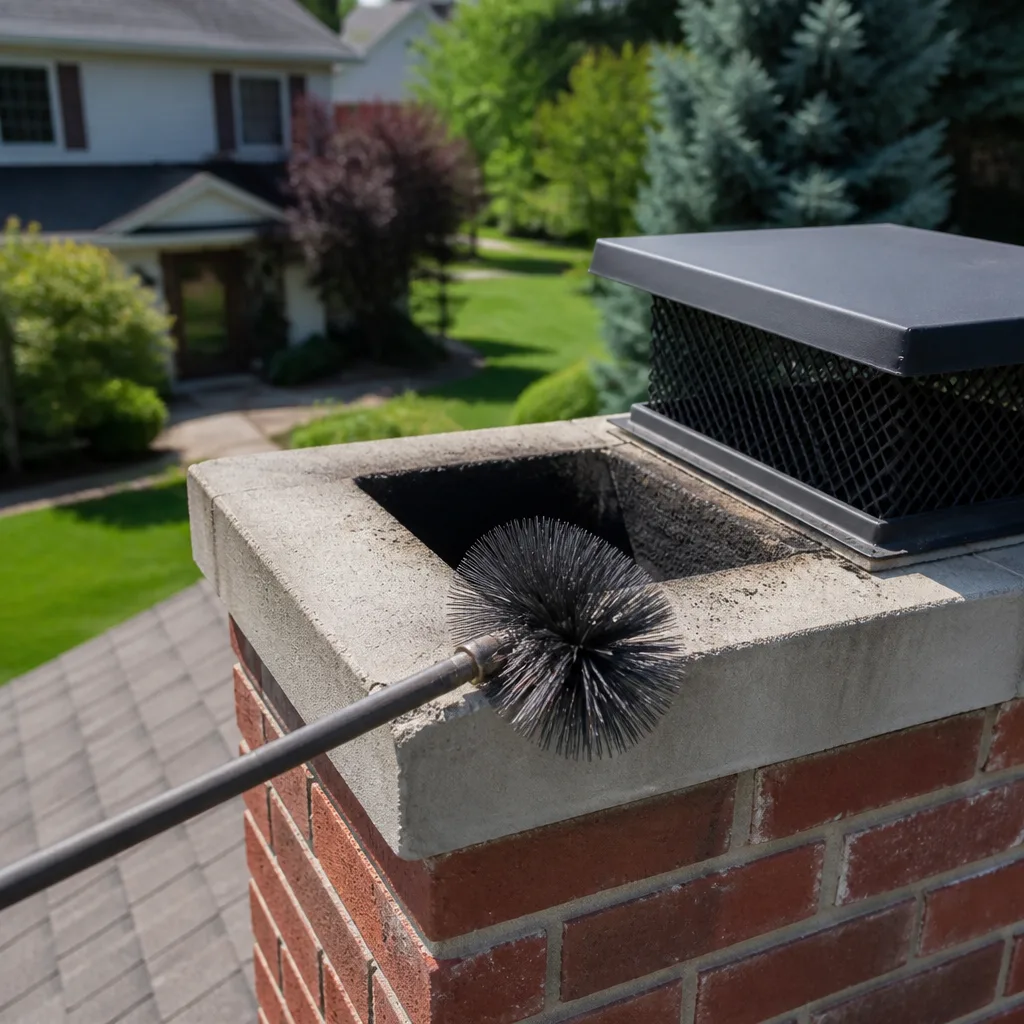
Chimney sweep logs do not sweep chimneys. They loosen some creosote - which then falls where a brush and vacuum still have to collect it.
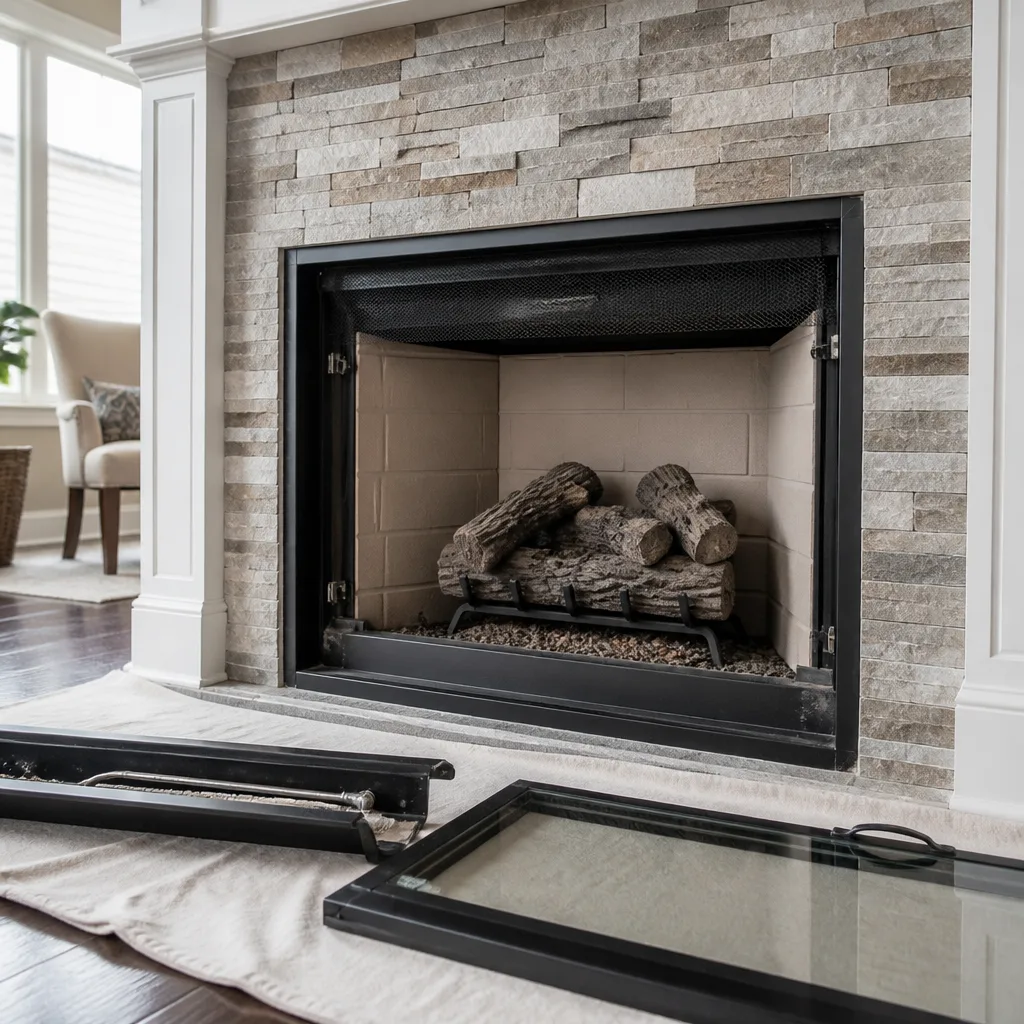
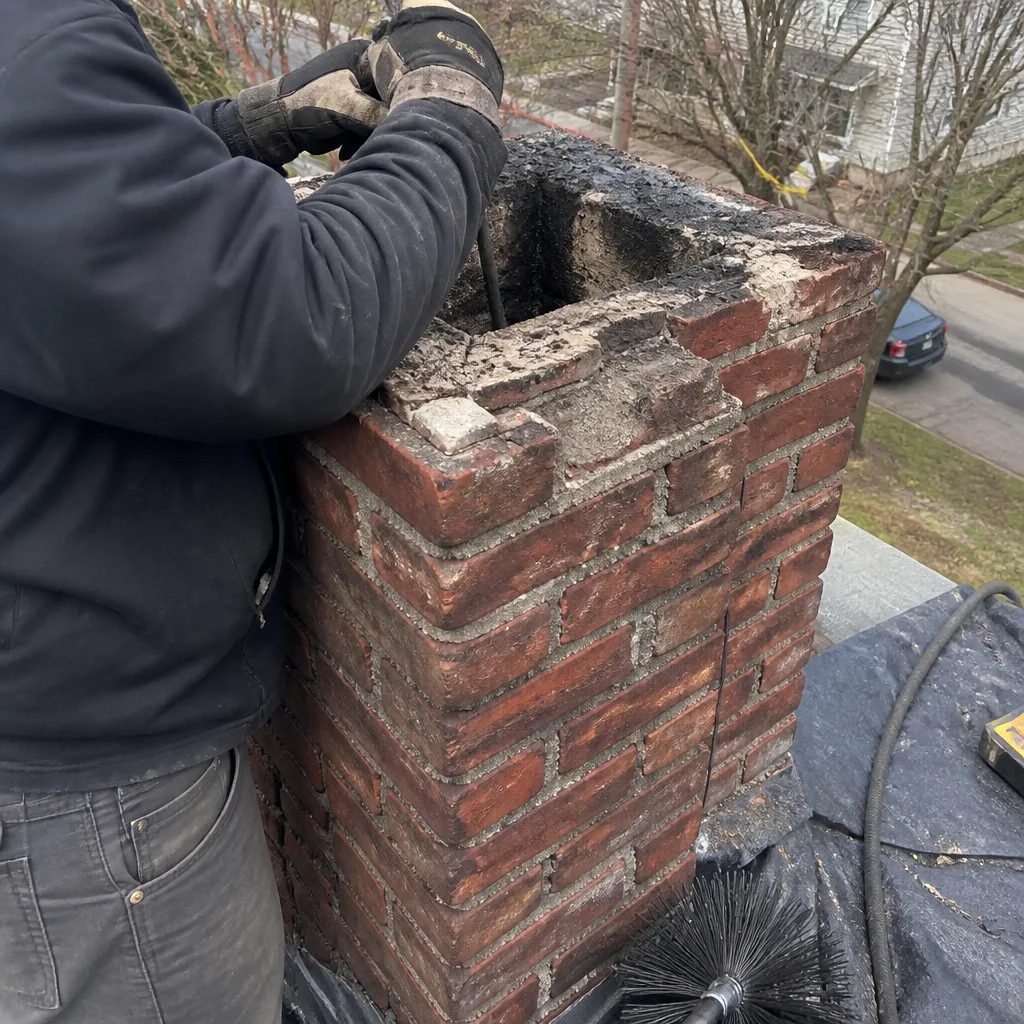 Before
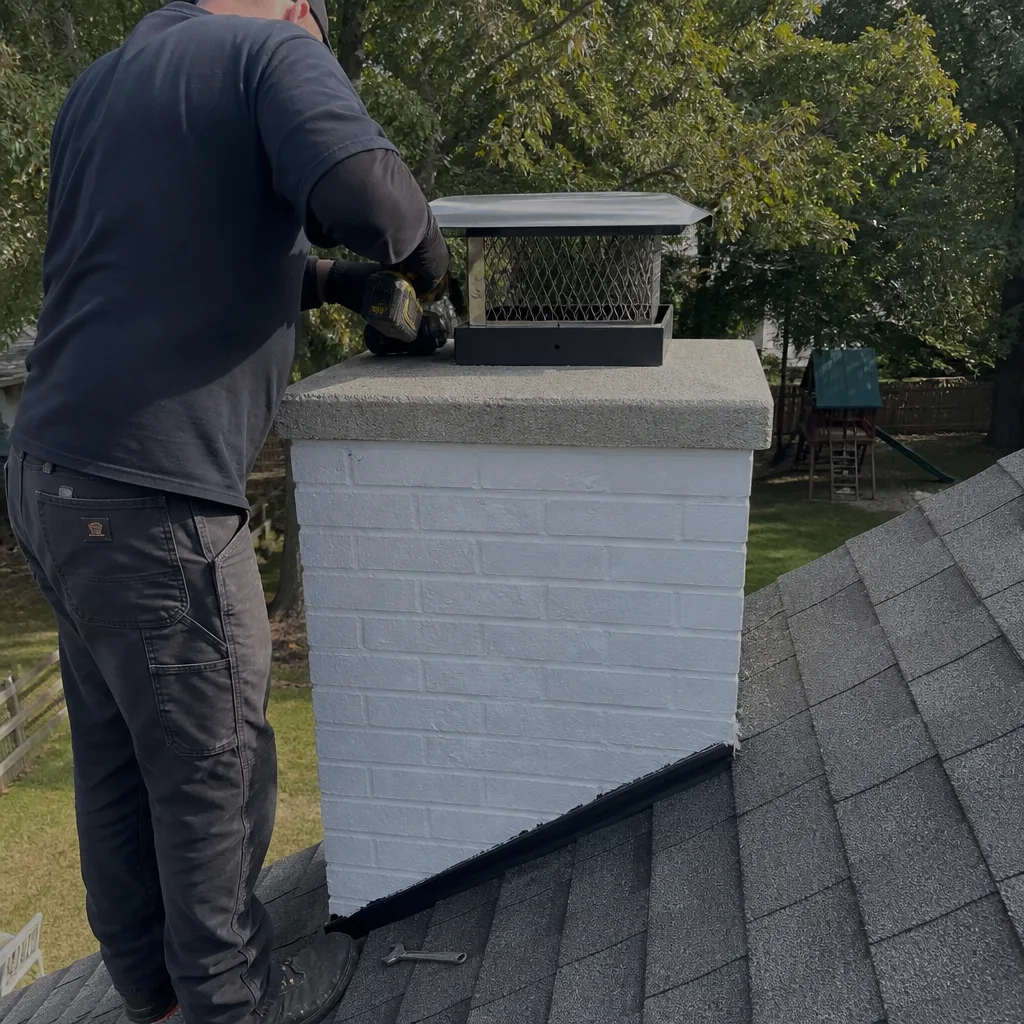 After
After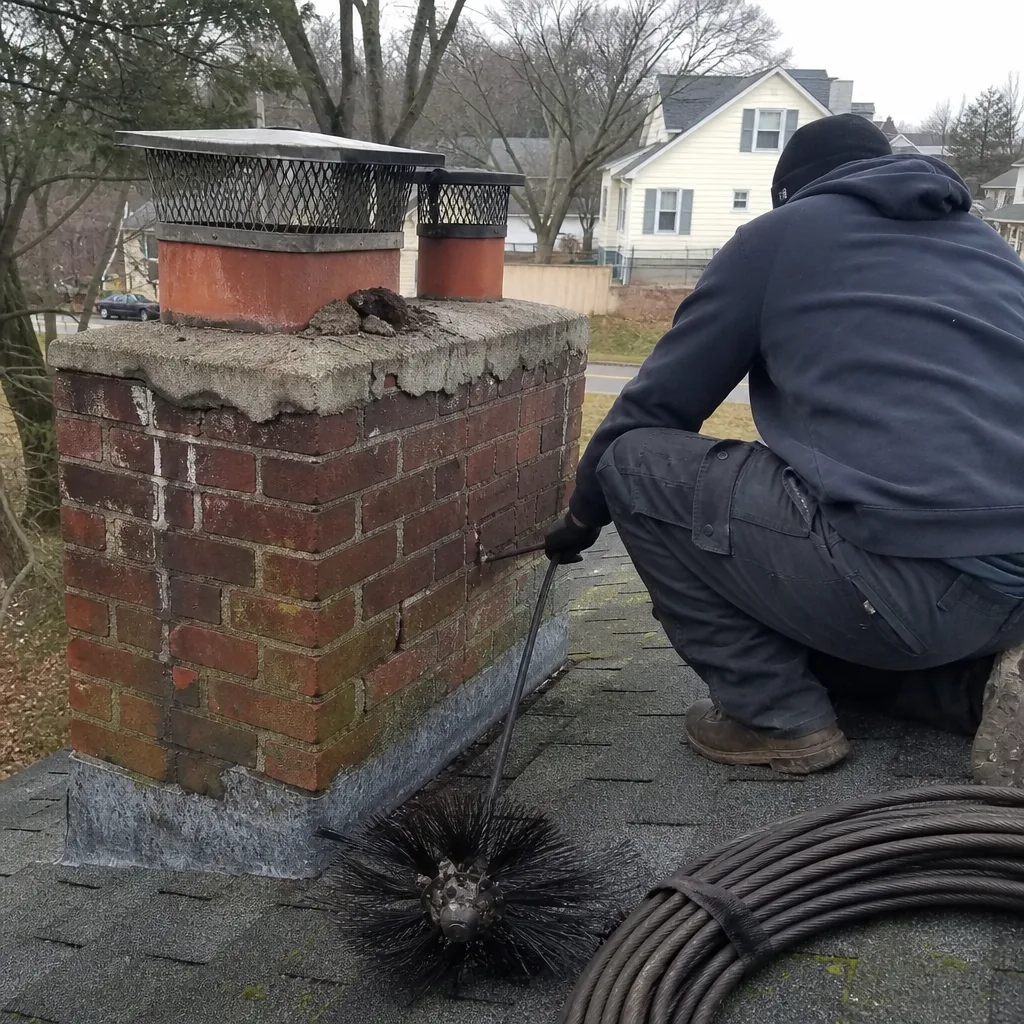 Before
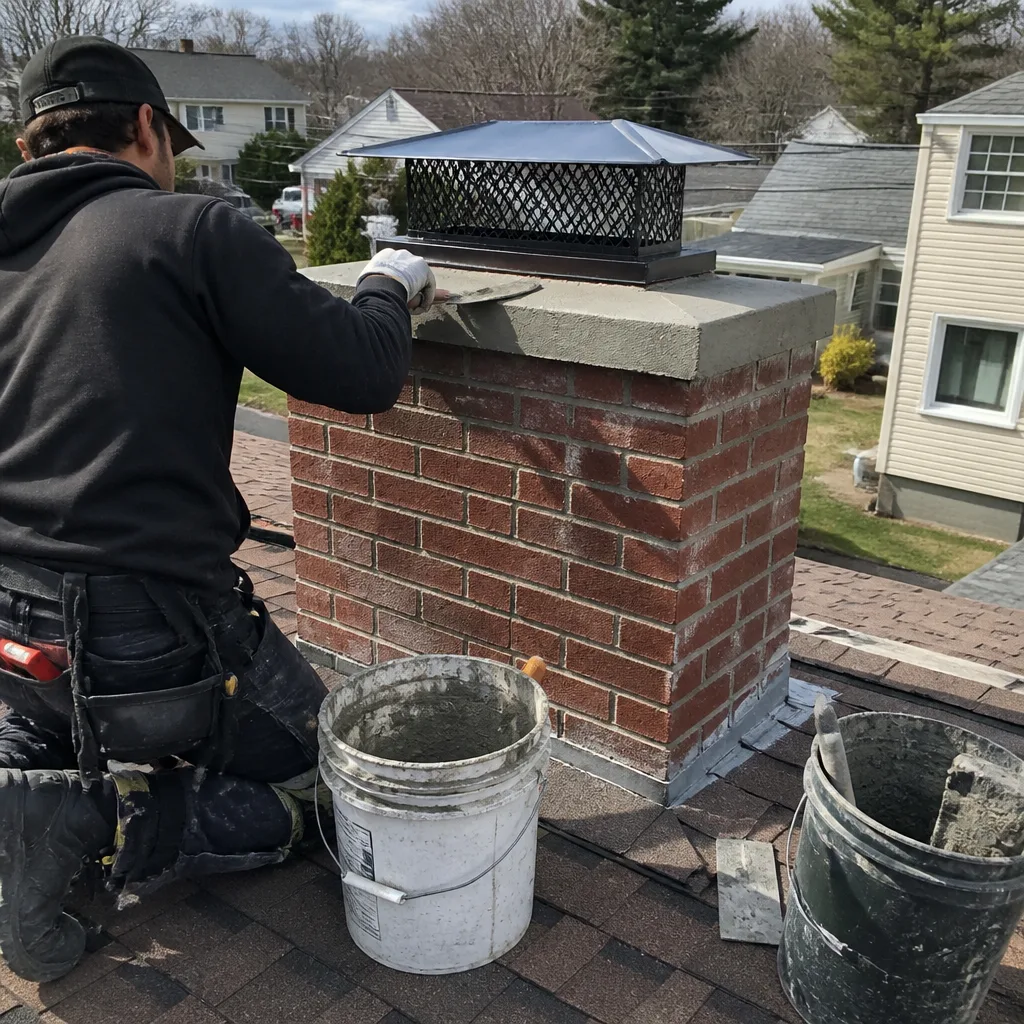 After
After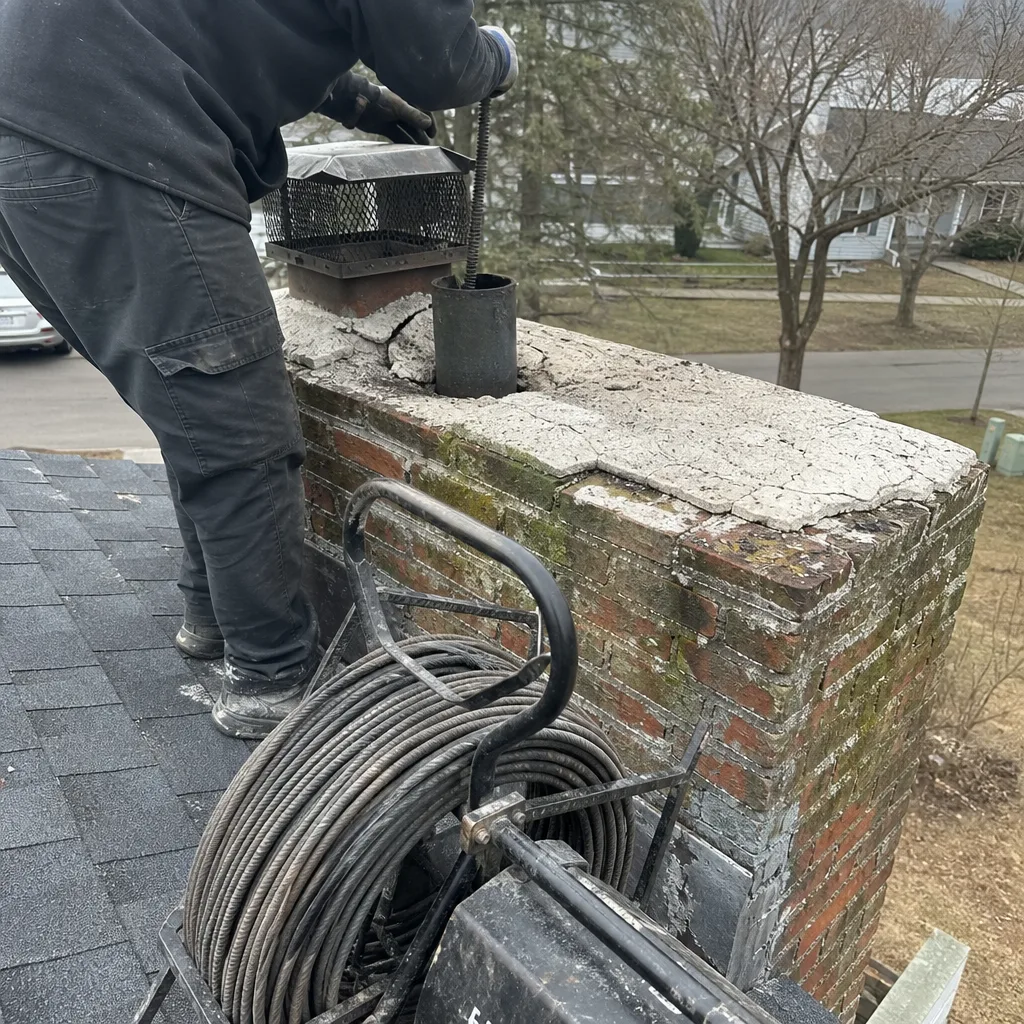 Before
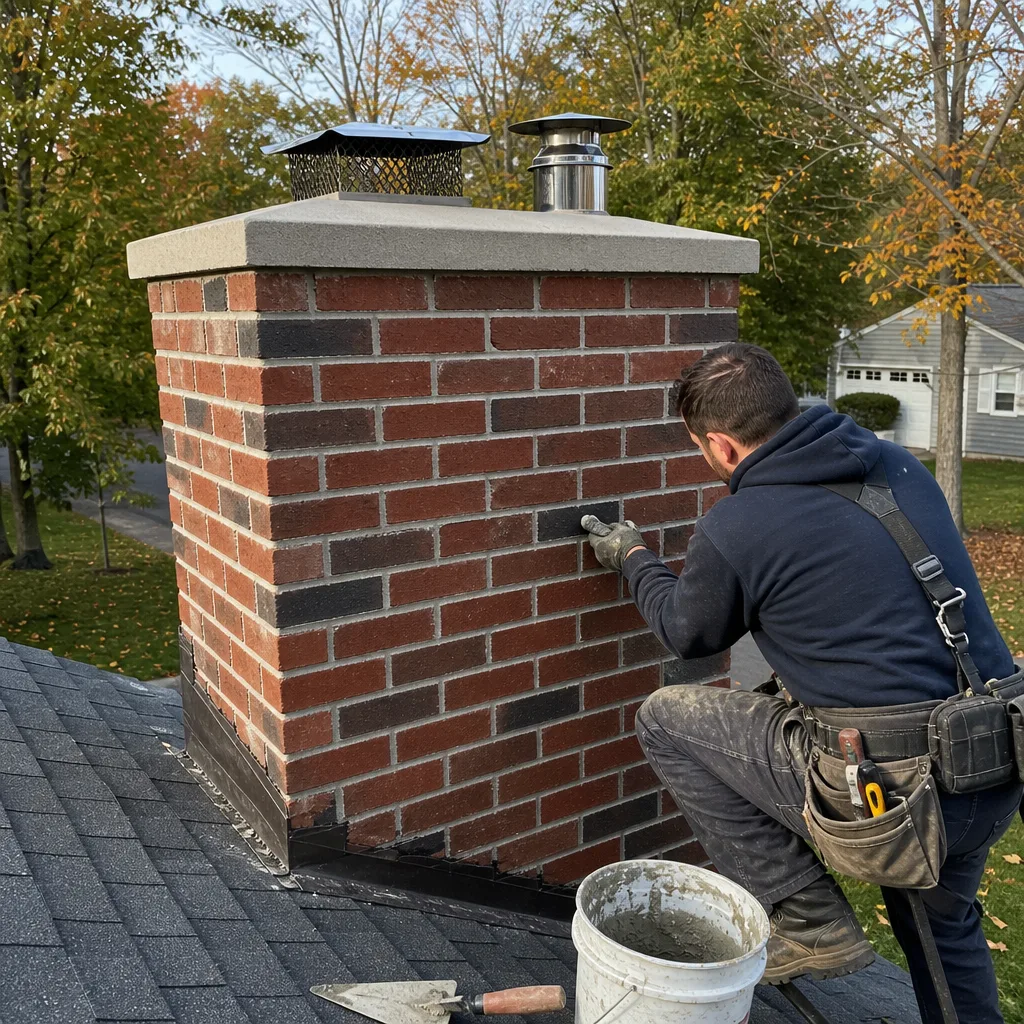 After
AfterChimney Cleaning & Sweep Maintenance Checklist for Chelmsford Homeowners
Most chimney maintenance checklists online were written to fill a webpage, not to catch real problems. They tell you to “inspect the damper” without explaining what a failing damper feels like when the handle grinds halfway closed, or what spalling brick sounds like when you tap it with a key. After 42 years in this trade, we’ve learned that Chelmsford homeowners need pass-fail thresholds, not vague prompts. This guide gives you room-by-room, season-by-season criteria you can actually use, plus the honest line between what you can check yourself and what requires our Chimney Cleaning & Sweep services with a sweep’s mirror, light, and camera.
Quick Answer
A proper chimney maintenance checklist for Chelmsford homeowners covers four zones: the firebox and damper (interior), the flue and liner (hidden), the exterior masonry and crown (weather-exposed), and the documentation trail (insurance and resale). Most homeowners can safely assess the first zone; zones two through four need professional inspection at least annually, with exterior checks each spring after Middlesex County’s freeze-thaw cycle. For more guidance, see our Chimney Cleaning Warning Signs: A Chelmsford Homeowner’s Reference Guide.
Table of Contents
- Firebox and Damper: What You Can Check Yourself
- Flue and Liner: The Hidden Zone
- Exterior Masonry: Chelmsford’s Freeze-Thaw Test
- Odor Diagnostic: What Your Chimney Is Telling You
- Seasonal Schedule: When to Do What
- Record-Keeping: The Paperwork That Protects You
- Common Mistakes to Avoid
- When to Call a Professional
- Frequently Asked Questions
Firebox and Damper: What You Can Check Yourself
The firebox is where you can actually see what’s happening. That makes it the most useful self-check zone, but also where homeowners get falsely confident. Here’s what to look for, with real pass-fail criteria.
Firebox Interior Inspection
Start with the back wall and side refractory panels. These are the heat-resistant panels that line the firebox. In a wood-burning fireplace, look for cracks wider than a nickel, or any gap that lets you see through to the metal or masonry behind. A hairline crack in refractory paneling is normal; a crack you can fit a dime into is not. In Chelmsford, we see accelerated panel deterioration in homes built during the 1970s and 1980s construction boom, especially in neighborhoods like East Chelmsford and the MacKay neighborhood, where builders often used lower-grade refractory material that has now seen forty-plus years of thermal cycling.
Check the firebrick for spalling, which is when the brick face flakes or pops off. Tap suspect bricks with a house key. Solid brick returns a sharp click. Spalling brick sounds dull and may crumble at the tap. If you find powdery red debris at the firebox floor, that’s spalling material that has already fallen. More than a tablespoon of debris means the brick is actively deteriorating.
The hearth extension, the non-combustible surface in front of the firebox, must extend at least 16 inches in front and 8 inches to each side for an open fireplace. Measure it. If your hearth is shorter, it was likely built to an older code and may not provide adequate protection.
Damper Function Test
The damper is the metal plate that seals the flue when the fireplace is not in use. A failed damper costs you heated air all winter and can admit downdrafts that carry chimney odors into your living room.
Here’s the pass-fail test we teach Chelmsford homeowners:
- Visual check: Open the damper fully and shine a flashlight up the flue. The damper plate should sit level and unobstructed. Look for rust holes, warping, or creosote buildup that prevents full closure.
- Handle resistance: A properly functioning damper handle or chain moves with moderate resistance, roughly the effort of opening a sticky window. If it moves freely with no resistance, the linkage may be disconnected. If it requires force that makes the handle flex, the plate is likely warped or the track is corroded.
- Seating test: Close the damper and look for gaps of light around the perimeter. No light should show. A warped damper often seats at one edge but gaps at the other, creating a whistle or hiss during wind.
- Sound test: A damper that closes with a solid “clank” is seating properly. A grinding, scraping sound means the plate is dragging on warped metal or debris in the track.
If your damper fails any of these tests, it needs adjustment, repair, or replacement. We install replacement dampers from Famco and Copperfield when the original cannot be restored to proper function.
What Requires Professional Tools
What you cannot assess from the firebox: the condition of the smoke shelf (the flat area behind the damper where debris collects), the flue lining beyond the first few feet, and the structural integrity of the firebox floor from below. These require a sweep’s mirror, high-output light, and camera system. Our chimney cleaning and sweep service in Chelmsford includes visual documentation of these hidden areas.
Flue and Liner: The Hidden Zone
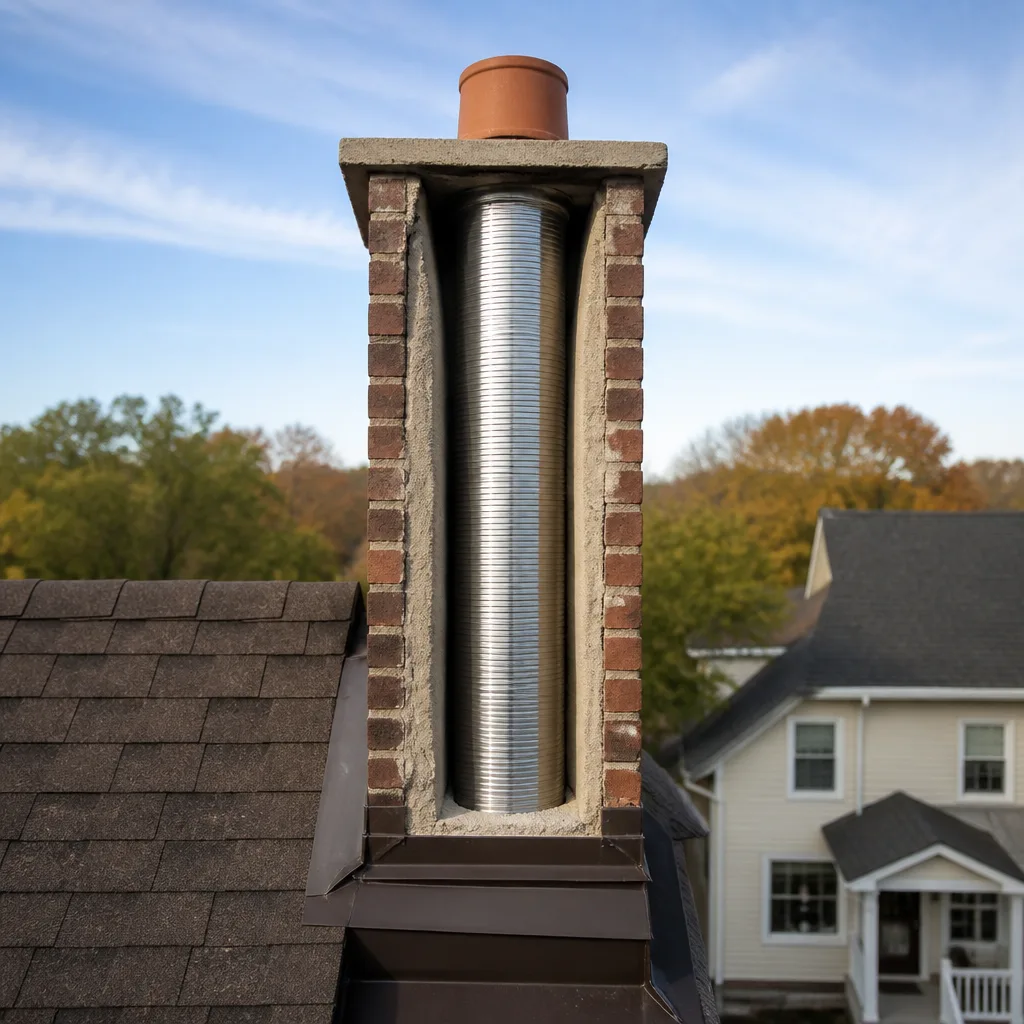
The flue liner is the protective channel that carries smoke and combustion gases from the firebox to the top of the chimney. You cannot see most of it. That invisibility makes it the most dangerous zone to neglect.
Why the Flue Liner Matters
A compromised liner allows heat to reach combustible framing, permits carbon monoxide to leak into living spaces, and accelerates creosote buildup by cooling flue gases below their optimal exit temperature. In Chelmsford, where many homes in neighborhoods like Westlands and South Chelmsford were built with clay tile liners in the 1960s through 1980s, we regularly find tile that has cracked from thermal shock or shifted from foundation settling.
What Homeowners Can Observe
From the firebox opening, shine a flashlight upward. You should see a continuous, uniform surface. Clay tile shows as rectangular segments with thin mortar joints. Metal liner shows as a smooth cylinder. Look for:
- Light showing through cracks in tile segments
- Shiny creosote glazing that looks like black varnish, especially in the upper third of the flue
- Debris or fallen tile fragments at the smoke shelf
- Any obstruction that blocks more than 25% of the flue opening
If you see any of these, stop using the fireplace and call for inspection. Do not attempt to clean or clear obstructions yourself.
What Professional Inspection Reveals
A Level-2 inspection, which we recommend for every Chelmsford home at change of ownership or after any chimney fire event, uses a video camera on a flexible rod to document the full flue length. We look for tile joint gaps, vertical cracks that indicate structural movement, and creosote buildup measured in sixteenths of an inch. The National Fire Protection Association standard calls for cleaning at 1/8 inch (2/16) of buildup.
Our camera inspections end with photos you can see and a plain-English verdict. If the liner needs replacement, we specify why, show you the image, and explain whether DuraFlex stainless steel relining or HeatShield cerfractory resurfacing is appropriate for your system. Nothing is recommended without camera evidence.
Exterior Masonry: Chelmsford’s Freeze-Thaw Test
Chelmsford’s climate delivers the perfect conditions for masonry damage: wet fall weather, sub-freezing winter temperatures, and spring thaw cycles that repeat the stress dozens of times per season. The freeze-thaw cycle is not abstract here. It is the leading cause of exterior chimney deterioration in Middlesex County.
Spring Inspection Protocol
Each April, after the last hard freeze, walk the exterior of your chimney with binoculars and a notepad. Work from ground level first, then from any accessible vantage point on the roof or from an upper-story window. Do not climb the roof yourself.
Brick and Mortar Assessment
Spalling brick: Look for brick faces that have flaked, popped, or crumbled. Early-stage spalling shows as surface roughness or small pits. Advanced spalling exposes the porous interior of the brick, which then absorbs more water and accelerates the cycle. In Chelmsford, we see the worst spalling on south- and west-facing chimney exposures, where freeze-thaw cycles are most frequent and intense. The MacKay neighborhood and older homes near the Merrimack River are particularly susceptible due to higher ambient moisture.
Mortar joint depth: Sound mortar joints should be recessed no more than 1/4 inch from the brick face, with the mortar itself intact and slightly harder than your fingernail. Test with a house key: mortar that crumbles or powders under light pressure is failing. Joints recessed more than 1/2 inch need repointing. Joints missing entirely, creating gaps between bricks, need immediate attention before the next freeze cycle.
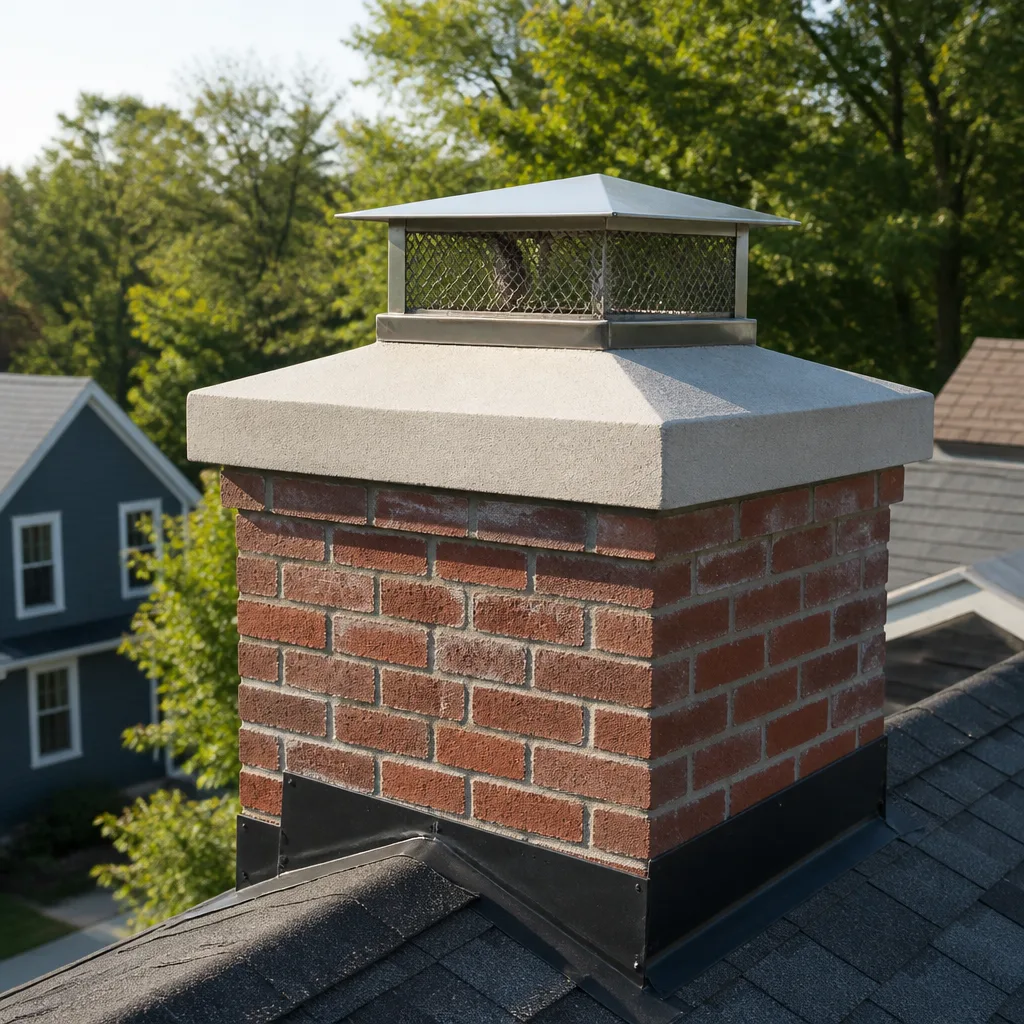
Crown condition: The concrete crown at the chimney top is not decorative. It sheds water away from the flue opening and protects the top course of brick. A sound crown has a slight slope, no cracks wider than 1/8 inch, and an overhang that extends past the brick face by at least 2 inches. Check for pooling, which indicates the crown has settled flat or reversed its slope. In Chelmsford, we replace crowns that have cracked through or lost their slope with new concrete or, in severe cases, with a Copperfield chimney cap system that provides integrated protection.
Flashing and Cap Check
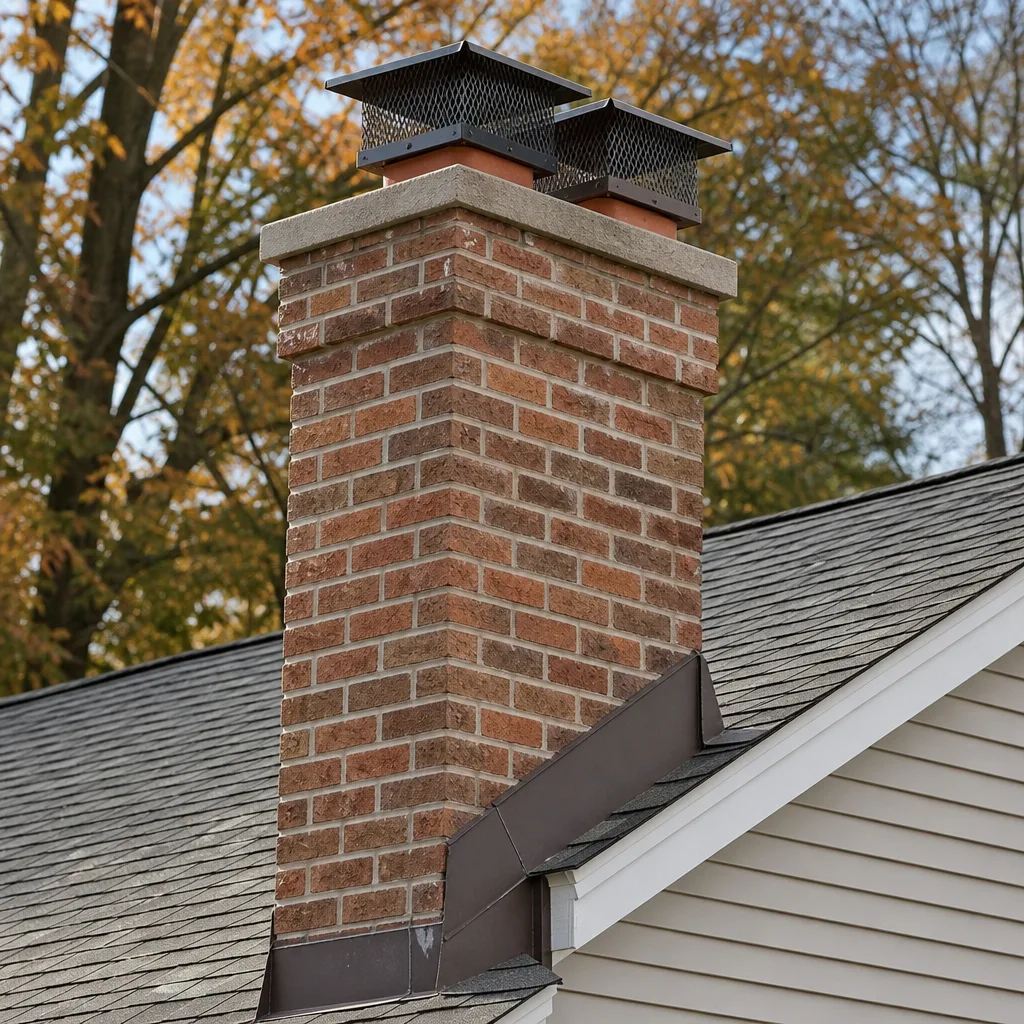
Chimney flashing, the metal joint where the chimney meets the roof, should lie flat with no lifted edges, no rust holes, and no gaps that admit daylight. The chimney cap should screen the flue opening against animals while allowing smoke exit. Missing screens, dented caps, or caps that have shifted off-center all need correction.
Odor Diagnostic: What Your Chimney Is Telling You
Chimney odors are diagnostic signals, not just nuisances. The specific character of the smell tells you what is happening inside the system and how urgent the response needs to be.
Creosote Odor: The Sharp, Tar-Like Smell
Creosote smells sharp, acrid, and chemically bitter, like hot asphalt or roofing tar. It intensifies in humid weather and when the air conditioner creates negative pressure that draws air down the flue. This odor means your flue has significant creosote buildup, and it is a fire hazard. The smell itself is not dangerous, but the condition causing it is. Schedule a sweep before the next burning season. In Chelmsford, where humid summer days are common, we get calls about creosote odor every July and August from homeowners who have not used their fireplace since March.
Musty or Earthy Odor: Water Intrusion
A damp, musty smell suggests water is entering the flue system, usually through a cracked crown, failed flashing, or deteriorated mortar cap. The odor may carry a faint mineral or clay note if water is leaching through masonry. This condition needs inspection within weeks, not days, but do not ignore it through a full season. Water inside a flue liner accelerates liner deterioration and can damage the smoke shelf and damper mechanism.
Ammonia or Fecal Odor: Animal Activity
A sharp ammonia smell, sometimes with a fecal undertone, indicates birds, squirrels, or raccoons have entered the flue. In Chelmsford, chimney swift nesting is common in May and June; these birds are migratory and federally protected during nesting season. If you hear active scratching or chirping, or if the odor is accompanied by visible debris at the firebox, stop using the fireplace and call for removal. Do not attempt to smoke out or dislodge animals yourself. After removal, we install Famco or Copperfield chimney caps with proper mesh screening to prevent recurrence.
Smoke or Soot Smell After Rain
If your fireplace smells like old campfire after rain, water has likely saturated soot deposits in a smoke shelf or flue offset. This is common in chimneys with poor draft or partial blockages. The smell indicates a system that is not venting properly even when dry, and it warrants inspection.
When to Act Immediately
Call for same-week inspection if: you smell ammonia with visible debris (active animal presence), you detect smoke odor when the fireplace is not in use (possible downdraft or blockage), or you smell gas or petroleum odors (possible fuel leak, not chimney-related but urgent). For creosote and musty odors, schedule within the month before the next burning season.
Seasonal Schedule: When to Do What
Chimney maintenance in Chelmsford follows the climate calendar. Here’s the schedule we recommend based on 42 years of local service.
Spring (April-May)
Conduct your exterior masonry inspection after the last hard freeze. Look for spalling, mortar loss, and crown damage as detailed above. This is also the ideal time to schedule major repairs, as masonry work needs temperatures above 40°F for proper curing, and our schedule has more availability before the fall rush. If you need chimney repair in Chelmsford, spring booking typically means faster scheduling and more flexible timing.
Summer (June-August)
Address any odors that emerge during humid weather. Schedule your annual sweep and inspection if you have not done so since the previous fall. Summer sweeps are easier to book and give you time to address any findings before the heating season. For gas fireplace owners, summer is the right time for fireplace service in Chelmsford, including burner cleaning, log repositioning, and safety control testing.
Fall (September-October)
This is peak season for a reason. Schedule your sweep and inspection by mid-September to guarantee availability before first use. The 90-Day Done Right Promise covers any work we complete, but the peace of mind comes from knowing the system is sound before you light the first fire. We answer the phone with a live person 24 hours a day, 7 days a week, but our appointment calendar fills by October 1 most years.
Winter (November-March)
Monitor for performance changes: slower draft, smoke spillage into the room, unusual odors, or visible creosote flakes in the firebox. These are real-time warnings that something has changed since your inspection. Do not attempt mid-season repairs yourself. Call for assessment if performance degrades.
Annual Minimum
Every wood-burning system needs professional sweep and inspection at least once per year, per NFPA 211. Gas systems need annual service per manufacturer warranty requirements. Oil and pellet systems have their own schedules, which we can advise based on your specific appliance.
Record-Keeping: The Paperwork That Protects You
Documentation is the most neglected part of chimney maintenance, and it is the part that matters most when something goes wrong. Insurance claims, home sales, and warranty disputes all turn on what you can prove about your maintenance history.
What to Keep After Each Service
After every professional chimney service, you should receive:
- A written inspection report with date, technician name, and company identification
- Photographs or video stills of any findings, especially liner condition and exterior damage
- Clear statement of recommended work, with priority ranking (safety-critical vs. monitoring vs. cosmetic)
- Invoice itemizing services performed and materials used
- Any warranty or guarantee documentation, including our 90-Day Done Right Promise in writing
Keep these records in a dedicated file, not mixed with general household receipts. Digital copies are fine; paper is fine; both is best.
Why It Matters in Middlesex County
When you sell a home in Chelmsford or anywhere in Middlesex County, the buyer’s inspection will include the chimney. A documented history of professional maintenance, with photos showing the flue condition at known dates, prevents last-minute negotiation surprises. We have seen sales delayed or renegotiated because a seller could not prove the chimney had been maintained, forcing a rush inspection that found deferred issues.
For insurance purposes, documentation proves due diligence. If a chimney fire occurs, your insurer may deny the claim if you cannot show regular professional maintenance. The NFPA 211 annual inspection standard is the benchmark most insurers apply.
Our reports are written for this purpose: documented like an engineer, explained like a craftsman. Photos you can see, a plain-English verdict, and a clear record of what we found and what we did.
Common Mistakes to Avoid
- Judging liner condition by firebox appearance. A clean, intact firebox tells you nothing about the flue liner 15 feet above. We’ve found collapsed clay tile in chimneys whose firebox looked pristine.
- Assuming gas fireplaces need no maintenance. Gas systems produce corrosive condensation, deteriorate ceramic logs, and can develop dangerous burner misalignment. Annual service is not optional.
- Waiting for visible exterior damage before acting. By the time spalling brick is obvious from the ground, water has been entering the system for multiple freeze-thaw cycles. Early intervention costs less.
- Using the wrong firewood. In Chelmsford, we see accelerated creosote buildup from homeowners burning construction lumber, painted wood, or unseasoned hardwood. Seasoned hardwood, split and dried 6-12 months, burns cleaner. Softwood is fine if properly seasoned; the “softwood causes creosote” myth persists but is wrong about the wood itself.
- Neglecting the chimney cap. A missing or damaged cap admits rain, animals, and debris. It is the cheapest protection and the most commonly deferred.
- DIY sweeping with household tools. A broom and shop vacuum cannot reach the smoke shelf or properly assess liner condition. Worse, improper technique can damage liner or deposit debris in dangerous locations.
- Skipping inspection after a chimney fire. Even a small chimney fire, often detected only by a loud roaring sound or acrid smell, can crack clay tile or damage metal liner. Always insist on Level-2 inspection after any suspected fire event.
When to Call a Professional
Call for professional assessment when: your damper fails the seating or sound test; you see any light through flue liner cracks; you find more than minimal spalling or mortar loss on exterior masonry; you detect any animal odor or debris; your fireplace performs differently than the previous season; or you have no documentation of professional service within the past 12 months.
Hearthstone Chimney Co. offers free estimates in Chelmsford. Our technicians are background-checked, uniformed, and complete most jobs in a single visit. No-hassle upfront pricing means the number on the estimate is the number on the invoice. Call (978) 991-9492 to schedule. A live person answers every call, 24 hours a day, 7 days a week.
Frequently Asked Questions
A standard chimney sweep and Level-1 inspection in Chelmsford typically runs $200-$350, depending on flue accessibility, buildup severity, and whether the system is wood-burning, gas, or pellet. Level-2 camera inspections add $150-$250. Our $89 Seasonal Tune-Up covers basic gas fireplace service during promotional periods. Call (978) 991-9492 for an exact quote - estimates are free.
The National Fire Protection Association recommends annual inspection for all chimney systems, with sweeping as needed based on creosote accumulation. Most wood-burning fireplaces in regular use need sweeping once per year. Oil and gas systems need annual service but may not require mechanical sweeping every year. Chelmsford’s cold winters and humid summers make annual inspection particularly important for preventing moisture-related deterioration.
You need liner replacement when the existing liner is cracked, separated, or missing in a way that allows heat or combustion gases to reach combustible materials. We do not recommend liner replacement without camera documentation you can see for yourself. In some cases, partial damage can be monitored annually; in others, the risk warrants immediate action. The photos and plain-English verdict from our inspection let you make an informed decision, not a pressured one.
Skipped maintenance leads to three predictable outcomes: creosote accumulation increases chimney fire risk; moisture intrusion degrades liner and masonry; and minor problems become major repairs. In Chelmsford, we regularly see $200 sweeps become $3,000 rebuilds because a homeowner deferred maintenance for five years. Carbon monoxide exposure from deteriorated gas systems is the less visible but more dangerous risk.
You can observe the first few feet of liner from the firebox opening with a flashlight. Beyond that, professional camera inspection is required for reliable assessment. Do not attempt to climb the flue or use improvised camera equipment. The risk of falling debris, liner damage, or personal injury outweighs any savings.
Summer humidity reactivates creosote deposits and water-affected soot, producing sharper odors. Air conditioning creates negative pressure in tightly sealed homes, which draws air down the flue instead of allowing natural upward draft. A proper damper seal, chimney cap, and annual sweep minimize summer odor. Persistent odor despite these measures suggests a more significant blockage or moisture problem that needs professional assessment.
The Bottom Line
A useful chimney maintenance checklist gives you pass-fail criteria, not vague encouragement. Check your firebox and damper with the tests we’ve described. Inspect exterior masonry each spring for freeze-thaw damage specific to Chelmsford’s climate. Track odors by character and urgency. Keep professional documentation for every service. And know the honest boundary between homeowner maintenance and professional inspection - the hidden zones of flue and liner require tools and training you should not attempt to replicate.
Hearthstone Chimney Co. has served this region for over 42 years. We document every inspection with photos and a plain-English verdict. We back every job with the 90-Day Done Right Promise in writing. And when you call (978) 991-9492, a live person answers, 24 hours a day, 7 days a week.
Written by Russell Haines, Owner at Hearthstone Chimney Co., serving Chelmsford since 2014.