
Last updated September 10, 2026
Level 1 sweep and inspection to the NFPA 211 annual standard - flue, crown, cap, and flashing checked and photographed
Chimney sweep logs do not sweep chimneys. They loosen some creosote - which then falls where a brush and vacuum still have to collect it.
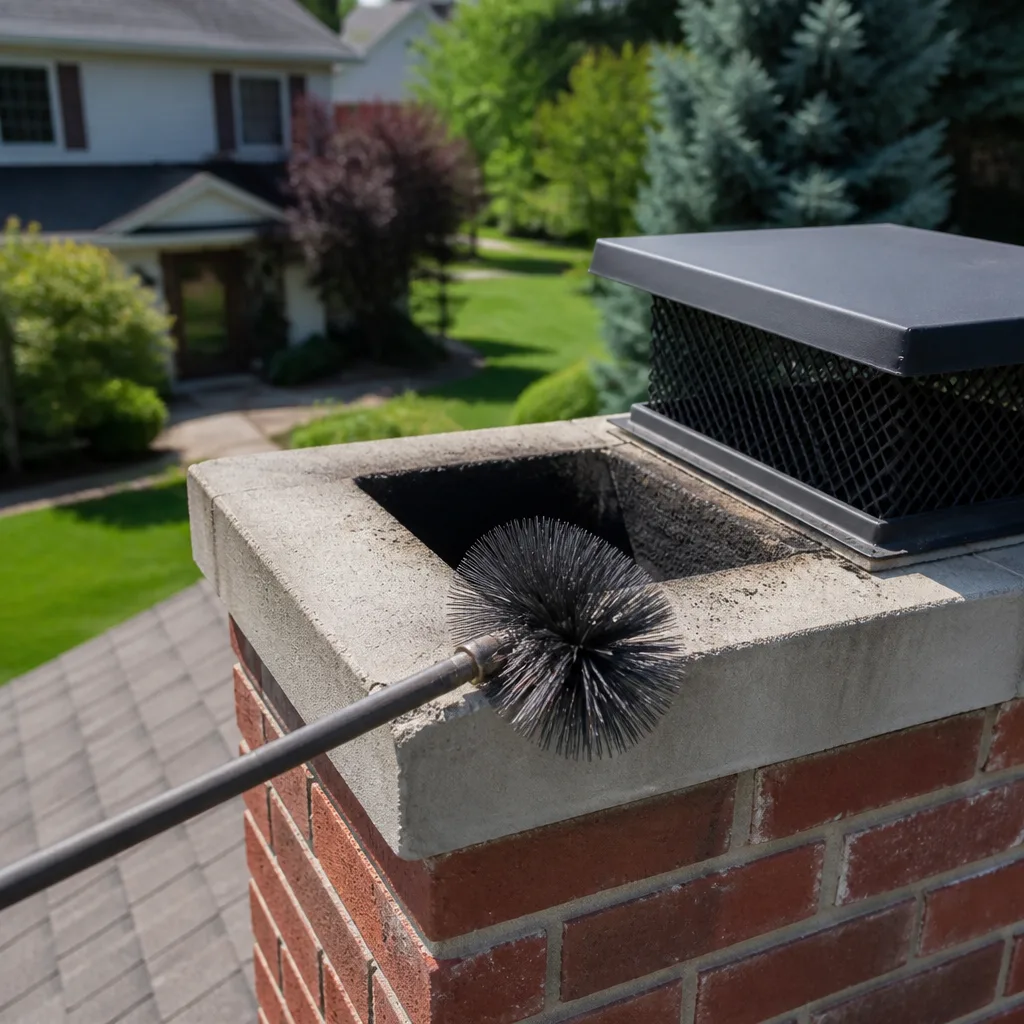
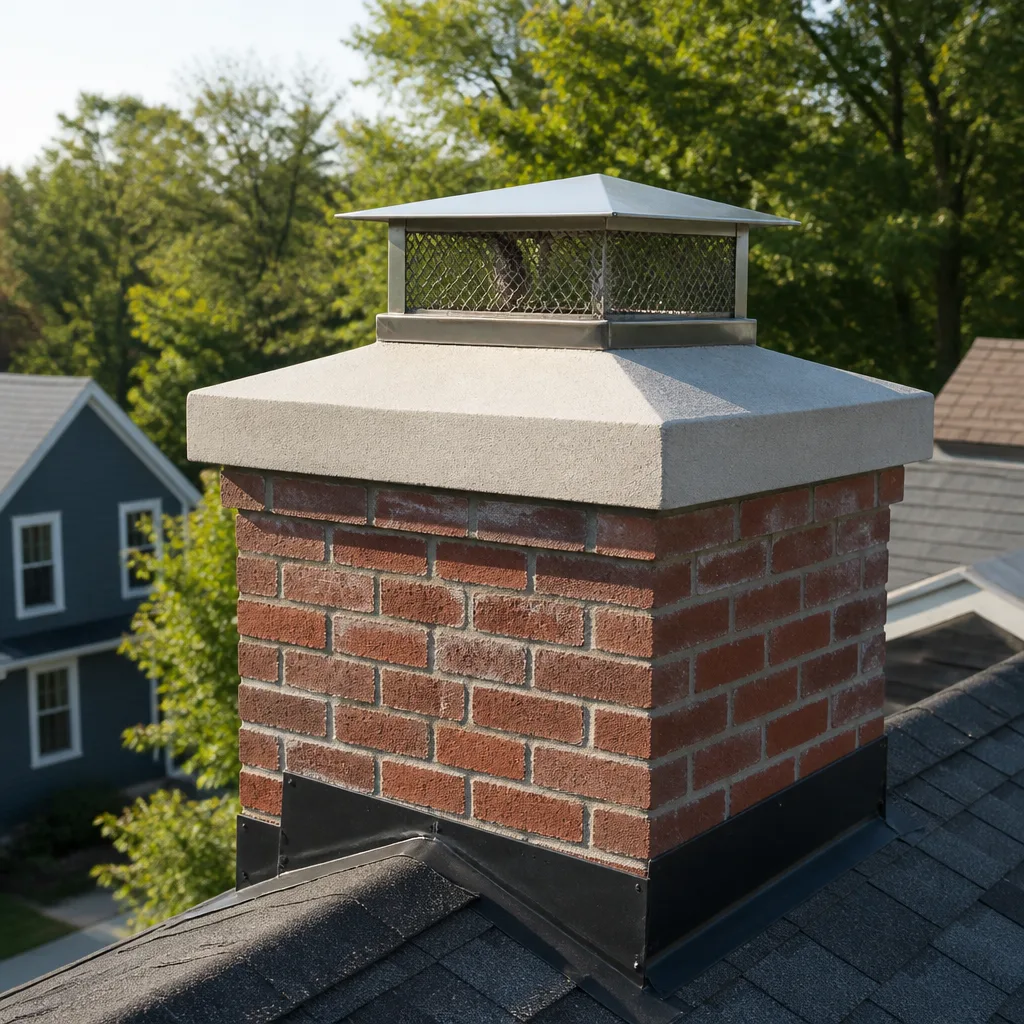
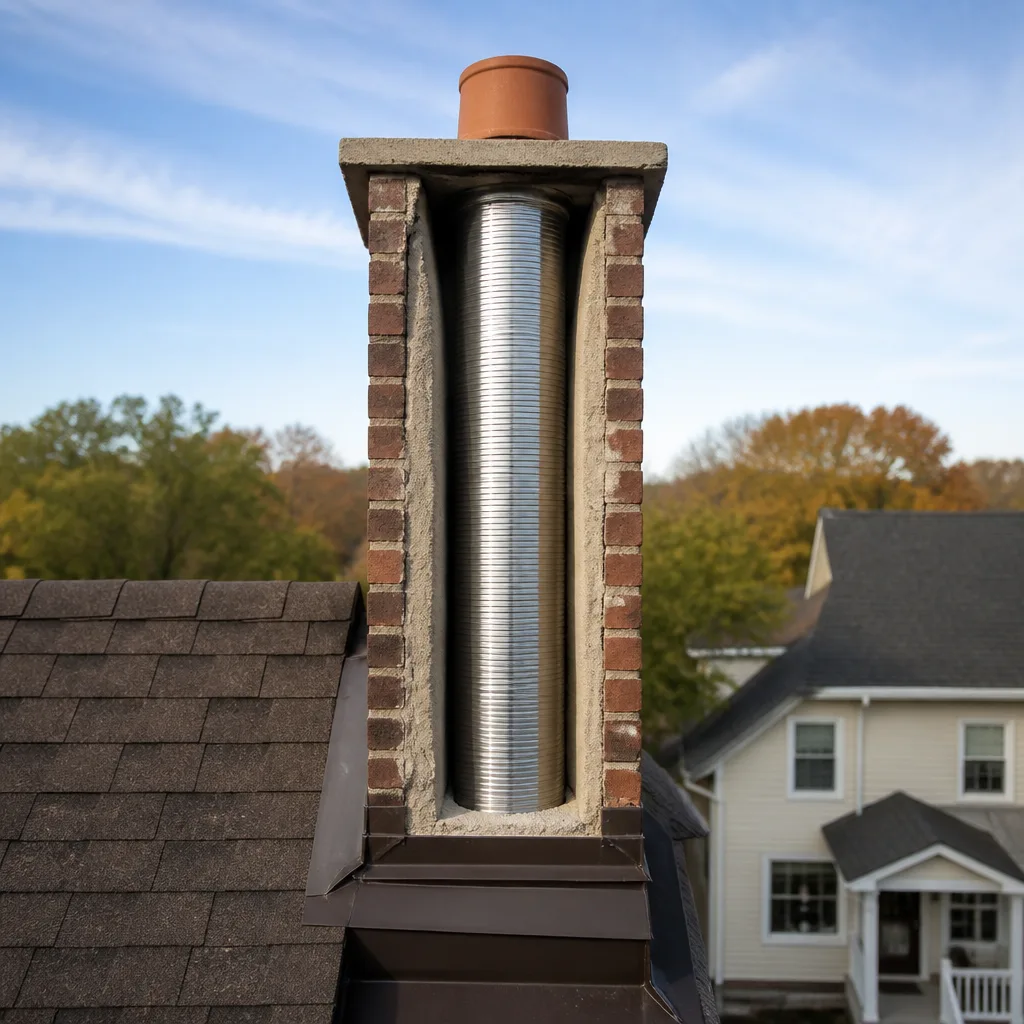
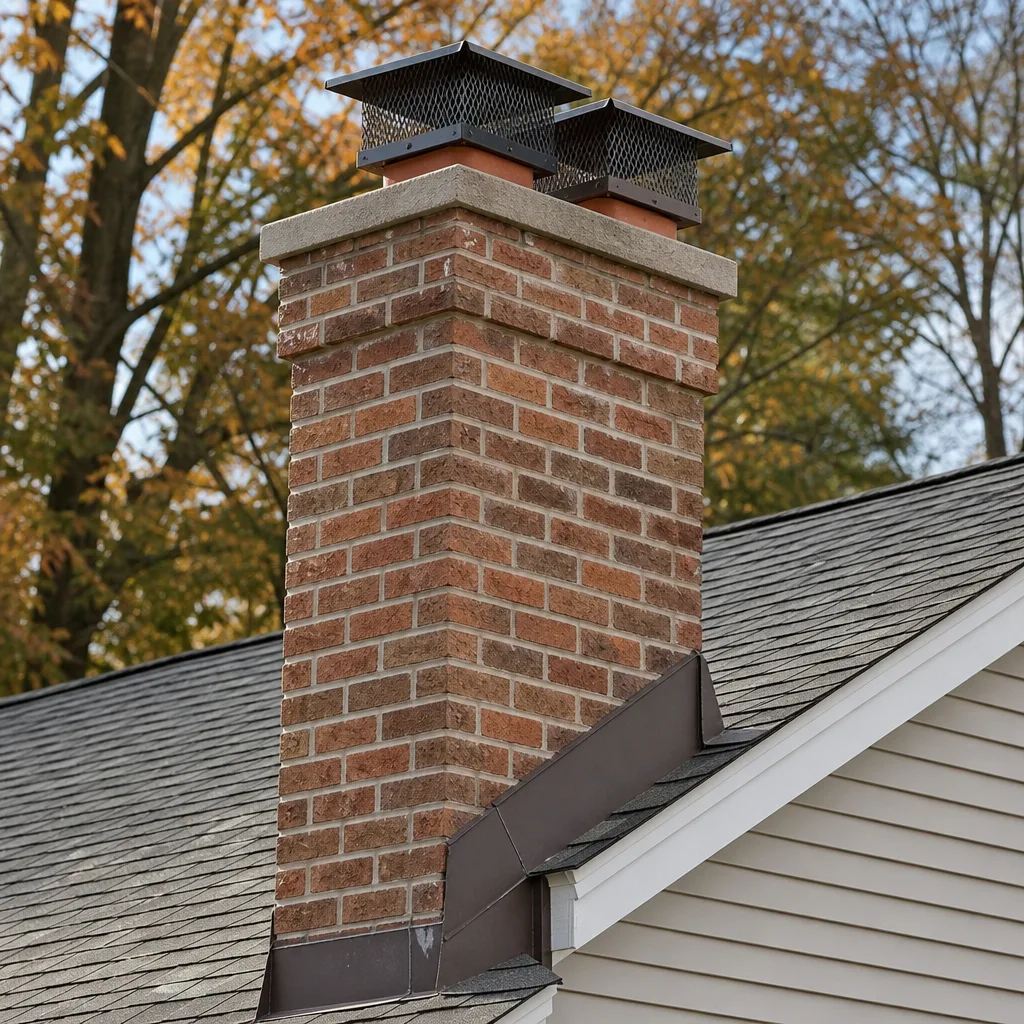
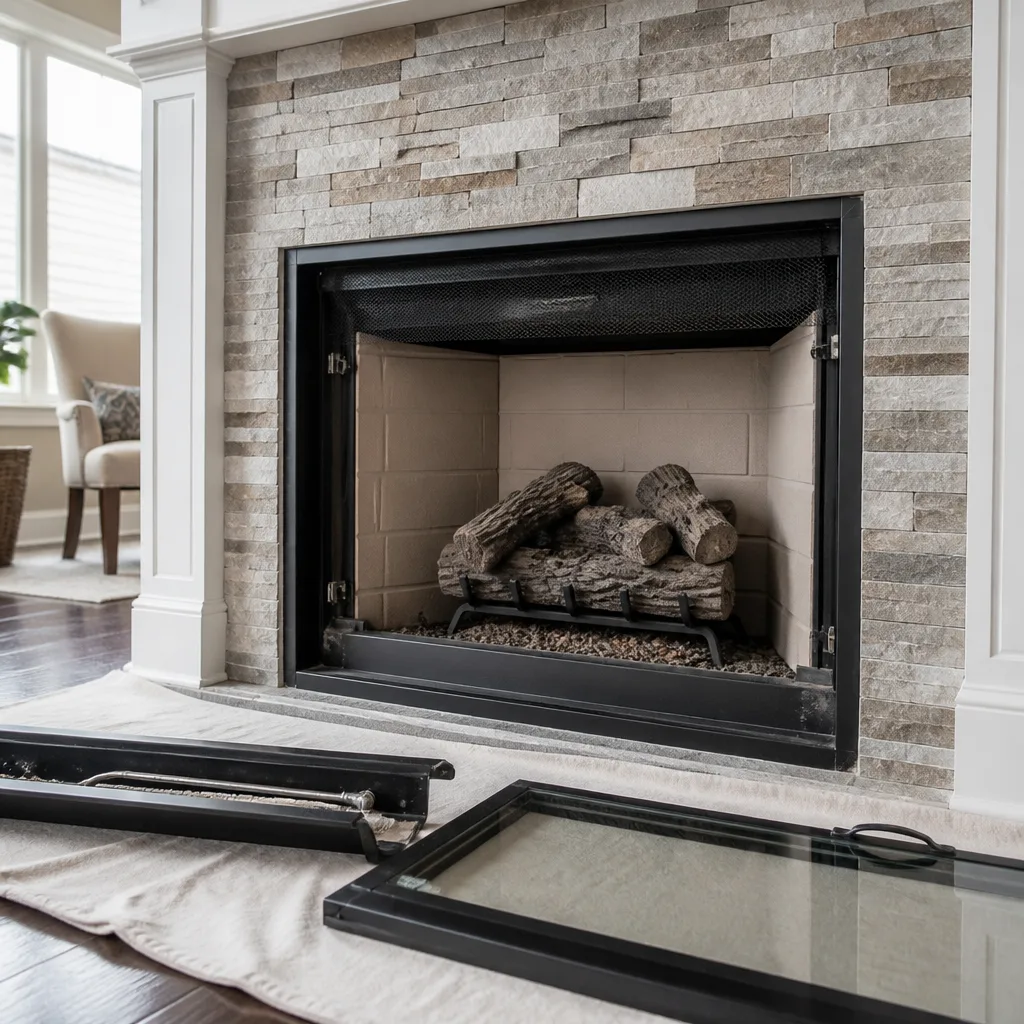
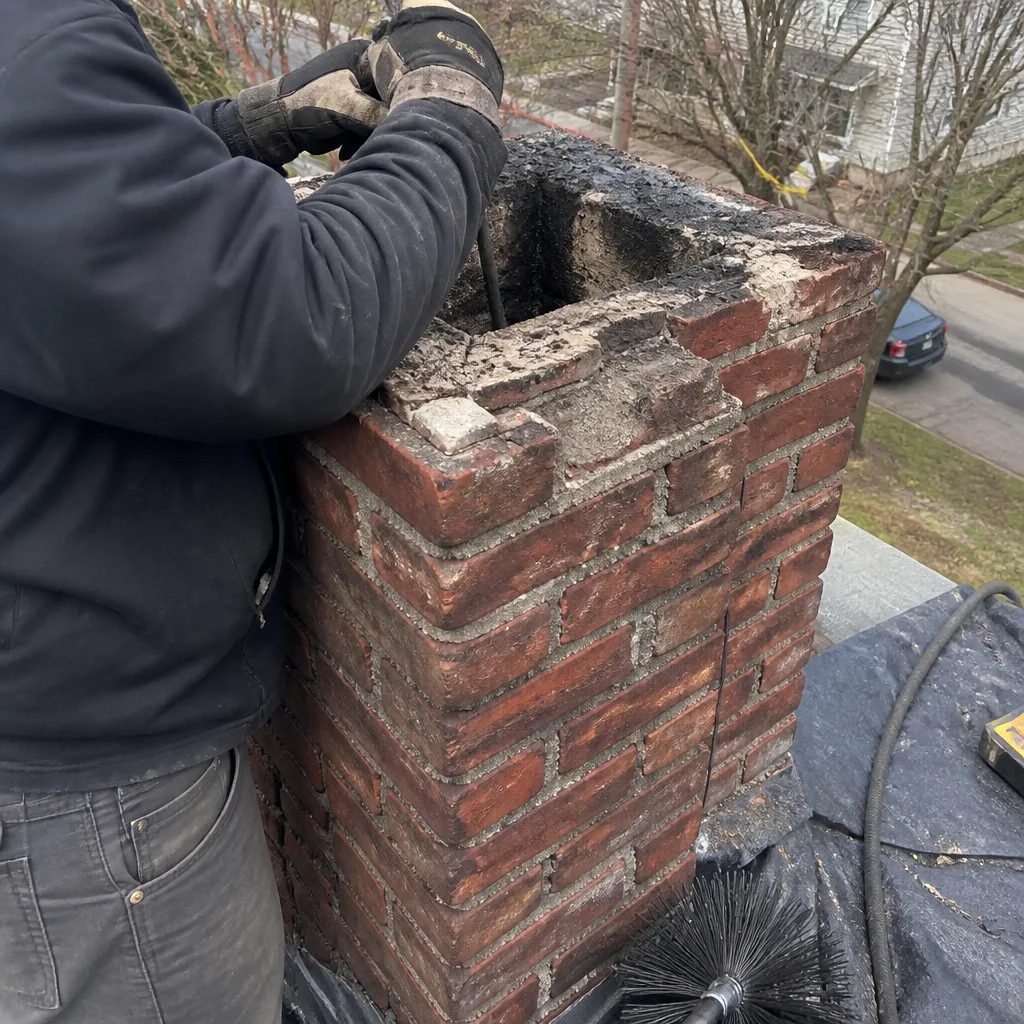 Before
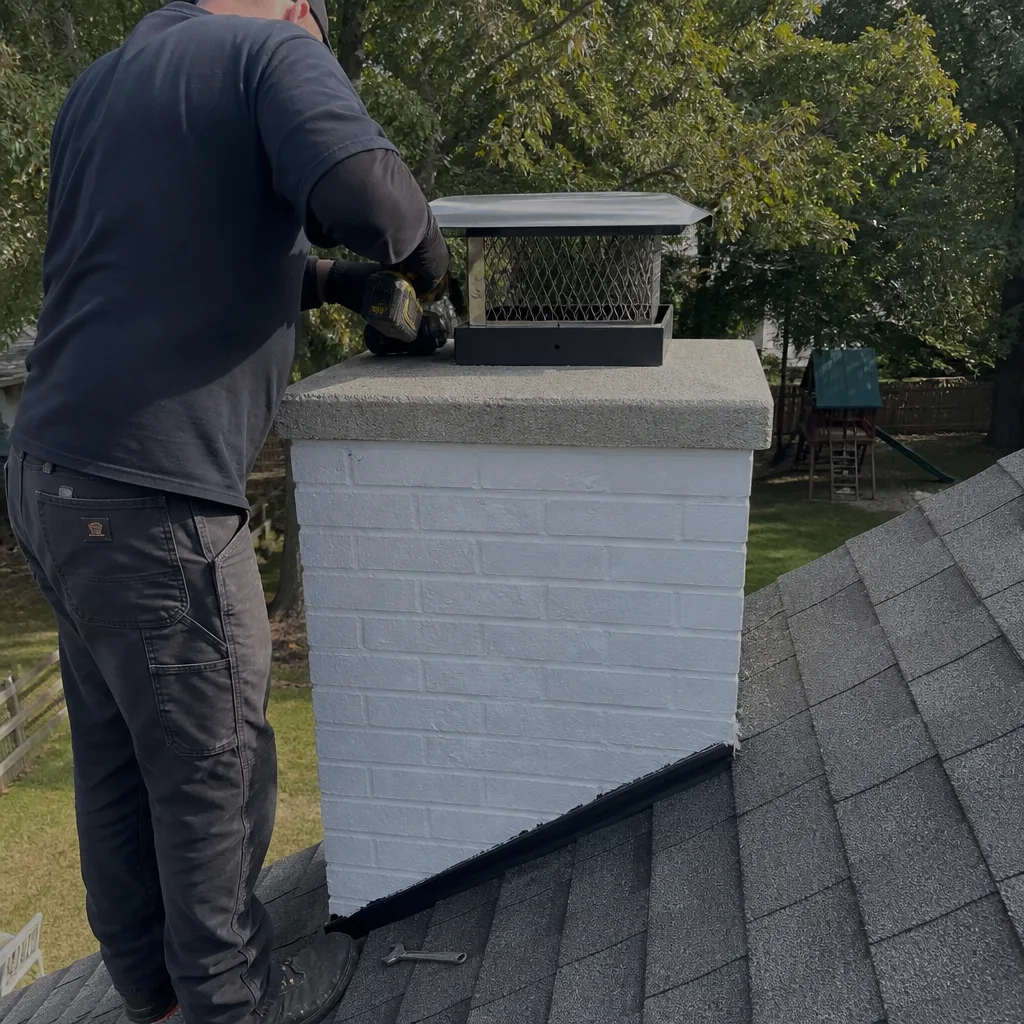 After
After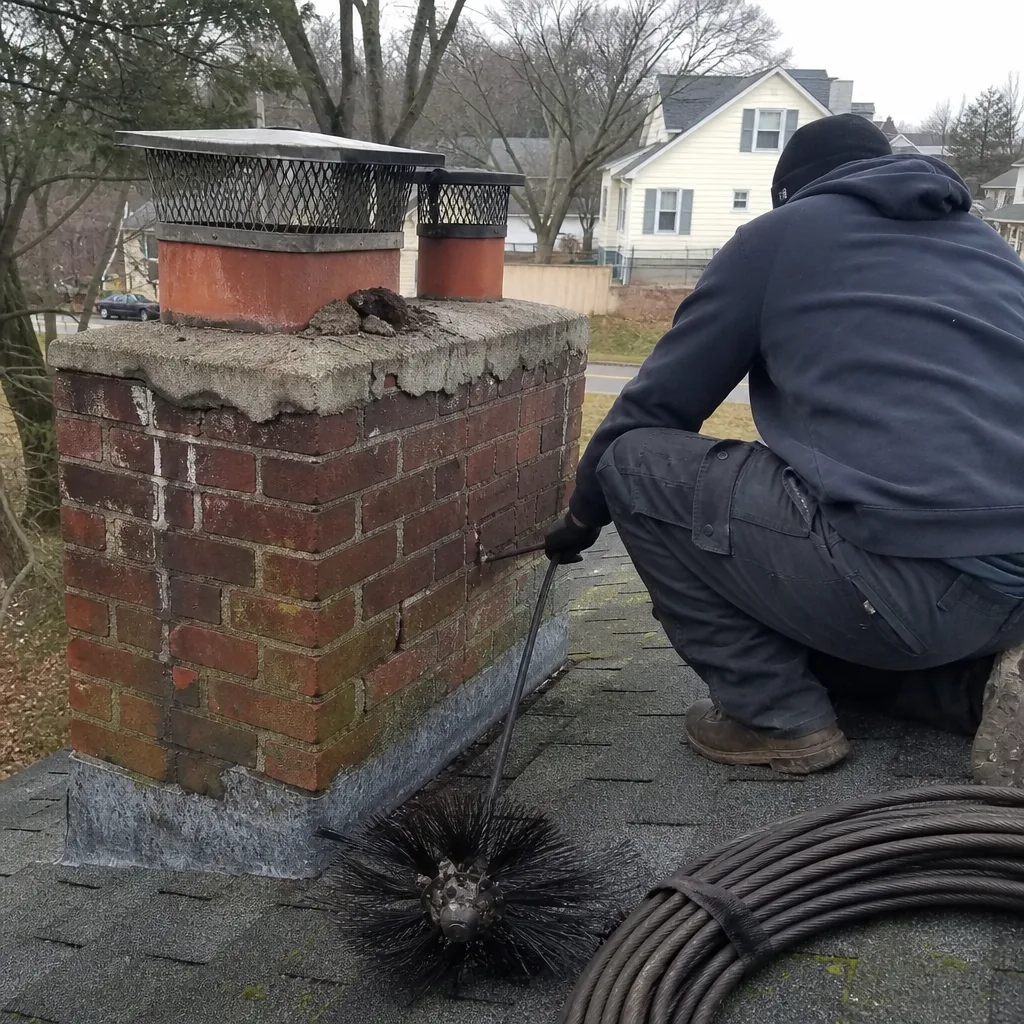 Before
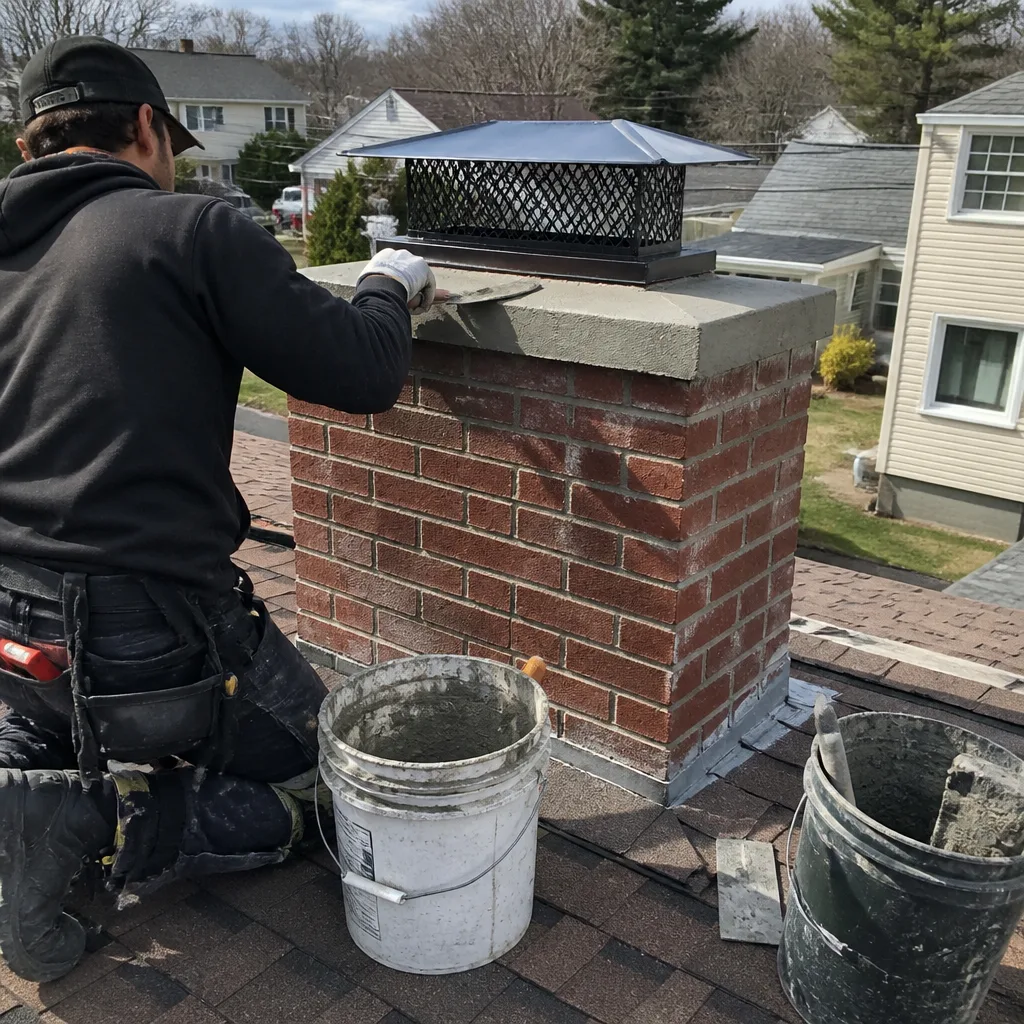 After
After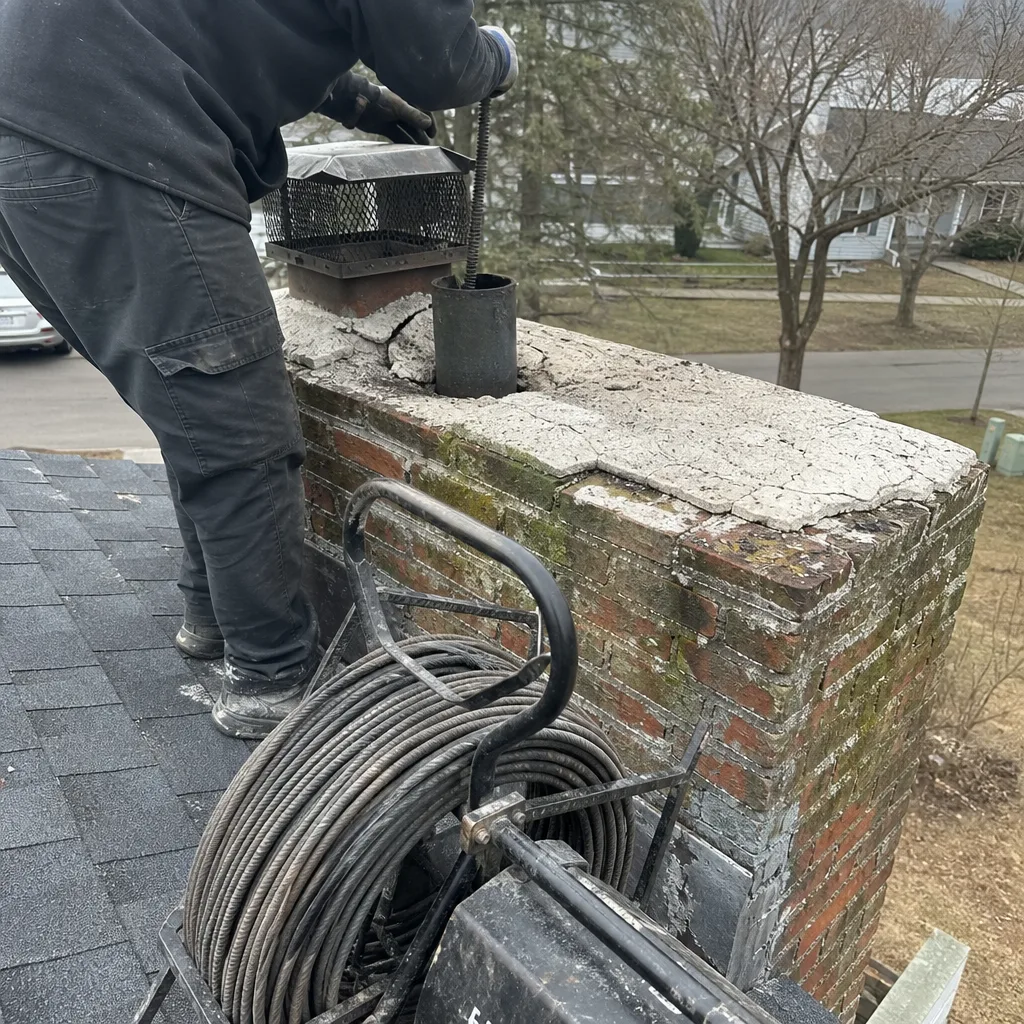 Before
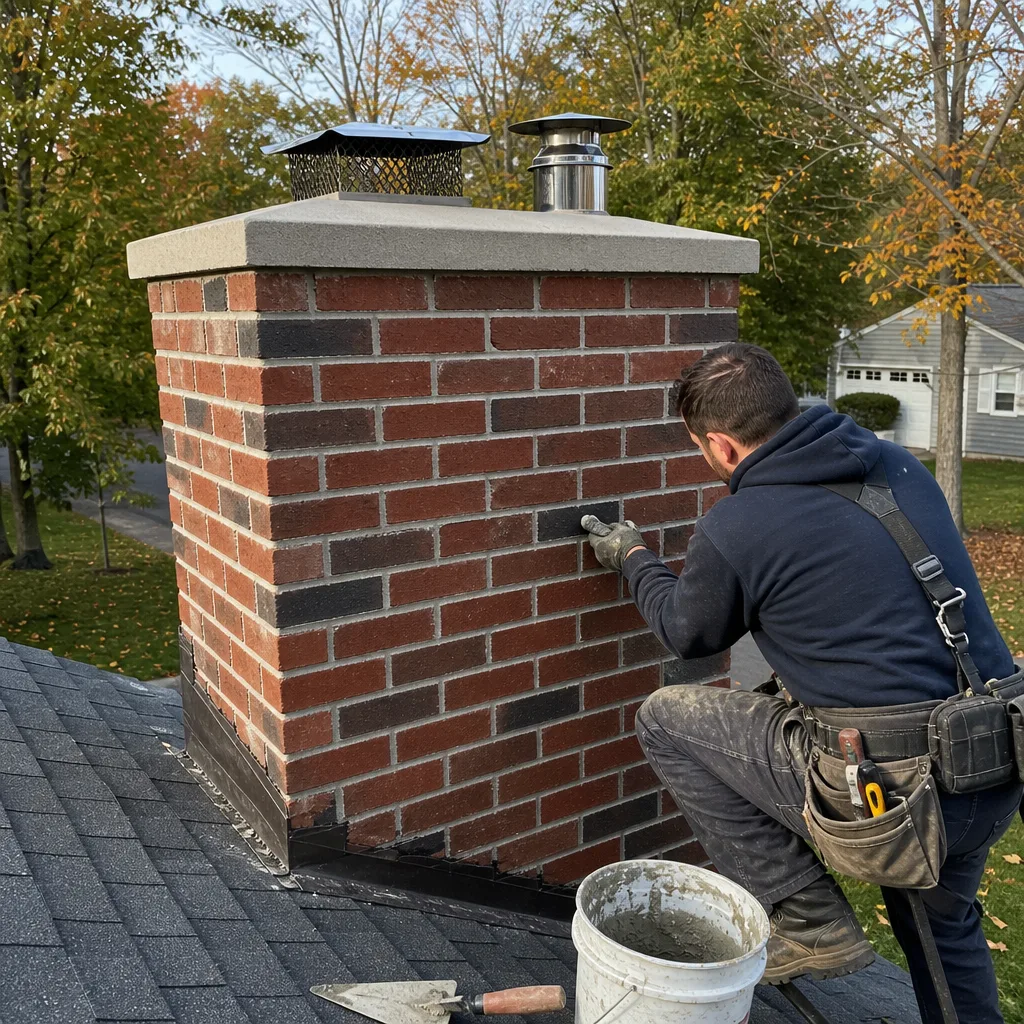 After
AfterDIY vs Professional Chimney Cleaning: The Chelmsford Homeowner’s Decision Guide
You can buy the exact same brush kit a sweep uses. What you can’t buy is knowing what you’re looking at when you pull it out - and in a chimney, the things you don’t recognize are the things that burn your house down. In Chelmsford, where winters run long and masonry chimneys in neighborhoods like West Chelmsford and the historic district near the Common often date back to the 1970s and 1980s, we’ve seen too many homeowners finish a Saturday cleaning job feeling satisfied while Stage 2 creosote continues to coat their smoke chamber. This guide will show you what DIY chimney cleaning can actually accomplish, where it reliably falls short, and how to decide which path makes sense for your specific system - or see our How to Hire a Chimney Cleaning Contractor in Chelmsford: A Step-by-Step Guide if you decide professional help is the better route.
Quick Answer
DIY chimney cleaning is a defensible choice for gas fireplaces with flexible liners and recent professional baseline inspections, but it is not adequate for masonry chimneys over 20 years old, systems with no documented inspection history, or any fireplace that has had odor, draft, or smoke problems. The real risk isn’t incomplete cleaning - it’s missing structural defects and creosote buildup that a homeowner lacks the training and equipment to identify.
Table of Contents
- What DIY Chimney Cleaning Can Realistically Accomplish
- The Three Areas Homeowners Consistently Miss
- Equipment Reality Check: Actual DIY Costs vs. Professional Cleaning
- Insurance and Liability: What Your Policy May Actually Say
- A Clear Decision Framework for Chelmsford Homeowners
- Common Mistakes to Avoid
- When to Call a Professional
- Frequently Asked Questions
What DIY Chimney Cleaning Can Realistically Accomplish
Let’s start with what DIY can do, because understanding the boundaries is what keeps you safe.
A homeowner with patience, the right brush diameter, and a straight flue can remove light Stage 1 creosote. This is the fluffy, soot-like deposit that forms during normal burning of well-seasoned hardwood. It brushes off readily. If your system meets all of the following conditions, DIY cleaning is a reasonable maintenance task between professional visits:
- Gas fireplace with a flexible metal liner installed within the last 10 years
- A professional Level 2 inspection on file from the previous 12 months
- No history of smoke backup, odd odors, or draft complaints
- Straight flue with no offsets or bends
- Accessible firebox and damper that move freely
We’ve cleaned chimneys in Chelmsford’s newer developments near Drum Hill where gas inserts with flexible DuraFlex liners fit this profile exactly. The homeowner who burns only gas, keeps their annual professional inspection current, and wants to knock down light particulate buildup between visits? That person can handle this.
But here’s where the boundary hardens. Stage 2 creosote - the shiny, tar-like, popcorn-textured deposit that forms when wood is burned unseasoned or when the flue runs too cool - does not brush off. It requires mechanical removal with specialized chains or rotary systems, sometimes followed by chemical treatment. Stage 3 creosote, the hardened glaze that can exceed 1/4 inch thickness, is essentially fuel-soaked ceramic. A homeowner with a wire brush will scratch the surface, feel accomplished, and leave 90% of the hazard in place.
In our 42 years serving Middlesex County, including Chelmsford homes near the Merrimack River where damp air accelerates creosote formation, we’ve pulled out DIY-cleaned flues that looked passable from the firebox and were still coated with Stage 2 deposits above the smoke shelf. The brush never reached that far. The homeowner never knew.
DIY cleaning also cannot evaluate the condition of the liner itself. A stainless DuraFlex liner can develop seam separations. A terracotta liner can spall, crack, or shift at the joints. These defects are invisible from below and often invisible from above without a camera. You can have a perfectly clean flue surrounding a failed liner - and that failure is what channels heat to combustible framing.
The Three Areas Homeowners Consistently Miss
Every year we inspect chimneys in Chelmsford where the homeowner has “been cleaning it myself for years.” In nearly every case, three specific zones have never been touched. These aren’t minor oversights. They’re the locations where most chimney fires originate.
1. The Smoke Shelf Behind the Damper
The smoke shelf is the flat or slightly sloped ledge behind the damper plate, designed to collect falling debris and reverse downdrafts. It’s typically 6 to 12 inches deep in a masonry fireplace, and it’s a creosote magnet. Cold air settles here. Condensation forms. The resulting deposit is often the densest in the entire system.
A standard brush rod pushed up the flue passes completely above this area. The damper, even when fully open, blocks direct access. Professional sweeps use specialized flat brushes, hand tools, and HEPA vacuums with extended wands to clean this space. We’ve found smoke shelves in Chelmsford’s older colonials near Route 4 packed with 2 to 3 inches of hardened material that the homeowner never suspected.
2. The Smoke Chamber Corbeling
The smoke chamber is the area above the damper and below the flue liner, where the fireplace walls taper inward. Code requires this surface to be parged smooth with refractory mortar, but many older chimneys, especially in Chelmsford neighborhoods built during the 1960s and 1970s housing boom, have rough corbeled brick instead.
Rough surfaces create turbulence. Turbulence causes creosote to deposit heavily. The corbeling itself - the stepped brick pattern - creates ledges where material accumulates. A brush moving through the flue above never contacts this area. Professional sweeps use chamber whips, rotary tools, and hand scraping to address it. In our experience, this is where Stage 2 deposits first become problematic in systems that the homeowner believed were “clean.”
3. The Liner Joints Visible Only From Above
Terracotta flue liners are installed in sections, typically 2 feet long, with joints that should be mortared. Over decades of thermal cycling, these joints fail. The liner sections can shift, creating gaps that expose the surrounding masonry to direct flue gases and heat.
These defects are not visible from the firebox. They’re often not visible from the roof without a light source inserted into the flue and a camera or mirror system. We use Level 2 camera inspections that document every joint, every crack, every spalled surface. The homeowner who cleans their own chimney from below has no mechanism to detect these failures.
In 2019, we inspected a Chelmsford home near South Row Road where the homeowner had performed DIY cleaning for 11 consecutive years. The flue looked clean. The camera revealed three separated liner joints and a vertical crack running 18 inches. The system was a house fire waiting for the right cold night and an overloaded firebox.
Equipment Reality Check: Actual DIY Costs vs. Professional Cleaning
The internet makes DIY chimney cleaning look cheap. The reality is more layered, especially for Chelmsford homeowners who need equipment suited to their specific system - check our Chimney Cleaning Cost Breakdown: The Chelmsford Homeowner’s Reference for 2026 to compare real numbers.
Here’s what a genuinely adequate DIY setup costs for a standard masonry fireplace with an 8-by-8-inch terracotta flue:
| Item | Cost Range |
|---|---|
| Polypropylene brush, 8″ diameter (properly sized to flue) | $25-$40 |
| Flexible chimney rods, 1/4″ or 3/8″, set of 6 (18 ft. reach) | $45-$75 |
| HEPA vacuum rated for ash and fine particulate | $120-$250 |
| Drop cloths, 12′ x 15′, heavy canvas, set of 2 | $40-$60 |
| Respirator with P100 filters (ash contains silica and creosote particles) | $35-$50 |
| Work light with extension, 500+ lumens | $25-$40 |
| Safety glasses, gloves, ladder stabilizer for roof access | $50-$80 |
| Total initial investment | $340-$595 |
The professional cleaning cost in the Chelmsford market typically runs $200-$350 for a standard masonry fireplace sweep with Level 1 inspection, depending on accessibility and condition. A Level 2 inspection with camera documentation adds $150-$250.
So the DIY “savings” evaporate quickly. If you already own a HEPA vacuum and basic safety gear, your incremental cost drops to roughly $100-$160. But you’re still performing only a fraction of the service a professional provides, with no documentation, no defect detection, and no written condition report.
There’s also the equipment quality issue. The brushes and rods sold at hardware stores are often undersized or constructed with materials that don’t hold up to creosote solvents. Professional-grade equipment from suppliers like Copperfield and Famco - the brands we use exclusively - costs more because it lasts and performs. A homeowner buying a budget kit online may find bristles shedding into the flue or rods separating mid-cleaning.
And then there’s disposal. Creosote is classified as hazardous waste in Massachusetts. Professional sweeps transport it to licensed facilities. Homeowners who bag it for curbside pickup are often violating local regulations without knowing it.
Insurance and Liability: What Your Policy May Actually Say
This is the section most DIY guides omit entirely, and it’s the one that can cost you tens of thousands of dollars.
Homeowner’s insurance policies vary in their treatment of chimney fires, but a growing number of carriers now include language that limits or excludes coverage for systems without documented professional inspection and maintenance. The specific wording we’ve encountered in Massachusetts policies typically falls into three categories:
- Maintenance exclusion clauses: The policy covers sudden and accidental damage but excludes losses resulting from “lack of maintenance” or “failure to maintain.” A chimney fire in a system with no professional inspection history can be classified as maintenance-related, shifting liability to the homeowner.
- Wood-burning appliance riders: Some policies require annual professional inspection and cleaning as a condition of coverage for wood-burning systems. Failure to comply voids the rider.
- Negligence determinations: Even without specific exclusion language, insurers may argue that a reasonable homeowner would have engaged professional inspection, and that DIY cleaning without proper training constitutes negligence.
We are not insurance professionals, and policy language changes. What we can tell you from 42 years in this trade is that the homeowners who fare best after chimney fires are those with documented annual inspections from certified sweeps, photos of condition, and written reports. The homeowner who says “I clean it myself every year” typically faces a harder claims process.
In Chelmsford, where home values have risen substantially and replacement costs for historic properties near the town center can exceed $500,000, an uncovered chimney fire is a financial catastrophe. The $250 professional inspection that produces a dated, photo-documented report is inexpensive insurance against insurance problems.
If you currently DIY your chimney maintenance, we recommend pulling your policy declarations page and looking for terms like “maintenance,” “wood-burning,” “solid fuel,” or “inspection requirements.” If the language is ambiguous, a call to your agent for clarification is worth the time.
A Clear Decision Framework for Chelmsford Homeowners
After four decades of inspecting chimneys across Middlesex County, we’ve developed a straightforward framework. It doesn’t flatter our business. It reflects what we’ve actually seen work and fail.
DIY Is Reasonable When:
- Your system is gas-only with a flexible metal liner (DuraFlex or equivalent)
- You have a professional Level 2 inspection on file from the past 12 months
- The inspection found no defects, no creosote beyond Stage 1, and no liner issues
- Your flue is straight with no offsets
- You have no history of smoke backup, odors, or draft problems
- You own or are willing to purchase proper equipment, including HEPA vacuum and respirator
DIY Is Not Adequate When:
- Your chimney is masonry construction over 20 years old (most of Chelmsford’s housing stock)
- You have no professional inspection history, or your last inspection was over 2 years ago
- You burn wood, even occasionally, in a masonry fireplace
- You’ve experienced any smoke in the room, odd odors, or difficulty starting/maintaining drafts
- Your flue has offsets or bends that prevent straight brush passage
- You’ve noticed exterior staining, efflorescence (white powder), or deteriorating mortar
- You’re preparing to sell the home and need documentation for disclosure
Chelmsford’s climate adds specific considerations - our Seasonal Chimney Cleaning Care for Chelmsford: Year-Round Homeowner’s Guide covers this in depth. Our location in the Merrimack Valley means cold, damp winters that promote condensation in flues. The temperature differential between heated living space and cold exterior masonry drives moisture migration. Homes near the river or in low-lying areas like North Chelmsford see this effect amplified. Masonry systems here age faster than identical construction in drier climates. A 25-year-old chimney in Chelmsford is not equivalent to a 25-year-old chimney in Arizona.
The historic homes near the Chelmsford Common and along Route 129 present additional complexity. Many have been modified multiple times, with original fireplaces adapted for inserts, liners added later, and chimney caps replaced with varying quality. Without a professional camera inspection, you cannot know what previous owners installed or whether those installations remain sound.
Common Mistakes to Avoid
- Using a brush that’s the wrong size for the flue. An undersized brush skips the corners where creosote concentrates. An oversized brush can lodge in the flue, requiring professional extraction. Measure the flue interior precisely, or have a sweep confirm the dimension.
- Cleaning from below only, without roof access to inspect the crown and cap. The crown is your chimney’s umbrella. Cracks there admit water that destroys masonry from the inside. In Chelmsford’s freeze-thaw climate, a cracked crown is a five-year path to rebuild territory.
- Burning creosote removal logs as a substitute for mechanical cleaning. These products can loosen light deposits slightly but do not remove Stage 2 or 3 creosote. They also create loose, flaky material that can obstruct the flue if not mechanically removed.
- Assuming no visible smoke means no problem. Carbon monoxide produces no visible smoke. A partially blocked flue or cracked liner can vent CO into living space without any warning sign you can detect without a monitor. This is why we recommend CO detectors on every level, tested monthly.
- Cleaning a fireplace that hasn’t been professionally inspected in years. You may be brushing debris off a liner that’s already failed, giving yourself false confidence while the actual hazard remains. Always establish baseline condition before DIY maintenance.
- Ignoring the exterior. The flue interior is half the system. The crown, cap, flashing, and masonry condition determine whether water enters and destroys what you’ve cleaned. A professional inspection evaluates the whole assembly.
When to Call a Professional
Call a professional sweep when your system falls outside the narrow DIY-appropriate zone described above. Call immediately if you notice any of the following: smoke entering the room during normal operation, a strong tar or campfire odor when the fireplace is not in use, visible cracks in the firebox or exterior masonry, white staining on the chimney exterior, or a damper that sticks or won’t fully open or close.
For Chelmsford homeowners with masonry chimneys - which describes most homes in neighborhoods like Westlands, Parker, and the historic district - professional annual inspection isn’t an upsell. It’s the baseline that keeps your system insurable, your family safe, and your home’s value protected.
Chimney Cleaning & Sweep in Chelmsford from Hearthstone Chimney Co. includes Level 2 camera inspection with photos you can see, a plain-English verdict on condition, and documentation you can file with your insurer. We offer free estimates in Chelmsford - call (978) 991-9492. Our 90-Day Done Right Promise means if it’s not right, we come back. In writing, no arguing.
Frequently Asked Questions
A standard chimney sweep with Level 1 inspection in Chelmsford typically costs $200-$350, while a Level 2 inspection with camera documentation runs $350-$600 depending on accessibility and system complexity. These prices reflect the full service: equipment setup, interior and exterior evaluation, debris removal, and written condition report with photos. Call (978) 991-9492 for an exact quote - estimates are free.
Occasional wood burning still produces creosote, and occasional use can actually increase certain risks because the flue never fully warms to establish strong draft. In our experience across Chelmsford, occasional burners often have more advanced creosote stages than daily burners because they never develop the system awareness that comes with regular use. We recommend professional inspection at least annually regardless of burn frequency.
The National Fire Protection Association recommends annual inspection for all solid fuel systems, with cleaning frequency determined by inspection findings. In Chelmsford’s climate, where cold, damp winters promote condensation and creosote formation, most wood-burning systems need annual sweeping. Gas systems typically need less frequent cleaning but still require annual inspection for liner integrity and venting performance. The $89 Seasonal Tune-Up from Hearthstone Chimney Co. covers gas fireplace inspection and basic maintenance.
Skipped maintenance leads to creosote accumulation, which restricts flue diameter and increases the risk of chimney fire. A chimney fire can reach 2,000 degrees Fahrenheit, cracking liners, damaging masonry, and potentially igniting adjacent framing. Even without fire, blocked or deteriorated flues can vent carbon monoxide into living space. The consequences aren’t gradual inconvenience - they’re sudden, catastrophic, and often occur on the coldest night when the system is working hardest. Call (978) 991-9492 for an inspection that tells you exactly where your system stands.
A liner recommendation should always be supported by camera evidence you can see yourself, plus a clear explanation of the specific defect and the hazard it creates. At Hearthstone Chimney Co., we show you the photos, point to the crack or separation, and explain what happens if heat reaches combustible framing. We also tell you plainly when a defect can be monitored rather than immediately replaced. No work is recommended without documentation you can evaluate. If another company recommended a liner without showing you camera evidence, our Free Second Opinion on any written estimate gives you that second look.
Level 1 is a visual inspection of accessible portions of the chimney exterior and interior, appropriate for systems with no changes and continued use under the same conditions. Level 2 includes video scanning of the flue interior, accessible portions of the attic and basement, and evaluation of clearances to combustibles - required for real estate transactions, after chimney fires, when fuel type changes, or when any system modification occurs. For most Chelmsford homeowners with masonry chimneys over 20 years old, Level 2 is the appropriate baseline. Chimney Repair in Chelmsford often begins with Level 2 findings that Level 1 would have missed entirely.
The Bottom Line
DIY chimney cleaning has a place, but that place is narrow: gas systems, recent professional baselines, straight flues, and homeowners who understand exactly what they’re not seeing. For the masonry chimneys that dominate Chelmsford’s housing stock, professional inspection and cleaning isn’t about convenience. It’s about detecting the defects that hide where brushes don’t reach and untrained eyes don’t look. The cost difference between DIY and professional service is smaller than it appears, and the gap in what you learn about your system’s condition is enormous. Done right - and we stand behind it - professional service gives you photos you can see, a plain-English verdict, and documentation that protects your home, your insurance coverage, and your peace of mind. For more guides & resources on keeping your chimney safe, explore our blog. A square deal: no surprises on the bill. We’ll be there when we say.
Written by Russell Haines, Owner at Hearthstone Chimney Co., serving Chelmsford since 2014.