
Last updated September 10, 2026
Level 1 sweep and inspection to the NFPA 211 annual standard - flue, crown, cap, and flashing checked and photographed
Chimney sweep logs do not sweep chimneys. They loosen some creosote - which then falls where a brush and vacuum still have to collect it.
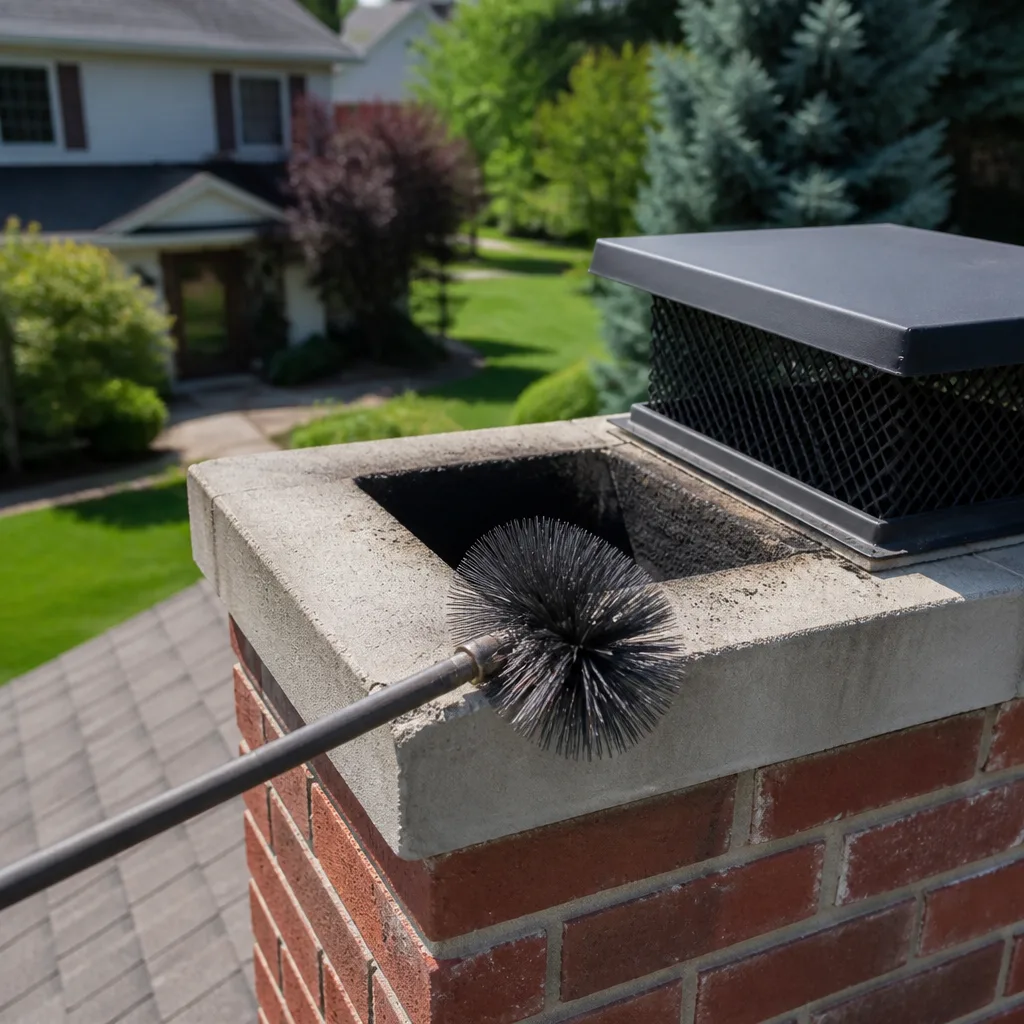
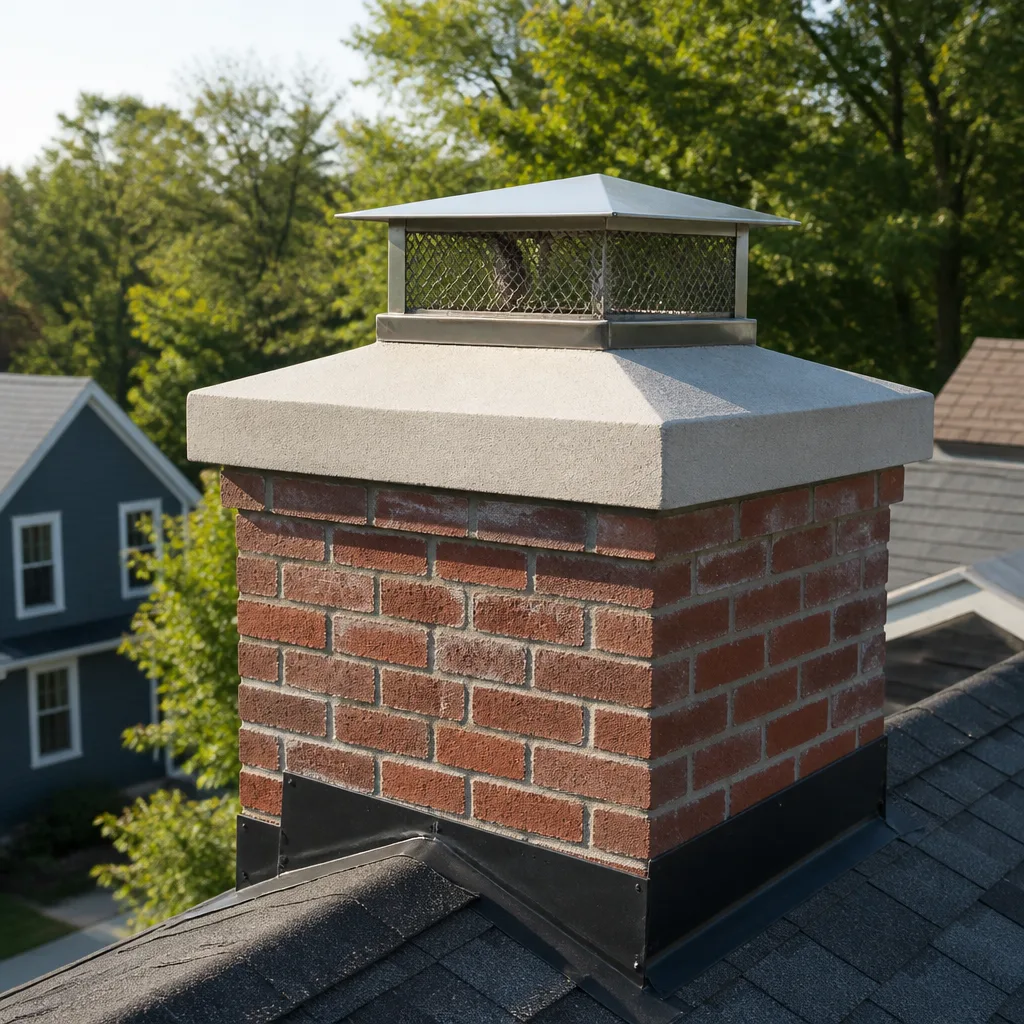
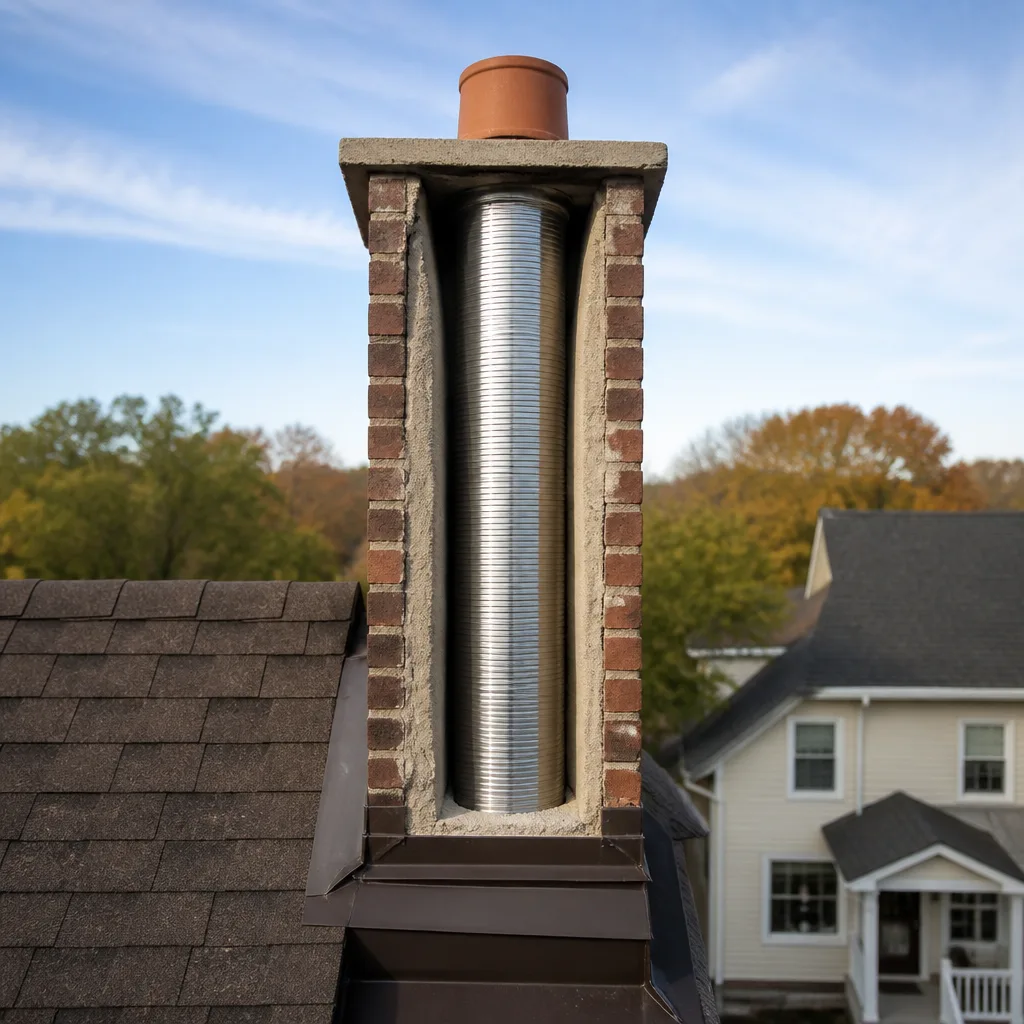
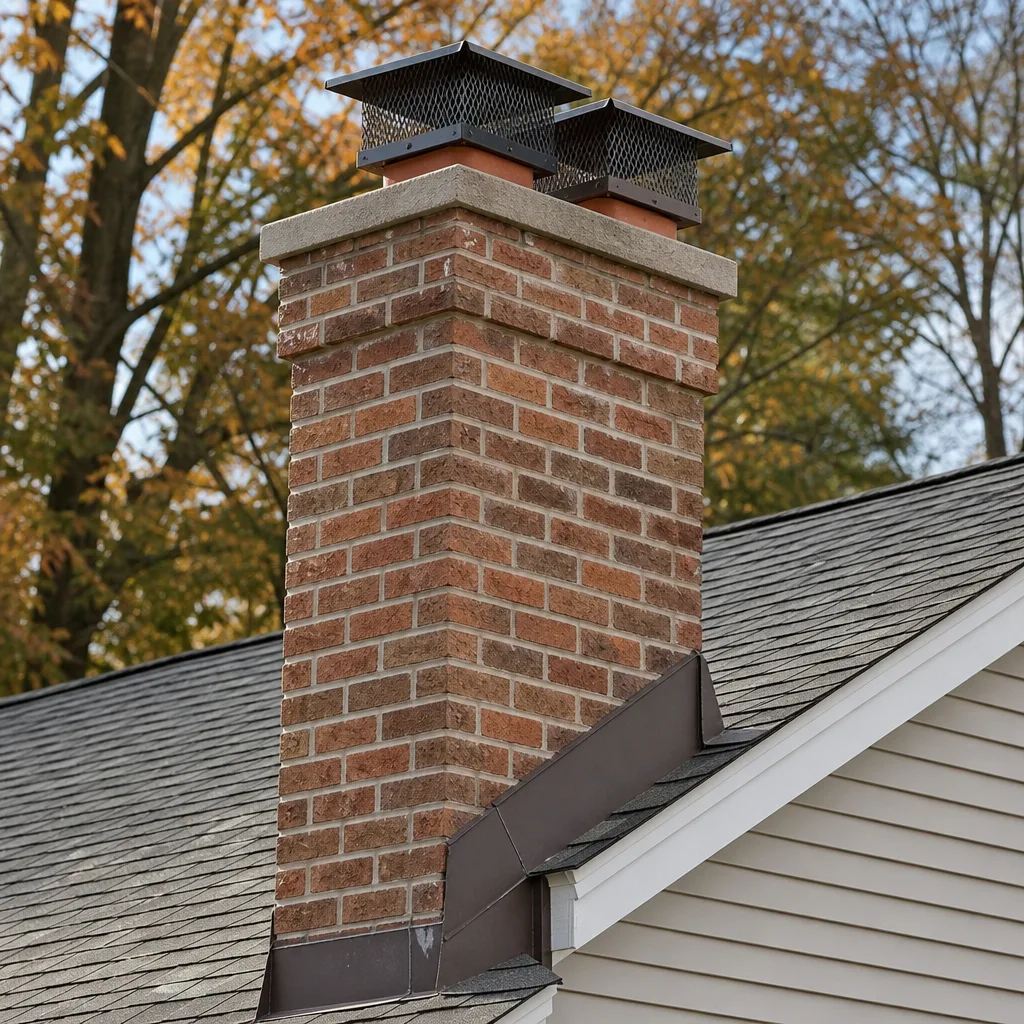
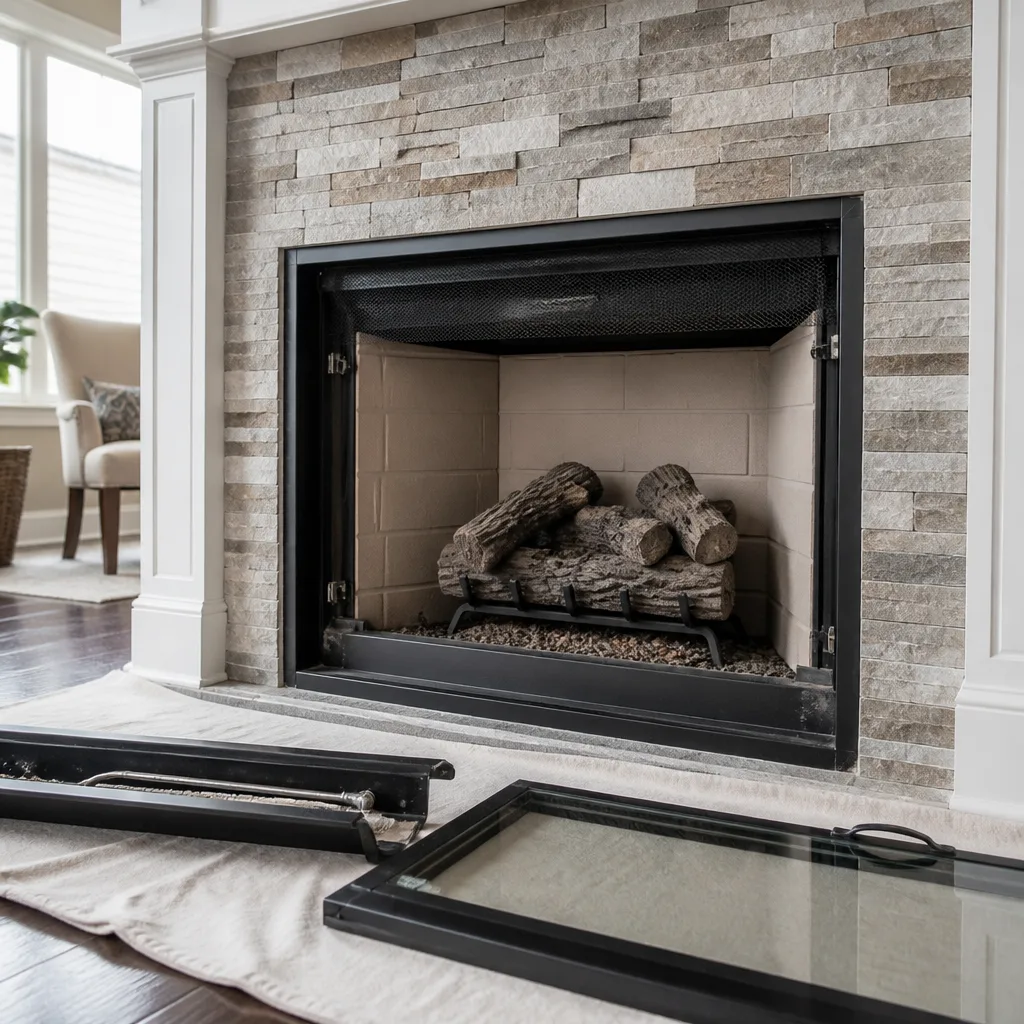
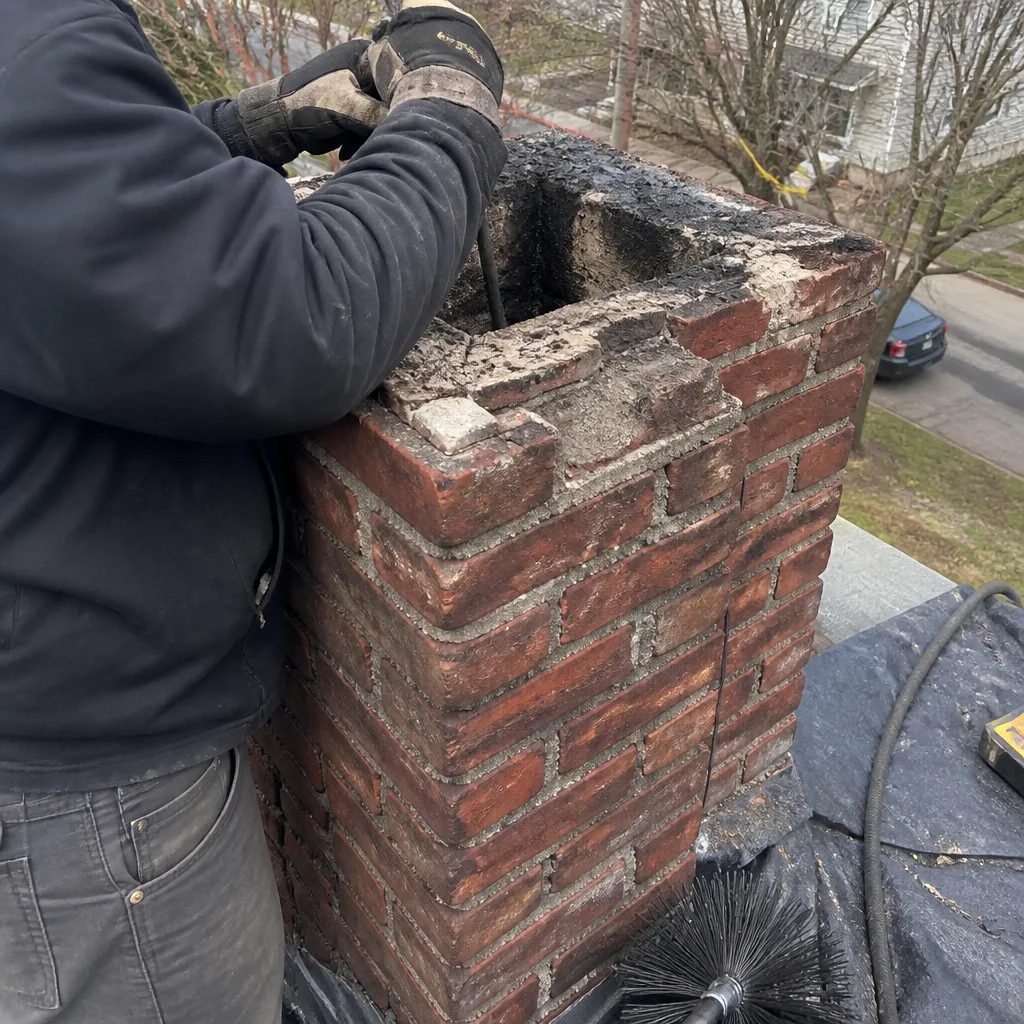 Before
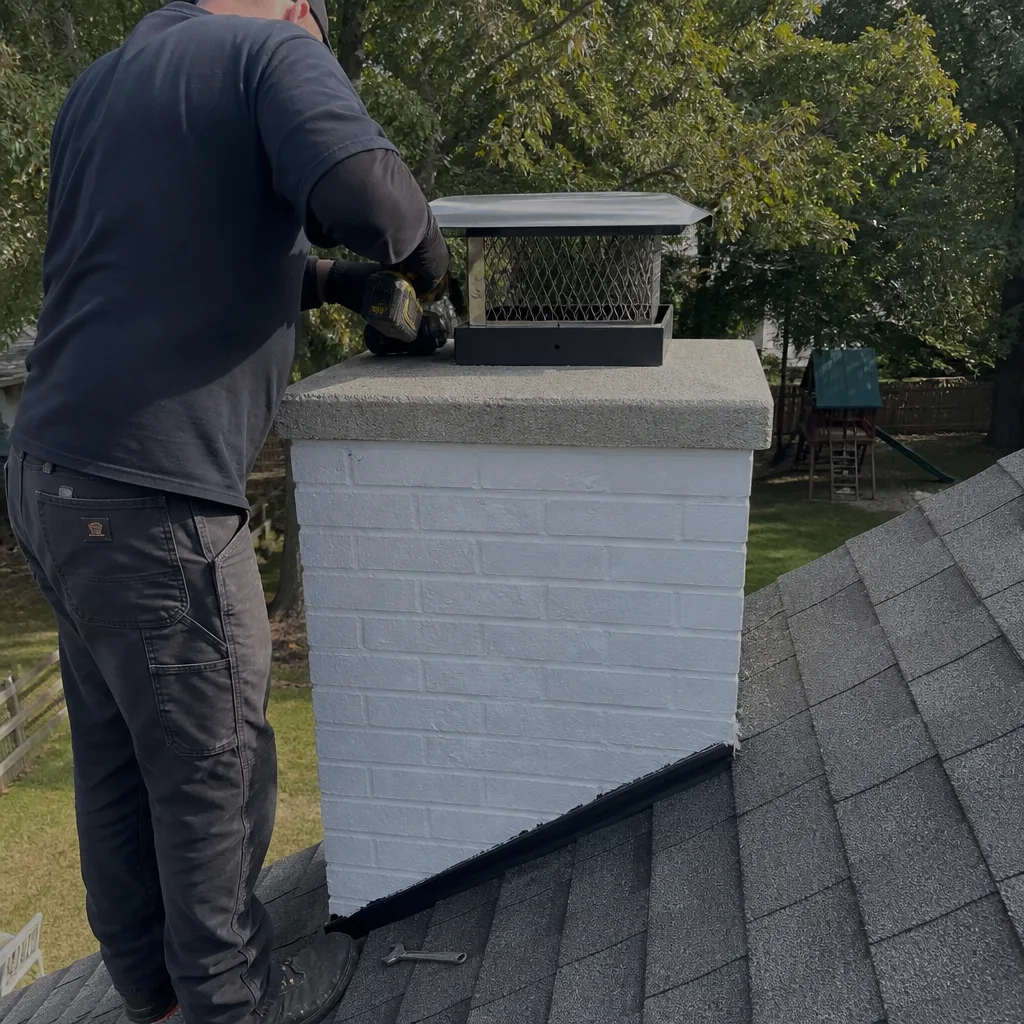 After
After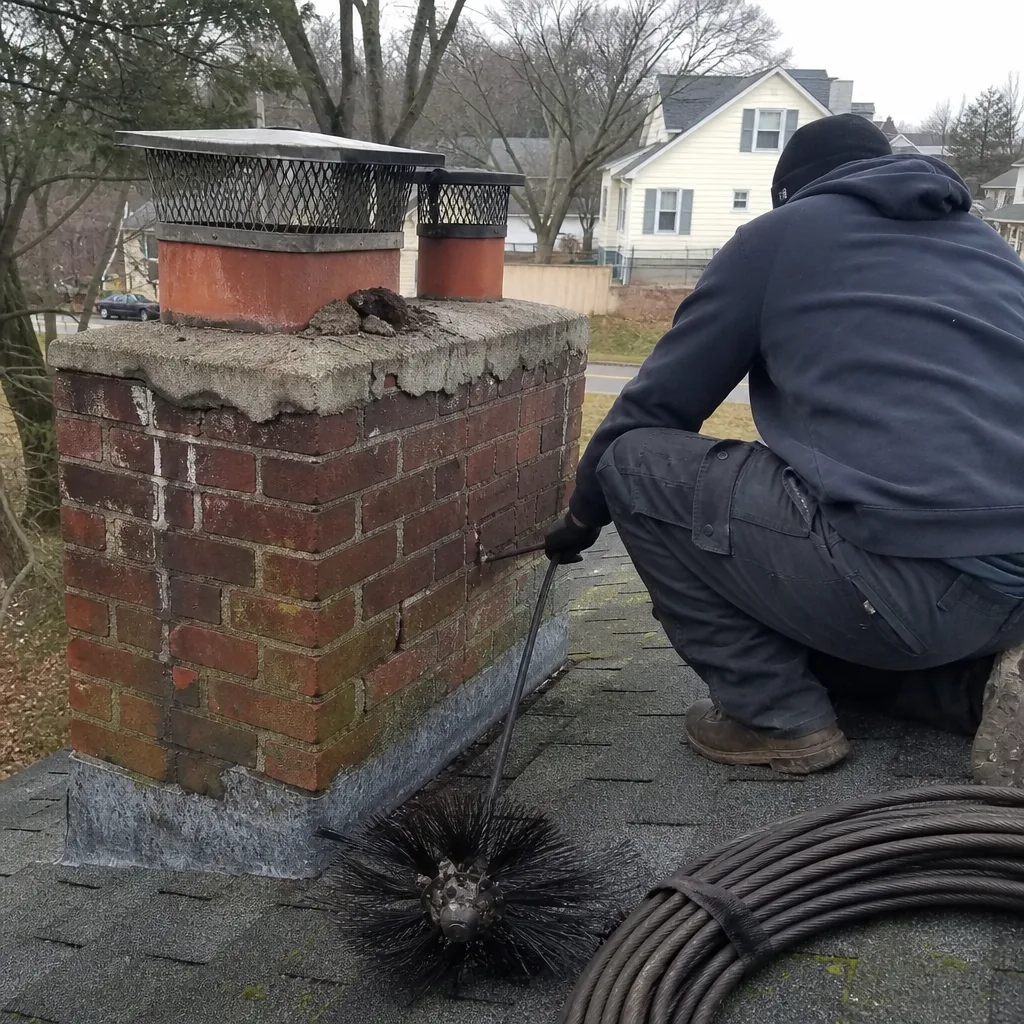 Before
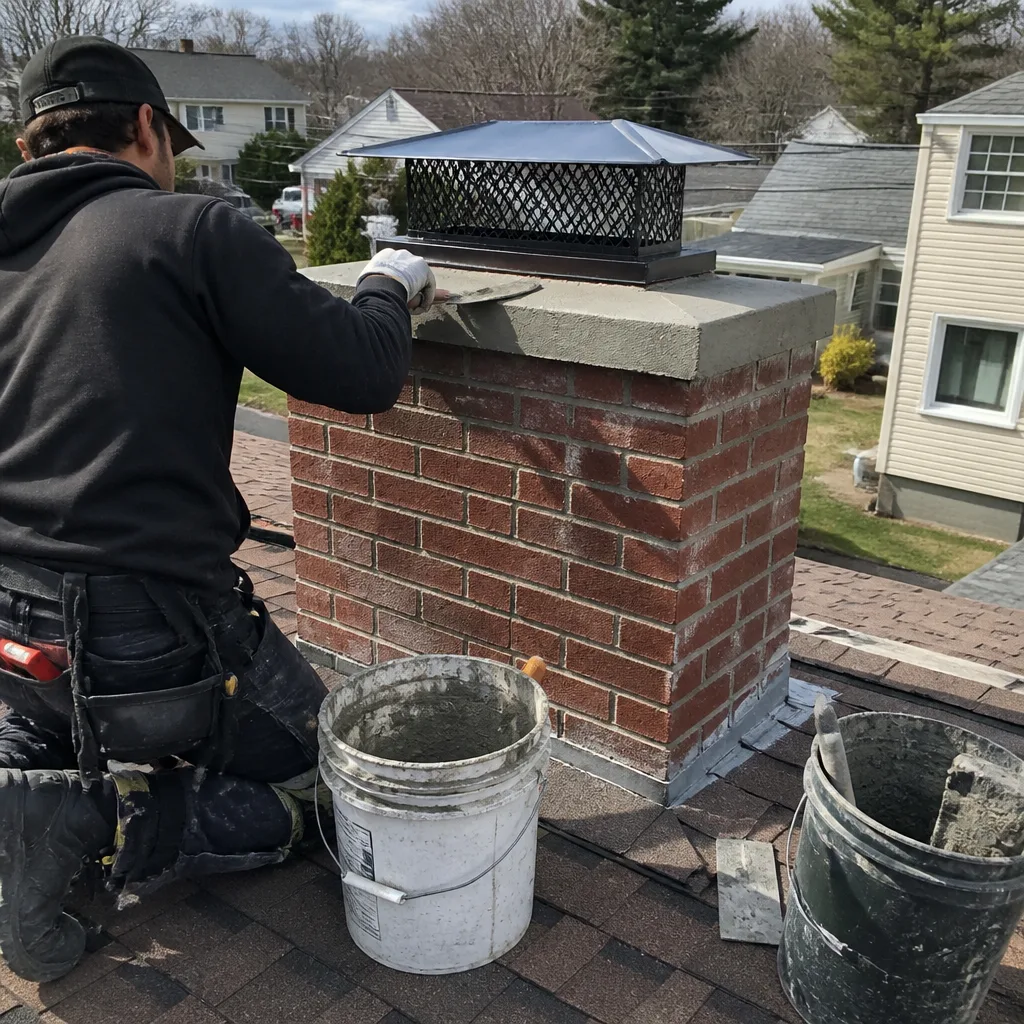 After
After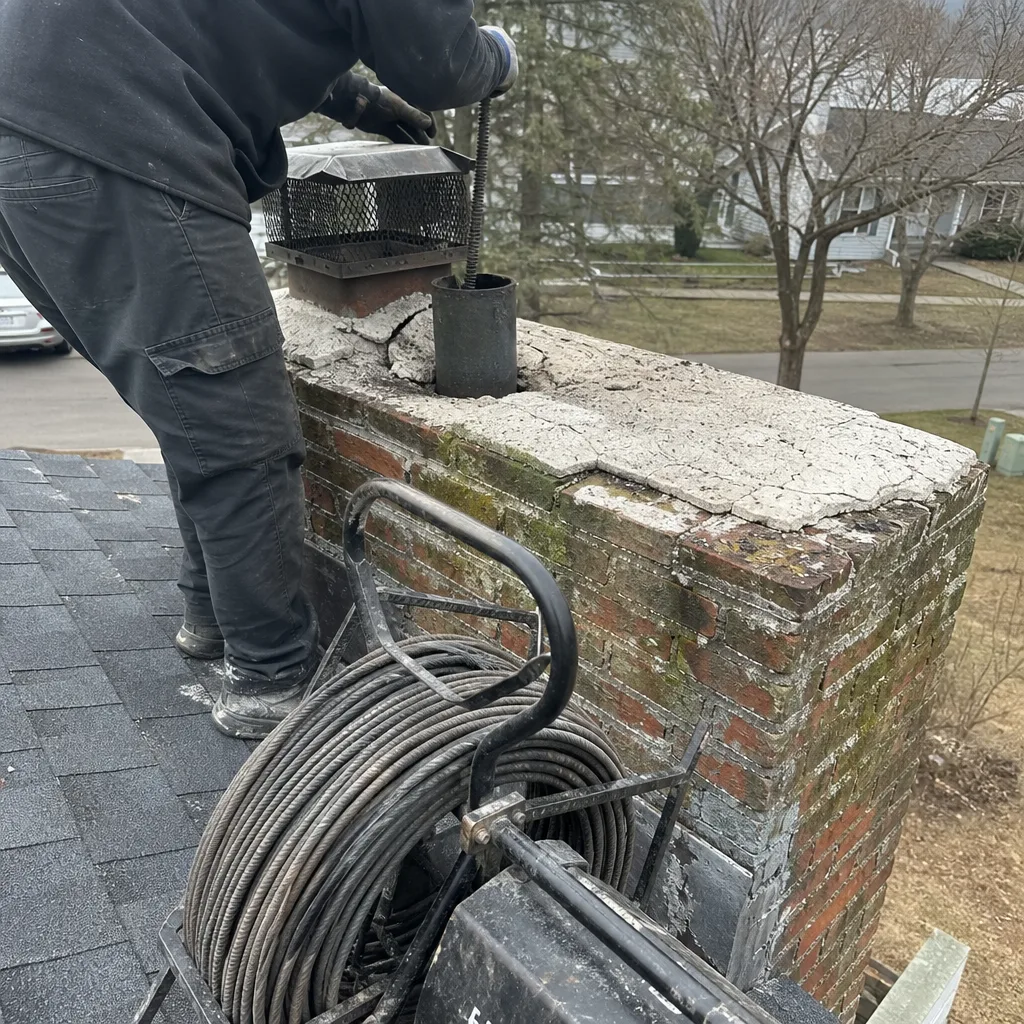 Before
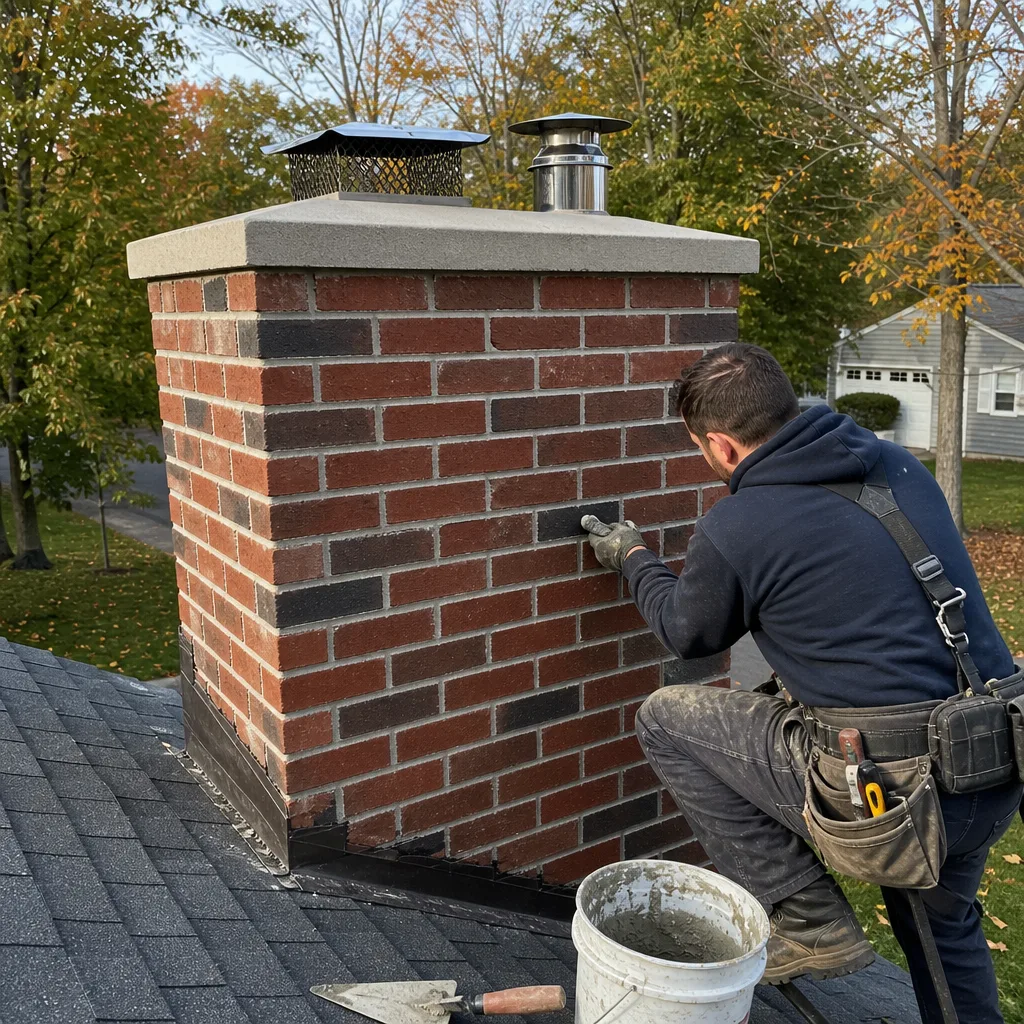 After
AfterChimney Cleaning Warning Signs: A Chelmsford Homeowner’s Reference Guide
A chimney fire doesn’t always sound like a fire. Some burn slow and quiet inside the flue, detected only by a slight roaring on a windy night or a flue tile that cracks under heat you never knew was there. In Chelmsford, where we’ve swept chimneys in Colby, Freeman, and along the Merrimack Valley for over 42 years, we’ve learned that the most expensive repairs start as subtle signals - a draft that used to pull strong, a smell that wasn’t there last summer, a white bloom on the brick that neighbors mistake for age. Our Complete Guide to Chimney Cleaning in Chelmsford describes exactly what those early signals look and feel like so you can act before a $200 cleaning becomes a $3,000 repair.
Quick Answer
The warning signs that your Chelmsford chimney needs cleaning or repair include weak or smoky draft, persistent odors that change with the season, white mineral staining (efflorescence) on exterior brick, spalling or flaking masonry, and any visible debris or animal nesting material in the flue. Most of these conditions develop gradually and are easy to dismiss until they force an emergency repair. If you notice two or more of these signs together, schedule a Level-2 camera inspection before the next burning season.
Table of Contents
- Draft Degradation: How to Tell Normal Seasonal Change from Real Trouble
- Odor Mapping: What Your Chimney Smell Is Telling You
- Efflorescence on Exterior Brick: Reading the White Stains
- Ceiling and Wall Stains Near the Chimney Chase
- Spalling Brick and Crumbling Mortar in Chelmsford’s Climate
- Debris, Nesting Material, and Visible Blockage
- Common Mistakes to Avoid
- When to Call a Professional
- Frequently Asked Questions
Draft Degradation: How to Tell Normal Seasonal Change from Real Trouble
A chimney that used to draw well and now doesn’t is the most common warning sign we hear about from Chelmsford homeowners. The problem is distinguishing a temporary weather effect from a developing blockage or mechanical failure.
Normal seasonal draft variation happens. Cold, dense air outside in January creates stronger draft pressure than mild October afternoons. A chimney on the windward side of a house during a northeast storm will behave differently than on a calm day. These are expected.
But certain patterns signal real trouble:
- Draft weakness that persists across weather conditions. If your fireplace smokes on mild days, cold days, and windy days alike, the flue is likely partially obstructed by creosote buildup, a collapsed liner section, or a damper that no longer opens fully.
- Smoke spillage when starting a fire that used to light cleanly. This often means the flue opening has narrowed significantly. We’ve measured flues in Chelmsford homes that lost 30% of their cross-sectional area to glazed creosote - enough to reverse draft at startup.
- Cold air falling down the chimney when the damper is closed. A healthy chimney with a functioning damper should not deliver noticeable cold air infiltration. If you’re feeling a draft at the hearth with the damper shut, the damper seal has failed or debris is preventing full closure.
Here’s a simple test any homeowner can perform. Light a match, blow it out, and hold the smoking end near the firebox opening with the damper open. Watch the smoke:
- If smoke pulls steadily upward, draft is functioning.
- If smoke drifts lazily or falls back into the room, draft is marginal.
- If smoke blows outward into the room, you have negative pressure or blockage - stop using the fireplace and call for inspection.
In our experience across Chelmsford neighborhoods, draft degradation from creosote buildup is most common in homes that burn unseasoned hardwood or use the fireplace as supplemental heat rather than occasional ambiance - a trade-off we explore in our DIY vs Professional Chimney Cleaning guide. The Merrimack Valley’s cold snaps also matter: when temperatures drop below 15°F for several days, homeowners tend to burn hotter, faster fires that produce more combustible creosote deposits.
One detail competitors rarely mention: draft problems can also stem from house pressure changes. New kitchen exhaust fans, bathroom vents, or tightly sealed replacement windows can shift your home’s pressure balance enough to overcome a marginal chimney draft. We always check this context during inspection.
Chimney Cleaning & Sweep in Chelmsford addresses draft issues at their source - removing obstruction and documenting flue condition with photos you can see.
Odor Mapping: What Your Chimney Smell Is Telling You
Chimney odors are not random. They map to specific conditions, and the same smell can mean different things depending on season and weather. Learning to read these signals prevents both unnecessary anxiety and dangerous neglect.
Campfire Smell in Summer
A faint campfire or asphalt odor from the fireplace during warm, humid months is normal to a degree. It means creosote deposits in the flue are reacting to heat and humidity - the same way old woodstove chimneys smell after rain. But intensity matters. If the smell permeates living spaces, if guests notice it without prompting, or if it carries a sharp, acrid edge rather than a mellow wood-smoke quality, the creosote layer is thick enough to become a genuine hazard. In Chelmsford’s humid July and August, we’ve inspected chimneys where summer odor was the only warning before a Level-3 glazed creosote condition.
Campfire Smell in Winter
During burning season, a campfire smell while the fire is lit is expected. A campfire smell after the fire is out, or in rooms distant from the fireplace, suggests smoke is leaking through a cracked flue liner or deteriorating smoke chamber. This is not cosmetic. It means combustion byproducts are entering wall cavities or living spaces.
Sulfur or “Struck Match” Odor
A sharp sulfur smell, like struck matches or rotten eggs in mild form, indicates moisture mixing with creosote and soot to form acidic compounds. This accelerates liner deterioration and signals active condensation inside the flue. Chelmsford’s freeze-thaw cycles worsen this: moisture penetrates, freezes, expands, and creates micro-fractures that admit more moisture. The smell is your early warning before visible damage appears.
Sewage or Decay Odor
This is often misattributed to plumbing. If the smell intensifies near the fireplace and diminishes elsewhere, suspect a dead animal or accumulated organic debris in the flue. Squirrels, raccoons, and birds commonly enter uncapped chimneys in Chelmsford’s wooded sections - especially near Russell Mill Pond and along the Bruce Freeman Rail Trail corridor. The smell of decay means the animal died in place, and removal requires professional equipment to avoid contamination.
The “Clean” Chimney That Still Smells
We encounter this regularly. A homeowner has the flue swept, but odors persist. The cause is almost always the smoke chamber - the area above the damper and below the flue liner - which standard sweeping often misses. The smoke chamber is where incomplete combustion products collect in rough, corbeled brickwork. Without proper cleaning and sometimes parging (smoothing with refractory material), odors continue. Our Level-2 inspections include smoke chamber evaluation, and we document condition with photos.
HeatShield and other professional-grade refractory materials are what we use when smoke chamber parging is indicated - not builder-grade substitutes that crack within a season.
Efflorescence on Exterior Brick: Reading the White Stains
That white, powdery staining on chimney brick is called efflorescence. It is not mold, and it is not harmless decoration. It is minerals - primarily calcium and sulfate salts - drawn out of the masonry by moisture moving through the brick and evaporating at the surface.
The critical question is whether efflorescence indicates active, ongoing water intrusion or a past event that has since resolved.
Surface efflorescence brushes off easily, returns slowly or not at all, and appears after a single driving rain event. This is common on Chelmsford chimneys after nor’easters, especially on north-facing exposures that stay damp longer. It does not necessarily require repair, though it signals that your chimney absorbed significant water and would benefit from water-repellent treatment.
Active efflorescence returns repeatedly, feels slightly damp even when brushed off, and is accompanied by soft or spalling brick beneath. This means water is entering the masonry system continuously - through failed crown mortar, deteriorated flashing, or porous brick - and cycling through freeze-thaw damage. In Chelmsford’s climate, with temperatures swinging from single digits to 50°F across a typical winter week, this cycling accelerates exponentially.
Here’s how to distinguish the two:
- Photograph the staining after a dry week.
- Brush it off with a stiff, dry brush - no water.
- Check again after the next significant rain or snowmelt.
- If it returns within two weeks, you have active intrusion requiring professional evaluation.
Efflorescence location also matters. Staining concentrated at the chimney base suggests ground moisture wicking upward - common in Chelmsford’s clay-heavy soils that hold water against foundations. Staining at the shoulder or mid-chimney points to crown or flashing failure. Staining below the roofline but above the shoulder often indicates a failed chimney cap or deteriorated wash (the sloped mortar that sheds water from the crown).
We use Gelco and Famco chimney caps and components when replacement is needed - professional-grade materials with proper galvanic compatibility, not the thin-gauge hardware-store versions that rust through in five years.
Ceiling and Wall Stains Near the Chimney Chase
Water stains on drywall or plaster near the chimney chase are urgent signals, but misdiagnosis is expensive. Calling a roofer for a chimney flashing leak, or a chimney company for a roof leak, wastes time and money. Here’s how to tell which trade you need.
Chimney flashing leaks typically appear as stains on the ceiling at the chimney’s perimeter, often triangular or fan-shaped as water spreads across drywall. The stain may darken after rain but lighten during dry spells. You may see rust streaks if metal flashing is corroding. In Chelmsford’s older neighborhoods - the homes near the Common, or the vintage colonials along Route 4 - step flashing often separates from brick as mortar joints deteriorate, creating a gap that admits water directly into the wall cavity.
Roof leaks unconnected to the chimney usually appear farther from the chimney centerline, follow rafter lines, or show multiple entry points. Water testing with a hose - carefully, and only if you can do so safely - can isolate the source.
Chimney chase top leaks (for factory-built or “prefab” chimneys) produce stains directly below the chase cover, often with rust-colored water if the galvanized cover is failing. These are chimney-specific repairs, not roofing.
The critical safety note: any water stain near a chimney that also serves a furnace or water heater demands immediate inspection. Moisture mixing with combustion byproducts creates acidic condensate that destroys metal liners from the outside. We’ve removed liners in Chelmsford homes that looked intact from inside but were paper-thin from external corrosion.
When we evaluate these stains, we photograph the suspected source, trace the water path where visible, and provide a plain-English verdict: chimney repair, roof repair, or both. No guesswork, no upsell.
Chimney Repair in Chelmsford covers flashing, crown, and chase-top work with the same documentation standard.
Spalling Brick and Crumbling Mortar in Chelmsford’s Climate
Spalling - the flaking, popping, or crumbling of brick faces - is the most visible sign of chimney distress. But not all spalling is equal, and Chelmsford’s specific conditions create patterns that homeowners should learn to read.
Our local clay-heavy soils hold moisture against foundations and chimney bases. Combined with temperature swings that can span 40°F in a single January day, this creates ideal conditions for freeze-thaw damage. Water enters brick pores, freezes, expands, and fractures the face. Repeat this cycle enough times, and the brick loses its protective “fire skin,” exposing softer interior material to accelerated deterioration.
Normal aging spalling affects isolated brick faces, progresses slowly over many years, and is concentrated on the most weather-exposed chimney face (usually north or northeast in our region). Mortar joints remain sound. This is maintenance-level concern, not emergency.
Accelerating structural spalling shows these patterns:
- Multiple adjacent bricks failing simultaneously
- Spalling accompanied by mortar erosion to finger-depth or greater
- Leaning or bulging of the chimney course above the damage
- New spalling appearing within a single season
- Staining or vegetation growth at the spall location, indicating persistent moisture
Rate of change is the key metric we teach homeowners to track. Photograph the same area seasonally. If the damaged zone expands more than a few inches in a year, or if individual spalls deepen from surface flaking to full brick-face loss, the chimney is in accelerating failure. Delaying repair at this stage typically doubles the cost within two to three years, as water penetrates deeper into the structure and undermines courses above.
In Chelmsford specifically, we’ve noticed accelerated spalling in homes built during the 1960s and 1970s construction boom, where lower-grade brick and soft mortar were common. The neighborhoods near Drum Hill and along Route 3 have many examples. These chimneys often need more than spot repair - they need partial rebuild with proper crown design and water management to prevent recurrence.
Our rebuilds use Olympia Chimney materials and proper engineering: adequate crown overhang, drip edges, and compatible mortar mixes that match or exceed original compressive strength without trapping moisture.
Fireplace Services in Chelmsford includes structural evaluation and rebuild planning with photos you can see and a plain-English verdict.
Debris, Nesting Material, and Visible Blockage
Some warning signs are not subtle. They are visible from the firebox or roof edge, and they demand immediate response.
Thermal creosote buildup appears as shiny, black, tar-like deposits or puffy, honeycomb-textured material in the flue. This is not ordinary soot. It is highly combustible, ignites at lower temperatures than ordinary creosote, and burns with explosive force. If you can see it from below, the condition is already advanced. Do not use the fireplace.
Animal nesting material ranges from obvious (sticks, leaves, twigs packed above the damper) to concealed (squirrel dreys in flue offsets, chimney swift nests on smoke shelf edges). Chelmsford’s mature tree canopy and proximity to conservation land make animal intrusion common. Raccoons can pull off poorly secured chimney caps. Squirrels squeeze through gaps you would think impossible.
Structural debris - pieces of flue tile, chunks of mortar, or brick fragments in the firebox - indicates liner failure or masonry deterioration above. Each piece that falls has left a corresponding gap or crack in the system. Combustion byproducts are likely entering wall cavities.
Soot fall, a light dusting of black powder below the damper after non-use periods, can be normal in small amounts. Heavy soot fall, or soot mixed with moisture that forms black paste, signals poor draft, unseasoned fuel, or a flue that is significantly oversized for the appliance.
We complete most debris removal and blockage clearing in a single visit, with camera verification that the flue is fully clear and structurally sound before we sign off. The 90-Day Done Right Promise applies: if it’s not right, we make it right, in writing, no arguing.
Common Mistakes to Avoid
- Assuming a gas fireplace chimney doesn’t need inspection. Gas appliances produce corrosive condensate and can suffer liner failure, animal intrusion, or draft hood blockage. Annual inspection applies to all fuel types.
- Using the fireplace less to “save” the chimney. Infrequent use allows moisture to accumulate without drying cycles from fire heat. Some of the most deteriorated chimneys we see in Chelmsford belong to homeowners who light three fires a year.
- Trusting a “clean” report from a visual-only inspection. Without camera documentation of the full flue length, you cannot verify condition. We provide photos you can see, explained in plain English.
- Applying waterproofing sealers without diagnosing the moisture source. Trapping water inside brick with non-breathable coatings accelerates spalling. Proper diagnosis first, treatment second.
- Ignoring summer odors because “we’re not using it anyway.” Summer odor intensity predicts winter creosote hazard. The same deposits causing smell in July will ignite in January.
- Hiring based on lowest price without verifying insurance, licensing, and guarantee terms. In Massachusetts, chimney sweeps are not universally regulated. Verify state licensing, general liability coverage, and whether any guarantee is in writing or merely verbal.
- Waiting for “one more season” on a known issue. Chelmsford’s freeze-thaw cycles punish delay. A crown crack that costs $400 to seal in September becomes a $2,400 rebuild by March.
When to Call a Professional
Call for professional evaluation when you observe any of the following: smoke spillage into living spaces during normal fire starting; visible debris, animal material, or tile fragments in the firebox; new or intensifying odors that persist beyond two weeks; efflorescence that returns after brushing; water stains on ceilings or walls near the chimney; or any change in draft behavior that doesn’t resolve with weather changes. See our step-by-step guide to hiring a chimney cleaning contractor in Chelmsford to choose the right professional.
Do not attempt to diagnose or repair flue liner damage, structural cracks, or animal removal yourself - for more guides & resources on safe chimney maintenance, explore our blog. These conditions involve genuine safety hazards - carbon monoxide exposure, chimney fire risk, or fall injury from roof access.
Hearthstone Chimney Co. home is where you’ll find our full service range and scheduling. We offer free estimates in Chelmsford - call (978) 991-9492. A live person answers every call, 24 hours a day, 7 days a week. Background-checked, uniformed technicians complete most jobs in a single visit, with no-hassle upfront pricing so there are no surprises on the bill.
Frequently Asked Questions
A standard chimney sweep and Level-1 inspection in the Chelmsford area typically runs between $200 and $350, depending on flue accessibility, appliance type, and whether creosote buildup requires additional treatment. Level-2 camera inspections, which we recommend for any home purchase, suspected damage, or change of fuel type, range from $300 to $500 and include photos you can see with a plain-English verdict. Call (978) 991-9492 for an exact quote - estimates are free.
You need a new liner when the existing one is cracked, perforated, improperly sized for the appliance, or missing entirely - conditions we verify with camera inspection, not guesswork. In Chelmsford’s older housing stock, unlined chimneys or clay tile liners damaged by decades of freeze-thaw cycling are common. We show you the photos, explain the hazard in plain English, and tell you honestly when work can safely wait versus when it cannot. Nothing is recommended without camera evidence you can see for yourself.
The National Fire Protection Association recommends annual inspection for all chimneys, and sweeping when creosote buildup exceeds 1/8 inch. For Chelmsford homeowners who burn wood as primary heat, this often means annual sweeping. Occasional fireplace users may extend to every two years if inspection confirms minimal buildup. Gas appliance chimneys still need annual inspection for corrosive damage or blockage, though sweeping frequency is typically lower. The $89 Seasonal Tune-Up we offer includes inspection and basic maintenance for qualifying systems.
Skipped maintenance leads to progressive creosote accumulation, which increases chimney fire risk and eventually obstructs draft completely. Moisture intrusion continues unseen, accelerating liner corrosion and masonry deterioration. By the time symptoms force attention - smoke in the house, visible stains, or structural damage - repairs typically cost 5 to 10 times preventive maintenance. In our 42 years serving this area, we’ve never seen a chimney improve with neglect. Call (978) 991-9492 to schedule before the next burning season.
Summer humidity reactivates creosote and soot deposits, releasing volatile compounds that winter’s dry air keeps dormant. The smell intensifies when air conditioning creates negative pressure that pulls chimney air into living spaces. A “clean” flue that still smells usually has a contaminated smoke chamber that standard sweeping missed. We address this with targeted smoke chamber cleaning and, when needed, parging with professional-grade refractory materials.
No. Any visible crack in flue tile means the chimney’s protective barrier is compromised. Combustion byproducts, including carbon monoxide, can enter wall cavities or living spaces through that crack. Heat can reach combustible framing. The crack will worsen with thermal cycling. Schedule a Level-2 inspection before the next fire. We document the full flue with photos and provide a plain-English verdict on repair options, from spot liner repair to full stainless steel relining with DuraFlex or other professional-grade materials.
The Bottom Line
Chimney warning signs are rarely dramatic until they become dangerous. The subtle signals - draft that isn’t what it was, a smell that changes with the weather, white stains that return after brushing, brick that flakes a little more each year - are the vocabulary your chimney uses to ask for attention. Learning to read these signs, and acting before they escalate, is the difference between routine maintenance and emergency repair. In Chelmsford’s climate, with its freeze-thaw punishment and clay-heavy soils, this discipline matters more than in milder regions. Document what you observe, photograph changes seasonally, and call for professional evaluation when two or more signs appear together. The cost of early attention is modest. The cost of delay is not.
Written by Russell Haines, Owner at Hearthstone Chimney Co., serving Chelmsford since 2014.