
Last updated September 10, 2026
Level 1 sweep and inspection to the NFPA 211 annual standard - flue, crown, cap, and flashing checked and photographed
Chimney sweep logs do not sweep chimneys. They loosen some creosote - which then falls where a brush and vacuum still have to collect it.
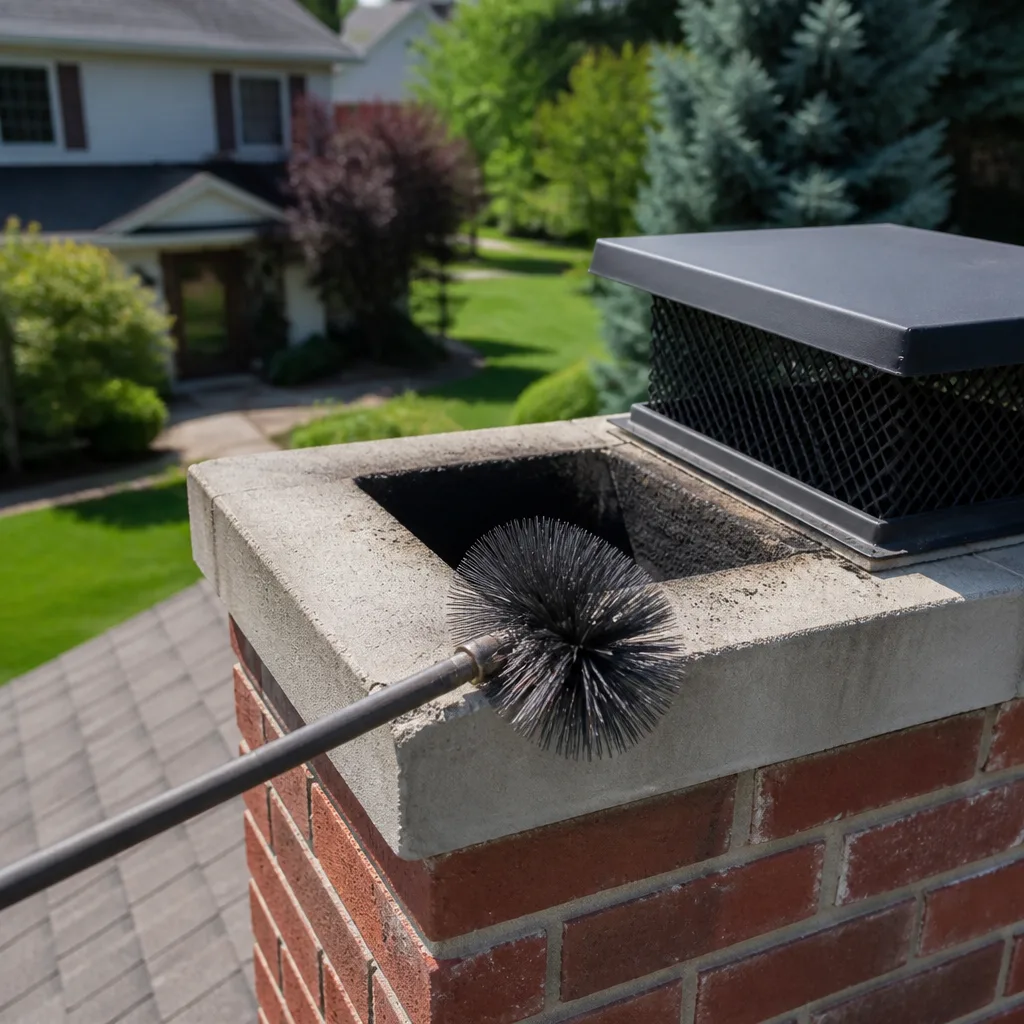
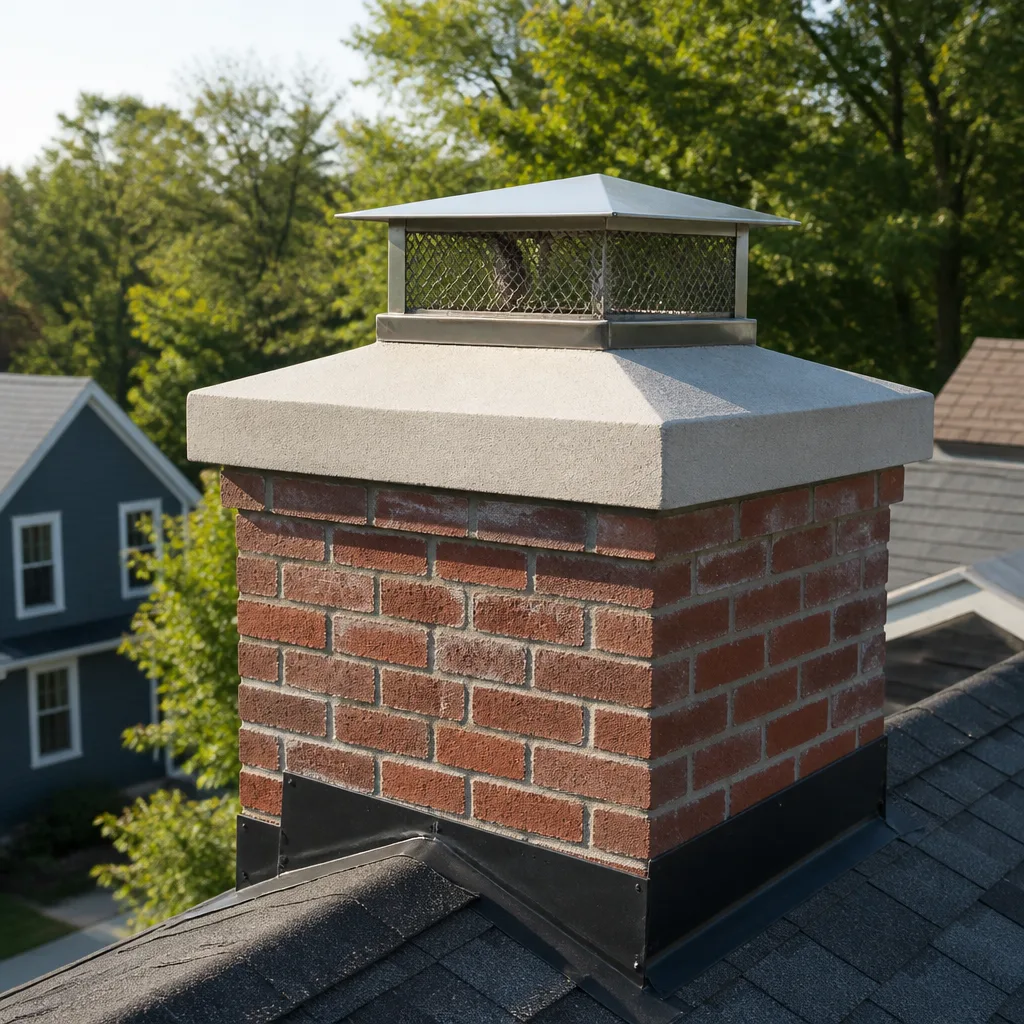
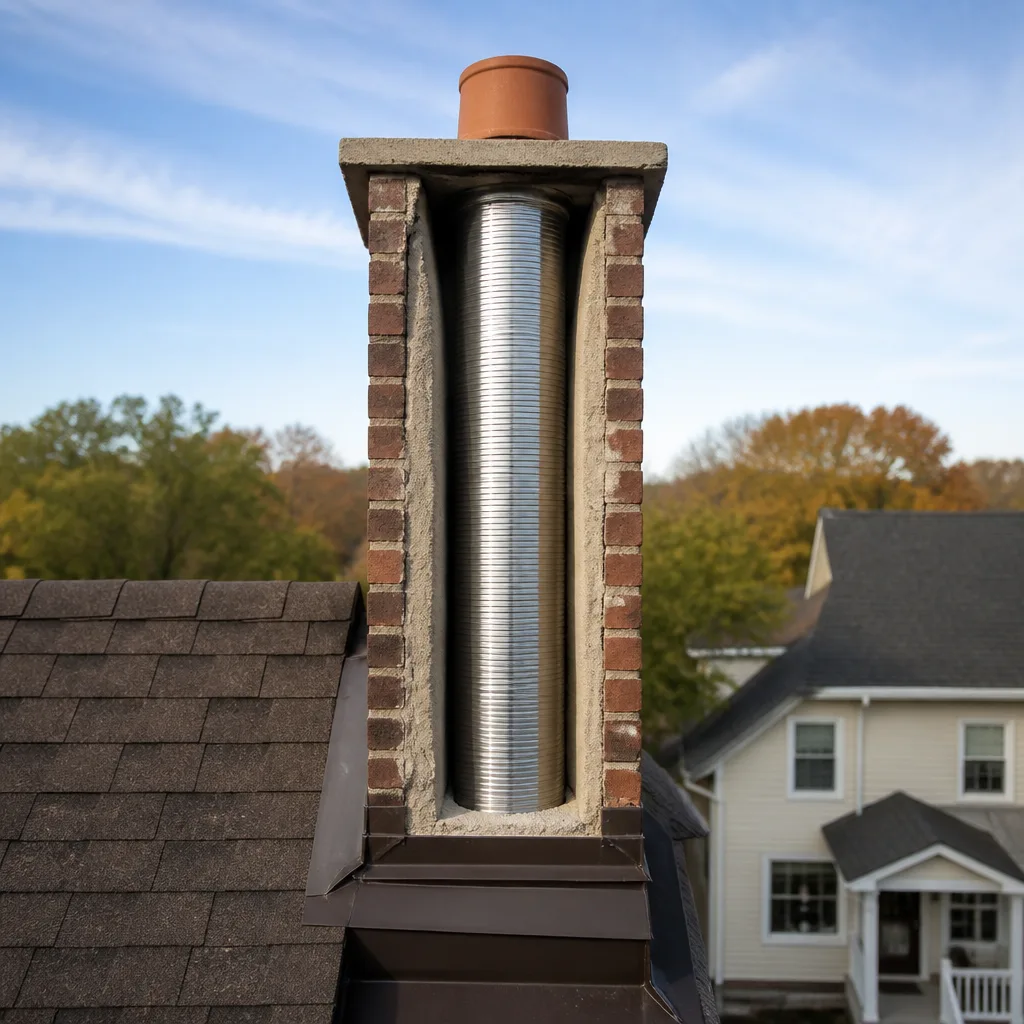
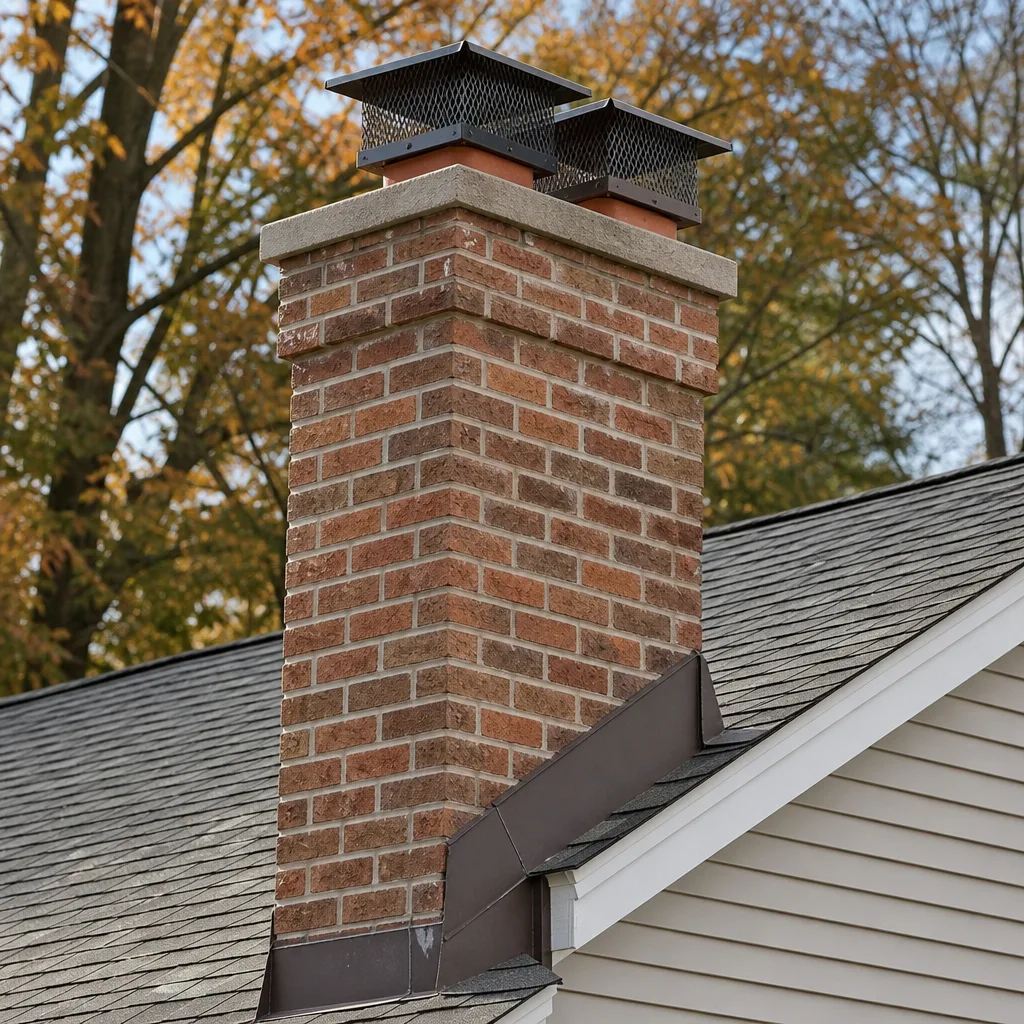
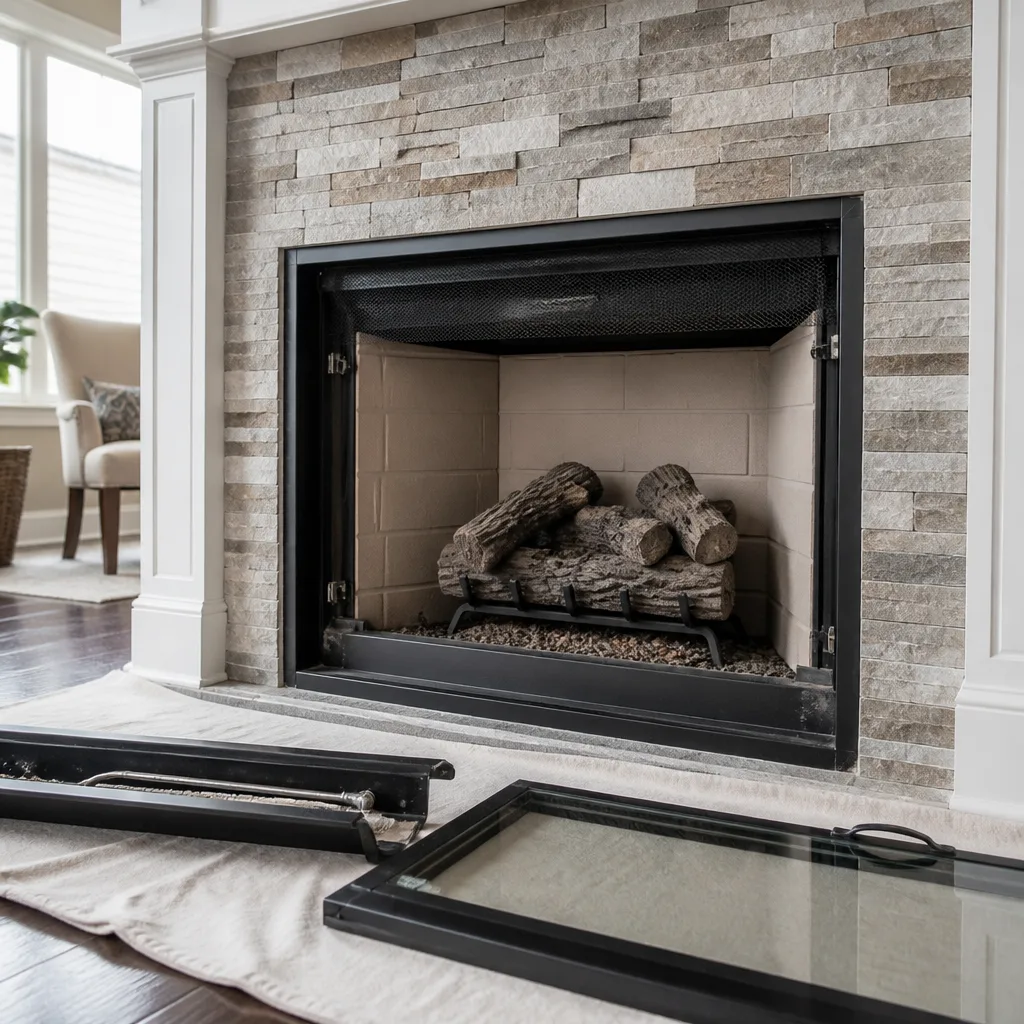
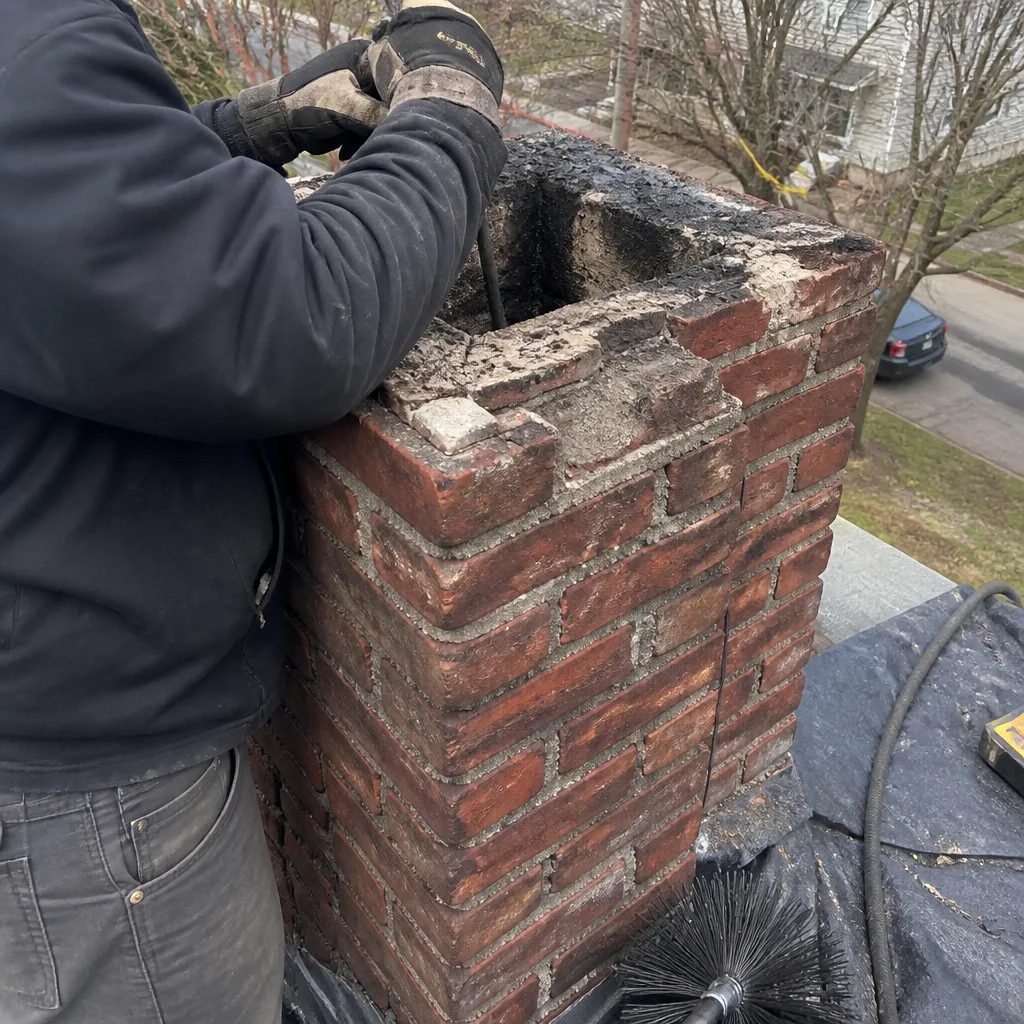 Before
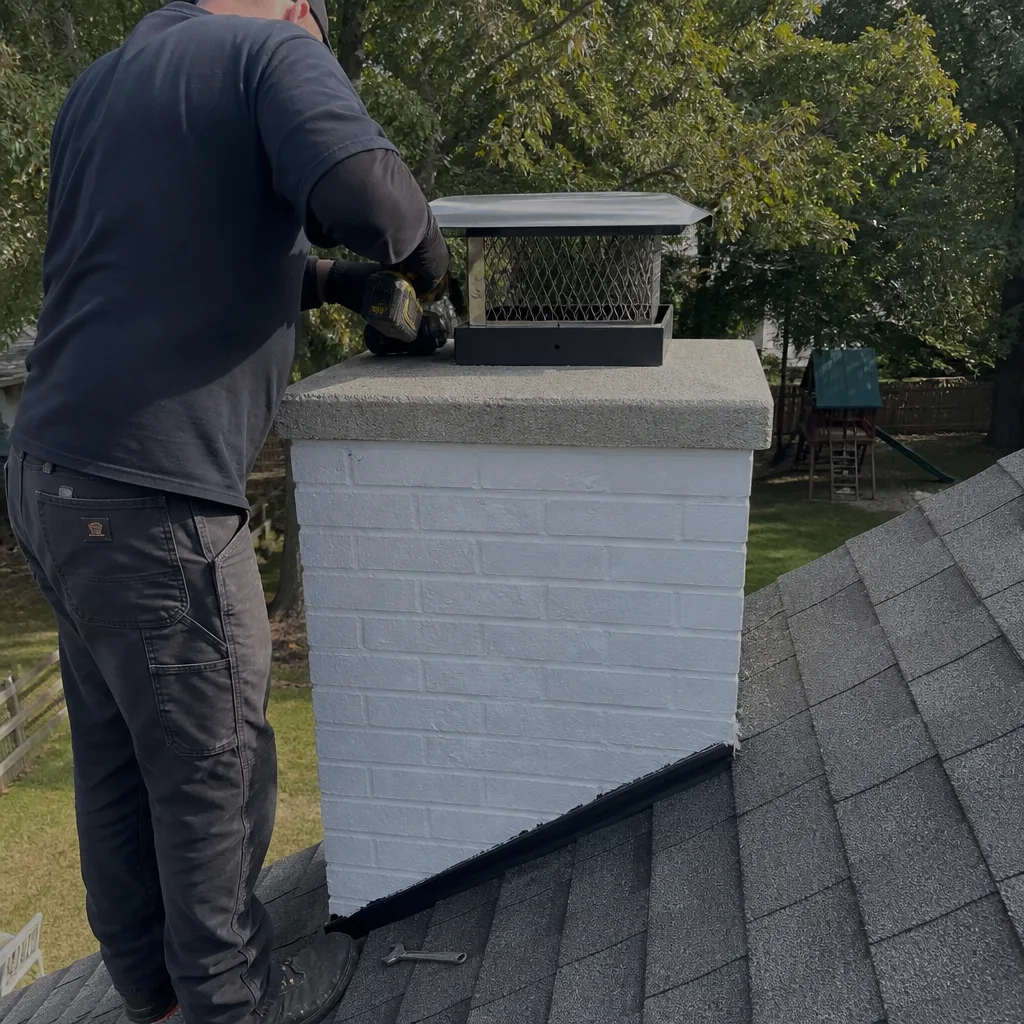 After
After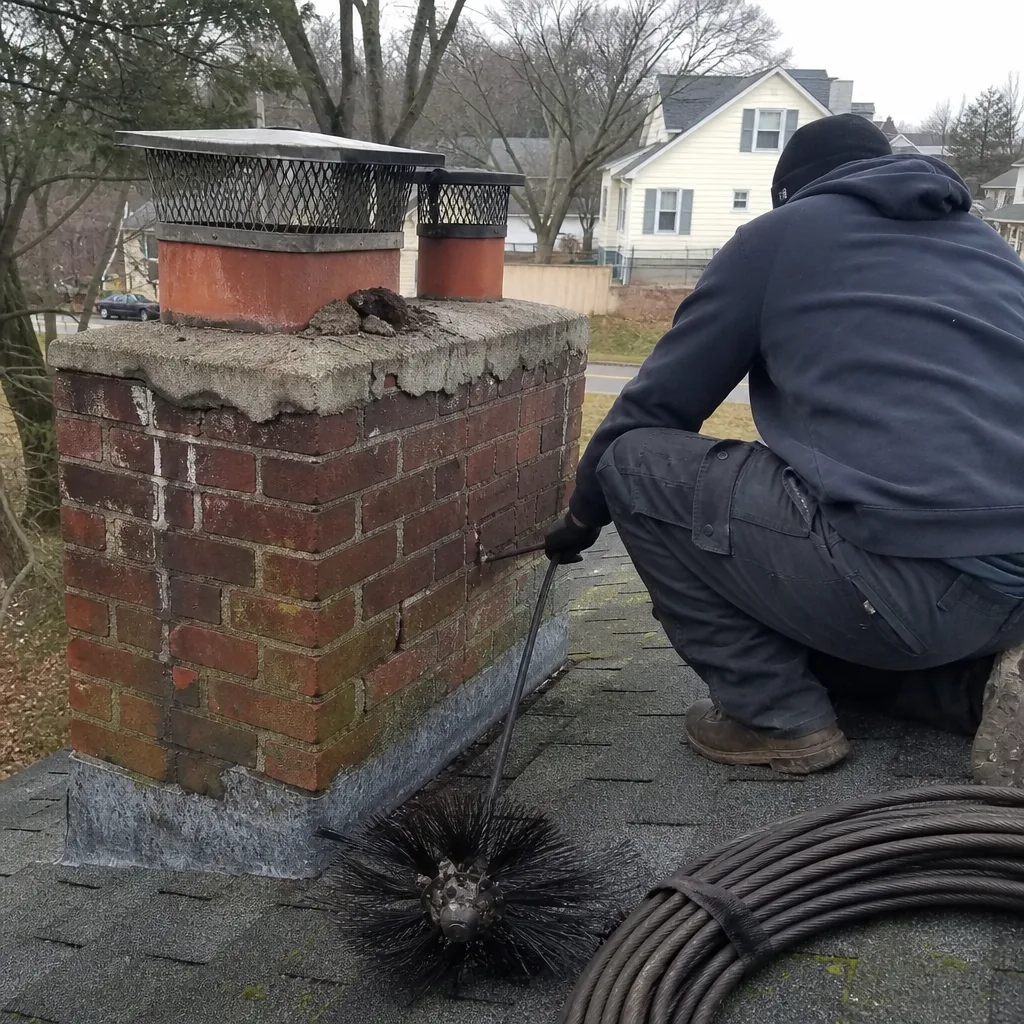 Before
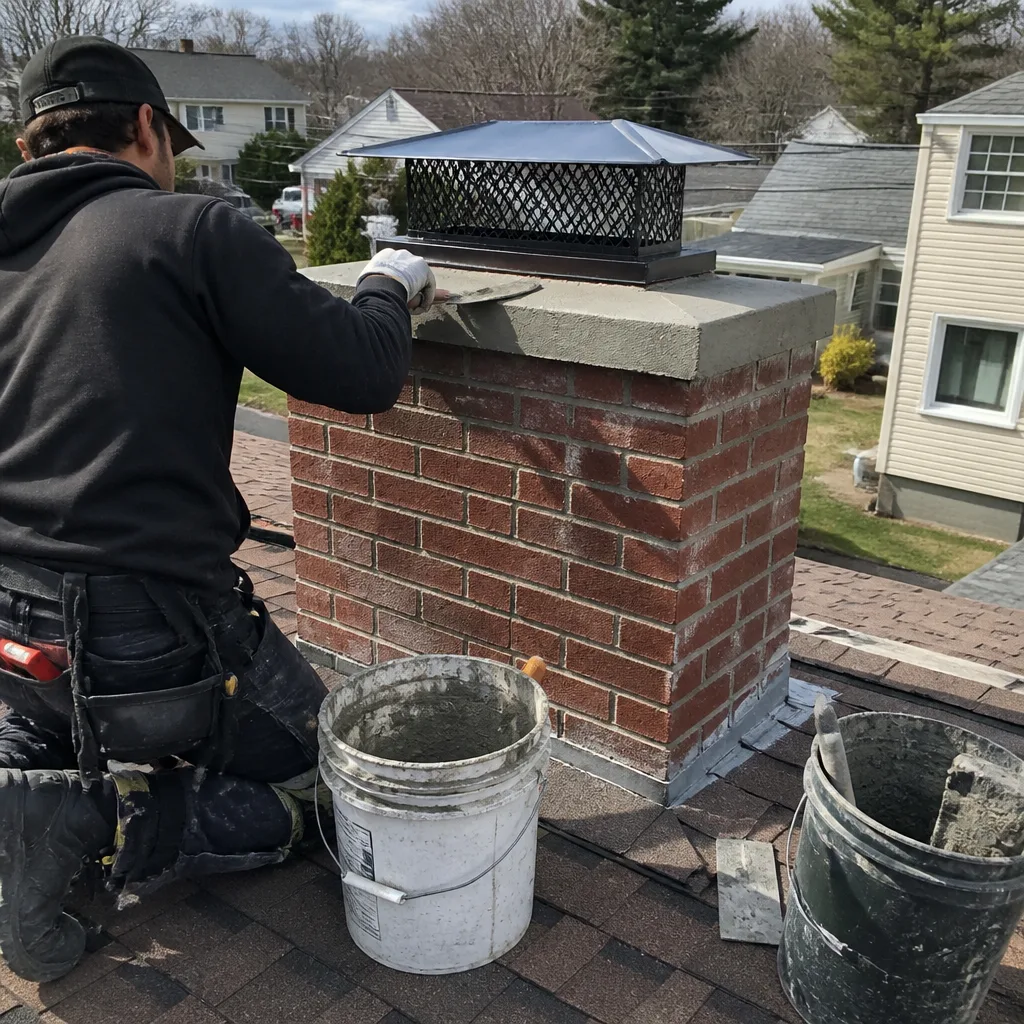 After
After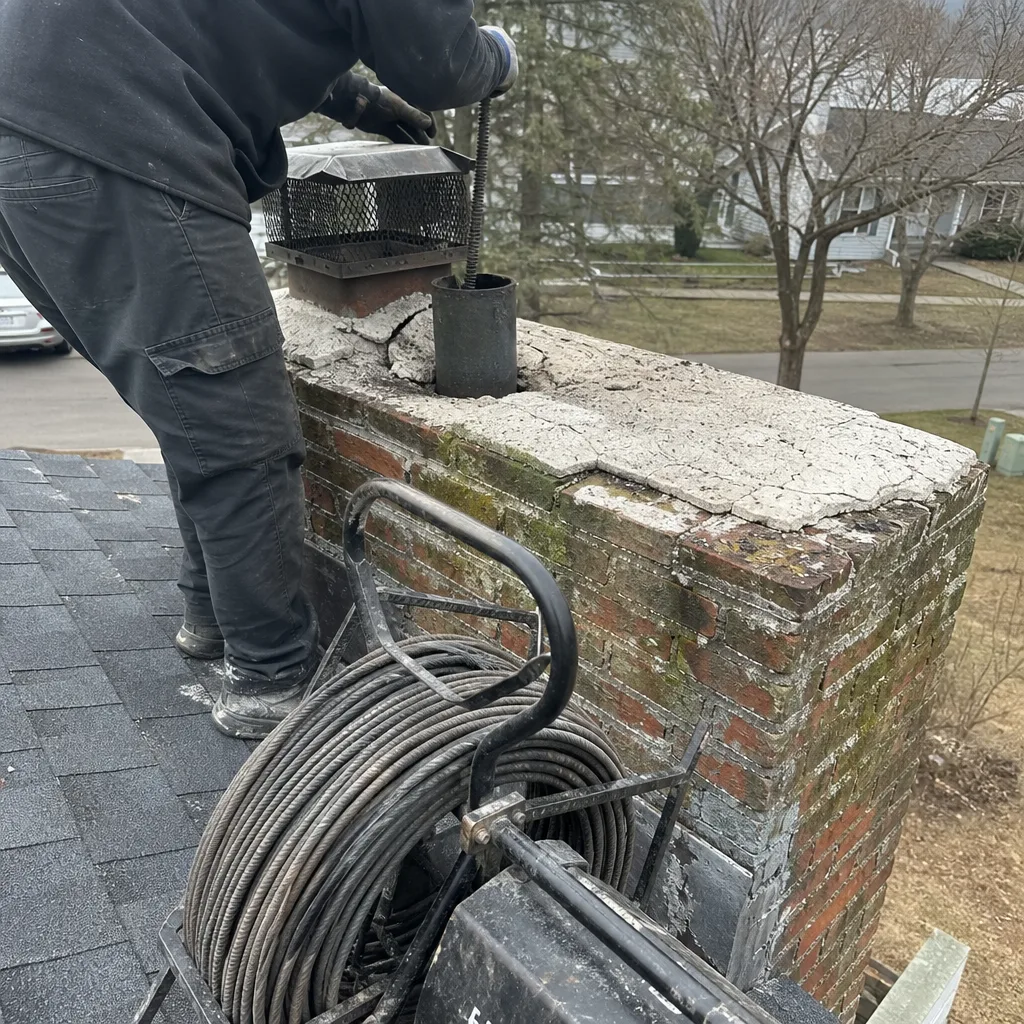 Before
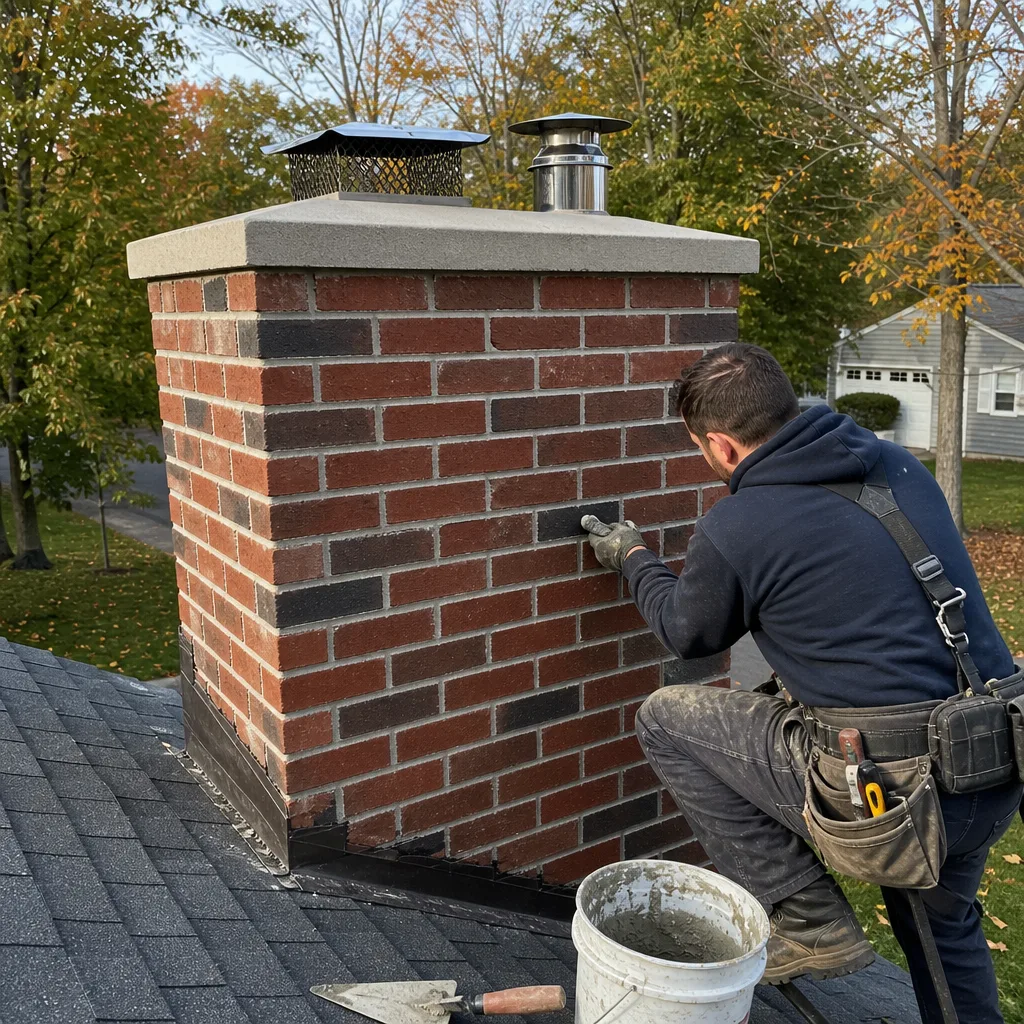 After
AfterThe Complete Guide to Chimney Cleaning in Chelmsford
The Chimney Safety Institute of America estimates that 25% of home heating fires involve chimneys that were “recently cleaned.” That statistic should stop every Chelmsford homeowner cold. It means a quarter of chimney fires happen after someone paid for a service that either wasn’t thorough enough or wasn’t performed at all. In our 42 years of work across Middlesex County, we’ve opened flues that carried a receipt from last season but still held dangerous glazed creosote. We’ve found smoke chambers packed with soot behind a “clean” firebox. This guide exists because two contractors can both advertise a “full chimney cleaning” and deliver completely different results. By the end, you’ll know exactly what a complete cleaning covers, how to verify it was done, and which corners unaccountable sweeps cut to save time. For more guides & resources on protecting your home, see our blog.
Quick Answer
A complete chimney cleaning in Chelmsford removes combustible creosote and soot from the firebox, smoke chamber, flue liner, and damper assembly, followed by a photo-documented Level 1 or Level 2 inspection per NFPA 211 standards. The process typically takes 60 to 90 minutes for a standard masonry fireplace and should leave you with before-and-after images, a written condition report, and no debris in your home. Prices in the Chelmsford market generally range from $199 to $289 for a thorough cleaning and basic inspection, with Level 2 camera inspections running higher when required by home sales or suspected damage.
Table of Contents
- What a Complete Chimney Cleaning Actually Covers
- Why Chelmsford’s Older Chimneys Need Different Care
- The Three Stages of Creosote Buildup
- NFPA Inspection Levels: What Your Sweep Should Include
- Photo Documentation: Your Only Real Protection
- Chimney Cleaning Costs in Chelmsford: What to Expect
- How to Choose a Chimney Sweep in Chelmsford
- How Often Should Your Chimney Be Cleaned
What a Complete Chimney Cleaning Actually Covers
Most homeowners in Chelmsford assume “chimney cleaning” means one thing. It doesn’t. The scope varies so dramatically between providers that the term has become nearly meaningless without specifics. If you’re weighing whether to tackle maintenance yourself or call a pro, our DIY vs Professional Chimney Cleaning: The Chelmsford Homeowner’s Decision Guide walks through the trade-offs. Here’s what a complete job includes, component by component, and why skipping any of them is a shortcut that puts your home at risk.
The Firebox
The firebox is where you see the fire, so it’s where most sweeps stop if they’re cutting corners. A proper cleaning removes all ash, soot, and deteriorated firebrick particles. We inspect the refractory panels for cracks or thinning, which in Chelmsford’s freeze-thaw climate can accelerate after water intrusion. A cracked firebox lets heat reach combustible framing. We’ve replaced fireboxes in Westford Street area homes where the previous “cleaning” never included panel inspection.
The Smoke Chamber
This is the angled area above the damper that funnels smoke into the flue. It’s invisible from the room and inaccessible without proper tools. Many budget sweeps skip it entirely. The smoke chamber collects the most creosote in any masonry system because temperatures drop and turbulence deposits heavy buildup here. NFPA 211 requires it be cleaned and parged smooth when deteriorated. We use hand brushes and scraping tools to reach every surface. In parged chambers, we check for gaps or separation that create ledges where creosote accumulates.
The Flue Liner
The liner carries exhaust gases up and out. For clay tile liners common in pre-1990 Chelmsford homes, we use properly sized poly or wire brushes that match the flue dimensions, rotated on flexible rods from top or bottom. Oversized brushes damage tile. Undersized ones polish the surface without removing buildup. For stainless steel liners, we use gentler methods to protect the metal. The liner must be visually verified clear at both ends. We document this with photos looking up from the firebox and down from the roof.
The Damper Assembly
The damper controls airflow and seals the flue when not in use. A complete cleaning removes soot from the frame, checks for proper opening and closing, and lubricates the mechanism. We’ve found dampers frozen shut by creosote in Chelmsford homes where the owner didn’t realize they were operating the fireplace with restricted airflow, which actually increases creosote formation.
Exterior and Crown
While not strictly “cleaning,” a responsible sweep examines the crown, cap, and exterior masonry for water intrusion evidence. Chelmsford’s wet springs and heavy snow loads stress chimney crowns. Cracks here funnel water into the system, accelerating liner deterioration and creating the freeze-thaw damage we see regularly in neighborhoods like South Chelmsford and around Heart Pond.
Key components of a complete cleaning:
- Firebox: ash removal, refractory panel inspection, debris collection
- Smoke chamber: hand brushing, ledge removal, parging condition check
- Flue liner: mechanical brushing appropriate to liner material, clear verification
- Damper: mechanism cleaning, operation test, lubrication
- Exterior: crown, cap, and flashing visual inspection for water damage
Why Chelmsford’s Older Chimneys Need Different Care
Chelmsford’s housing stock tells a specific story. The town’s rapid growth came in waves, 1960s through 1980s, with substantial earlier construction in the center and along historic routes. What this means for chimney work is that most masonry fireplaces here use clay tile liners installed before modern stainless steel systems became standard. These clay liners behave differently, fail differently, and require different cleaning technique than what works on newer installations.
Clay tile liners are brittle. Thermal shock from a chimney fire, or even rapid heating after long disuse, can crack them. The mortar joints between tiles deteriorate from acid condensation, especially in Chelmsford’s cold-start climate where homeowners light occasional fires rather than running continuous heat. Once joints erode, gaps allow gases and creosote to contact the surrounding masonry. We’ve removed sections of brick in North Chelmsford homes where this leakage had gone undetected for years because no camera inspection was performed.
The brushing technique matters. Clay tiles require brushes sized to the exact flue dimension, too large and you risk corner damage, too small and you leave buildup. The standard 8″ x 8″ or 8″ x 12″ clay flue common here needs matching equipment. We carry brush heads in quarter-inch increments because “close enough” isn’t close enough.
Older chimneys also lack the insulation around liners that modern codes require. This means colder flue surfaces, more condensation, and faster creosote accumulation, particularly with the seasoned hardwood common in Chelmsford where homeowners burn oak and maple from local suppliers. A sweep unfamiliar with these dynamics might recommend cleaning intervals based on national averages that don’t account for local conditions.
Water is the other factor. Chelmsford receives roughly 48 inches of precipitation annually, with significant snow load and spring thaw cycles. Unlined or deteriorating flues absorb moisture, which combines with acidic combustion byproducts to accelerate deterioration. We’ve found flue tiles spalling, flaking apart in layers, in homes near the Merrimack River where humidity runs higher. Proper cleaning includes assessment of whether the liner itself is the problem, not just what’s coating it.
For homeowners with chimney repair needs in Chelmsford, understanding these material differences helps explain why repair recommendations vary. A stainless steel liner from DuraFlex or Olympia Chimney, properly insulated and sized, solves many of the inherent limitations of original clay construction. But that recommendation should come after documentation, not as a default upsell.
The Three Stages of Creosote Buildup
Any sweep who reports only “light,” “moderate,” or “heavy” buildup is giving you incomplete information. Creosote progresses through three distinct stages, each with different removal difficulty and different fire risk. A proper cleaning note specifies the stage, the location, and the percentage of surface coverage. Here’s what those stages mean in practical terms.
Stage One: Soot
Stage one creosote is soft, black or brown, and brushes away readily with standard equipment. It’s mostly carbon particles with some condensed tar droplets. You’ll see it after regular burning of dry, seasoned hardwood with adequate airflow. In Chelmsford, we see stage one in fireplaces used weekly through winter with proper damper operation. Removal is straightforward, usually 30 to 45 minutes of brushing. The risk is low but not zero, stage one can ignite and progress to more dangerous deposits if left uncleaned.
Stage Two: Granular Creosote
Stage two appears as crunchy, porous flakes or small chips, often shiny and black. It forms when combustion is less complete, cooler flue temperatures condense more volatile compounds, or the wood has higher moisture content. This is common in Chelmsford when homeowners burn partially seasoned wood or restrict airflow to extend burn time. Stage two requires more aggressive brushing, sometimes with motorized whips or chains for stainless liners. It burns intensely once ignited and is responsible for most chimney fires that damage structures. Removal takes longer, 45 to 75 minutes typically, and produces more debris.
Stage Three: Glazed Creosote
Stage three is the dangerous one. It’s a hard, glossy, tar-like coating, ranging from dark brown to reddish-black, that bonds to the liner surface. It forms from sustained low-temperature burning, unseasoned wood, or restricted airflow over long periods. We’ve removed stage three deposits half an inch thick in Chelmsford homes where the fireplace was used as a primary heat source with poor technique. Standard brushing won’t touch it. Removal requires chemical treatment to soften the deposit, followed by mechanical removal, often across multiple sessions. Stage three ignites at lower temperatures and burns with explosive intensity. A chimney fire with stage three creosote can reach 2,000 degrees and crack clay liners, damage surrounding structure, or spread to the roof.
Why staging matters: A sweep who doesn’t distinguish these stages can’t predict when you’ll next need service, can’t assess your burning practices, and can’t document whether conditions are worsening. We photograph and stage every deposit we find. If your sweep doesn’t, you’re paying for a black-and-white verdict when you need the full picture.
NFPA Inspection Levels: What Your Sweep Should Include
The National Fire Protection Association defines three inspection levels in Standard 211. Most homeowners don’t know which applies to their situation, and some contractors exploit that confusion. Here’s the breakdown, when each is appropriate, and what Chelmsford homeowners should expect by default.
Level 1 Inspection
A Level 1 inspection is the minimum for annual maintenance when no changes have been made to the system and no problems are suspected. It includes examination of readily accessible portions of the chimney exterior, interior, and connecting appliances. The sweep checks basic soundness, obstruction, and creosote deposits. No tools are used to open or remove components. For Chelmsford homeowners with consistent annual service, no appliance changes, and no performance issues, Level 1 is appropriate and should be included in a standard cleaning price.
Level 2 Inspection
Level 2 is required when any of these apply: you’ve changed your heating appliance, you’ve changed fuel type, you’ve had a chimney fire or building fire, you’re selling the property, or you’ve noticed performance problems (smoke backup, odd odors, visible deterioration). It includes everything in Level 1 plus examination of accessible attics, crawl spaces, and basements, and a video scan of the flue interior.
This is where our documentation standard matters. A Level 2 inspection should produce images you can see, with a plain-English verdict on liner condition, joint integrity, and any needed repairs. We perform these with camera systems that record the full flue length, saved to your file. In Chelmsford’s competitive real estate market, we’ve provided Level 2 documentation for dozens of home sales, often catching issues that would have derailed transactions or created liability for sellers.
Level 2 should also follow any chimney fire, however minor it seemed. Thermal damage to clay liners isn’t always visible from the firebox. We’ve found hairline cracks in flue tiles after fires the homeowner described as “just a little whooshing sound.” Those cracks are escape paths for combustion gases into wall cavities.
Level 3 Inspection
Level 3 is invasive, involving removal of building materials to access concealed portions of the chimney. It’s warranted when serious hazards are suspected but cannot be confirmed otherwise. This requires written authorization, explanation of the scope, and often involves temporary structural opening. We’ve performed Level 3 inspections in Chelmsford historic homes where concealed chimney deterioration threatened structural integrity. This is rare, perhaps 2% of cases, but essential when indicated.
The accountability standard: A standard cleaning in Chelmsford should include at minimum a Level 1 inspection. If your sweep offers “cleaning only” with no inspection, or charges extra for basic condition assessment, that’s a red flag. The inspection and cleaning are inseparable, you cannot clean what you haven’t evaluated, and you cannot evaluate what you haven’t documented.
Photo Documentation: Your Only Real Protection
Verbal verdicts protect the contractor, not the homeowner. A sweep who tells you “everything looks fine” without images is asking for trust they haven’t earned. In 42 years, we’ve learned that photos do three things: they prove the work was performed, they establish baseline condition for future comparison, and they make repair recommendations objective rather than subjective.
Here’s what photo documentation should include for a complete cleaning:
- Firebox before and after, showing ash removal and refractory panel condition
- Smoke chamber view from below, showing ledge removal and surface condition
- Flue liner view from firebox looking up, showing passage clearance
- Flue liner view from roof looking down, showing crown condition and liner top
- Damper mechanism, showing operation range and soot clearance
- Exterior crown and cap, with close-up of any cracking or deterioration
- Any damage, obstruction, or anomaly found during service
We provide these images in a digital report with timestamp and location data. Homeowners in Chelmsford’s long-established neighborhoods, where houses pass through generations, particularly value this record for estate planning and maintenance history.
The absence of photos should concern you. We’ve taken over jobs from other providers where the homeowner was told they needed $4,000 in liner work with no visual evidence. When we camera-inspected, the liner was sound, the “damage” was normal mortar texture, and the previous recommendation was unsupported. Photos prevent this. They let you get a second opinion without paying for redundant inspection, and they keep recommendations honest.
Our chimney cleaning and sweep service in Chelmsford includes this documentation as standard, not optional. The Keystone Standard, our K.E.Y.S. values code, governs this: Krafted right, Every time, Your home first, Standing behind it. The “Your home first” element means you see what we see, and you decide based on evidence.
Chimney Cleaning Costs in Chelmsford: What to Expect
Price transparency matters for homeowners who’ve been surprised by bills before. Here’s how pricing breaks down in the Chelmsford market, with ranges based on what we’ve observed and charged over four decades. These are current market ranges for professional service, not the lowest advertised teaser rates that exclude necessary components.
| Service | Typical Range in Chelmsford | What’s Included |
|---|---|---|
| Standard cleaning with Level 1 inspection | $199 - $289 | Firebox, smoke chamber, flue, damper; basic condition report |
| Cleaning with Level 2 camera inspection | $299 - $449 | All above plus video flue scan, photo documentation, written verdict |
| Heavier creosote (Stage 2-3) | Add $75 - $150 | Extended mechanical removal, possible chemical treatment |
| Gas fireplace service | $159 - $229 | Burner cleaning, log inspection, gas leak check, draft test |
| Insert or stove cleaning | $189 - $279 | Removal of baffles, cleaning of secondary combustion chambers |
What affects your specific price: accessibility (steep roof, limited clearance), liner type and condition, time since last service, and whether animal removal or obstruction clearing is needed. We provide no-hassle upfront pricing, the number on the estimate is the number on the invoice. No surprises after we’re in your home.
Standing offers that apply: $50 off any repair over $250, free second opinion on any written estimate, $89 seasonal tune-up, and permanent 5% senior and veteran discount. These aren’t introductory come-ons, they’re permanent policies.
Be wary of quotes below $150 for a “full cleaning.” At that price, something is being skipped, the smoke chamber, the inspection, or the documentation. We’ve cleaned up after $99 specials that left glazed creosote in the flue and a receipt that satisfied the homeowner until the chimney fire.
How to Choose a Chimney Sweep in Chelmsford
The chimney service industry in Massachusetts has minimal licensing requirements compared to trades like plumbing or electrical. This creates a market where anyone with brushes and a truck can advertise. Here’s how to distinguish qualified professionals from operators you’ll regret hiring. Our How to Hire a Chimney Cleaning Contractor in Chelmsford: A Step-by-Step Guide expands on this with a full vetting checklist.
Verify CSIA certification. The Chimney Safety Institute of America certifies sweeps who pass examination and maintain continuing education. Certification can be verified online. We maintain CSIA-certified technicians and encourage homeowners to check any credential claimed.
Confirm insurance. Ask for certificate of liability and workers compensation. Chimney work involves roof access, combustion systems, and sometimes structural opening. Without proper coverage, a worker injury or property damage becomes your homeowner’s policy problem. We’re fully insured and bonded, documentation available on request.
Ask about inspection inclusion. If cleaning and inspection are priced separately, or if “inspection” means a glance rather than documented evaluation, keep looking. The NFPA levels described above should be familiar to any sweep you consider. Vague answers suggest vague standards.
Request photo documentation protocol. What exactly will you receive? When? In what format? If the answer is “I’ll tell you what I saw,” that’s insufficient. Our reports include timestamped images, plain-English findings, and clear recommendations with priority levels.
Check local reputation specifically. Online reviews are useful but verify they’re from Chelmsford-area customers with similar homes and services. We’ve served this town since 1984, our trucks are recognizable, our work is visible in neighborhoods from Vinal Square to East Chelmsford. Local longevity means accountability, you can find us if something needs follow-up.
Evaluate communication style. The sweep who pressures you for immediate expensive repairs, who won’t explain findings in terms you understand, or who dismisses your questions, is not operating from confidence in their work. We explain, document, and let you decide. The 90-Day Done Right Promise, in writing with no arguing, exists because we trust our work to stand inspection.
For fireplace services in Chelmsford beyond cleaning, the same selection criteria apply. Gas fireplace expertise requires additional certification, we maintain this for the growing number of Chelmsford homes with direct-vent and vent-free installations.
How Often Should Your Chimney Be Cleaned
The NFPA recommendation is annual inspection, with cleaning as needed based on deposit accumulation. “As needed” varies significantly based on how you burn, what you burn, and your system design. Here’s how Chelmsford homeowners should think about scheduling.
Wood-burning fireplaces: Annual cleaning minimum, more frequently if you burn daily through winter or use softer woods. The cord of pine or unseasoned oak you bought cheap generates more creosote than the same volume of dry hardwood. We see Chelmsford homeowners who burn 3-4 cords annually needing mid-season service, particularly with older, uninsulated clay liners that run cooler.
Gas fireplaces: Annual service despite no creosote formation. Gas systems develop debris in burners, ceramic logs deteriorate, and venting systems can be obstructed by nests or storm damage. The carbon monoxide risk from a malfunctioning gas fireplace is equal to or greater than the fire risk from wood creosote. We perform gas service with combustion analysis to verify safe operation.
Pellet stoves: Every ton of pellets burned, or annually, whichever comes first. Ash accumulation in combustion chambers and venting systems requires specific cleaning protocols.
Oil and gas furnace flues: Often overlooked, these require annual inspection and cleaning as needed. Sulfuric acid condensation in oil flues deteriorates clay liners rapidly. We’ve found collapsed liners in Chelmsford furnace flues that were never inspected because the homeowner assumed “it’s just the furnace.”
Situational triggers for immediate service:
- Smoke entering the room during operation
- Strong, acrid odors from the fireplace when not in use (often warm-weather creosote off-gassing)
- Visible debris or staining on exterior masonry
- Animal sounds or nest materials in the flue
- Any chimney fire event, however minor it seemed
- Purchase of a home with unknown service history
In Chelmsford’s climate, we recommend scheduling before the burning season begins, September through early November. Our calendar fills because homeowners who’ve experienced mid-winter service calls, cold houses, and emergency rates, plan ahead. Calls answered by a live person 24 hours a day, 7 days a week mean you can book when you think of it, not during business hours you might miss.
Common Mistakes to Avoid
- Hiring based on lowest price alone. The $99 special rarely includes smoke chamber access, camera inspection, or proper debris containment. We’ve repaired damage from cut-rate sweeps who used improper brush sizes on clay tile liners.
- Accepting verbal-only condition reports. Without photos, you have no evidence of what was found, no basis for comparison next year, and no protection against unnecessary repair recommendations. Verdicts without documentation protect the contractor.
- Ignoring the smoke chamber. If your sweep’s description doesn’t include this component, they’re skipping the area where most chimney fires originate. Ask specifically: “Did you clean and inspect the smoke chamber?”
- Using unseasoned or improper wood. Chelmsford homeowners who burn construction debris, painted wood, or green split wood accelerate creosote formation dramatically. Seasoned hardwood, split and stacked under cover for 12 months minimum, burns cleaner and reduces service frequency.
- Skipping annual service because “we barely use it.” Even occasional use produces creosote, and disuse allows moisture intrusion, animal nesting, and deterioration that a cleaning and inspection would catch. The chimney fire risk exists regardless of frequency.
- Assuming gas systems need no attention. Gas fireplace and furnace flues require annual inspection. Corrosion, obstruction, and combustion problems don’t care about fuel type.
- Delaying after a chimney fire. Even a small, self-extinguished chimney fire can crack clay liners or damage mortar joints. Thermal shock effects may not be immediately visible but create pathways for gas leakage and future fire spread. Always request Level 2 inspection after any fire event.
When to Call a Professional
Some situations require immediate professional evaluation, not next-season scheduling. Call for service if you experience smoke backup during normal operation, detect persistent sour or smoky odors from the fireplace, see staining or debris on exterior masonry, hear animal activity in the flue, or have any indication of a chimney fire. If you’ve purchased a Chelmsford home with unknown chimney history, schedule inspection before first use, inherited problems become your problems without warning.
For homeowners considering whether current conditions allow safe continued use, we offer free estimates with no obligation. Hearthstone Chimney Co. provides complete chimney services in Chelmsford and surrounding communities, with background-checked, uniformed technicians who complete most jobs in a single visit. Call (978) 991-9492 to schedule, or to discuss whether your situation needs immediate attention or can wait for routine scheduling.
Frequently Asked Questions
A thorough chimney cleaning with Level 1 inspection in Chelmsford typically costs between $199 and $289, while cleaning with Level 2 camera inspection and full photo documentation runs $299 to $449. Heavier creosote buildup or obstructions may add $75 to $150. We provide no-hassle upfront pricing before any work begins, the estimate number matches the invoice number. Call (978) 991-9492 for an exact quote, estimates are free.
You need a new liner only if inspection documents specific damage, deterioration, or code non-compliance that creates safety risk. Clay tile liners with cracked tiles, missing mortar joints, or spalling surfaces should be replaced, often with a stainless steel system from DuraFlex or Olympia Chimney that we can install with proper insulation. We never recommend liner replacement without camera evidence you can see yourself, and we’ll tell you plainly when conditions allow safe continued use with monitoring. Call (978) 991-9492 for a free second opinion on any liner replacement estimate.
The NFPA recommends annual inspection for all chimney systems, with cleaning frequency determined by creosote accumulation rather than calendar alone. Most wood-burning fireplaces in Chelmsford need annual cleaning given our cold-start burning patterns and older clay liner systems. Gas fireplaces and furnace flues also require annual service despite no creosote, for combustion safety and venting integrity. Schedule before burning season, September through early November, to avoid winter emergency rates. Call (978) 991-9492 to book your annual service.
Skipped cleaning allows creosote to progress from manageable soot to hazardous glazed deposits that ignite at lower temperatures and burn with explosive intensity. Chimney fires damage clay liners, crack masonry, and can spread to roof structures or interior framing. Even without fire, accumulated creosote restricts draft, causing smoke backup and carbon monoxide risk. Moisture combined with acidic deposits deteriorates liners and mortar joints, leading to costly structural repairs that early cleaning would have prevented. The $200 annual service prevents the $4,000 liner replacement or worse. Call (978) 991-9492 to schedule before problems develop.
Chimney sweeping is the mechanical removal of creosote, soot, and obstructions. Chimney inspection is the systematic evaluation of system condition, structure, and safety per NFPA 211 standards. A complete service includes both, you cannot properly inspect what you haven’t cleaned, and cleaning without inspection is incomplete work. In Chelmsford, we perform both together as standard practice, with inspection findings documented in photos and plain-English reports. Beware providers who price these separately or offer “cleaning only” without condition assessment.
Yes, for specific reasons. Pre-1990 homes in Chelmsford predominantly have uninsulated clay tile liners that are more susceptible to thermal shock, acid corrosion, and freeze-thaw damage from our wet climate. Original construction may not meet current clearances to combustibles. Decades of use without documented service history means unknown accumulation and deterioration. We’ve found significant concealed damage in well-maintained older homes where the chimney was simply never examined properly. Age alone isn’t the risk, age plus unknown condition is. Level 2 camera inspection provides the documentation needed for confident continued use or informed repair decisions.
The Bottom Line
A complete chimney cleaning in Chelmsford is defined by what gets cleaned, what gets inspected, and what gets documented, not by a receipt that says “swept.” The complete job covers firebox, smoke chamber, flue liner, and damper with appropriate technique for your liner type. It includes NFPA-compliant inspection with photo evidence you can review. It distinguishes creosote stages so you understand your actual condition. And it comes from a provider who’ll be accountable next season, next year, and next decade.
We’ve worked on chimneys in Chelmsford since 1984. We’ve seen what thorough work prevents and what shortcuts cost. The 90-Day Done Right Promise, in writing with no arguing, exists because we trust our process and our people. Photos you can see, a plain-English verdict, and a square deal with no surprises on the bill, that’s the standard we apply to every home.
Ready to schedule your complete chimney cleaning? Call Hearthstone Chimney Co. at (978) 991-9492. A live person answers 24 hours a day, 7 days a week. Estimates are free, pricing is upfront, and we’ll be there when we say.
Written by Russell Haines, Owner at Hearthstone Chimney Co., serving Chelmsford since 2014.